
The National Historic District
This audio tour stop made possible in memory of H. Wise Kelly III
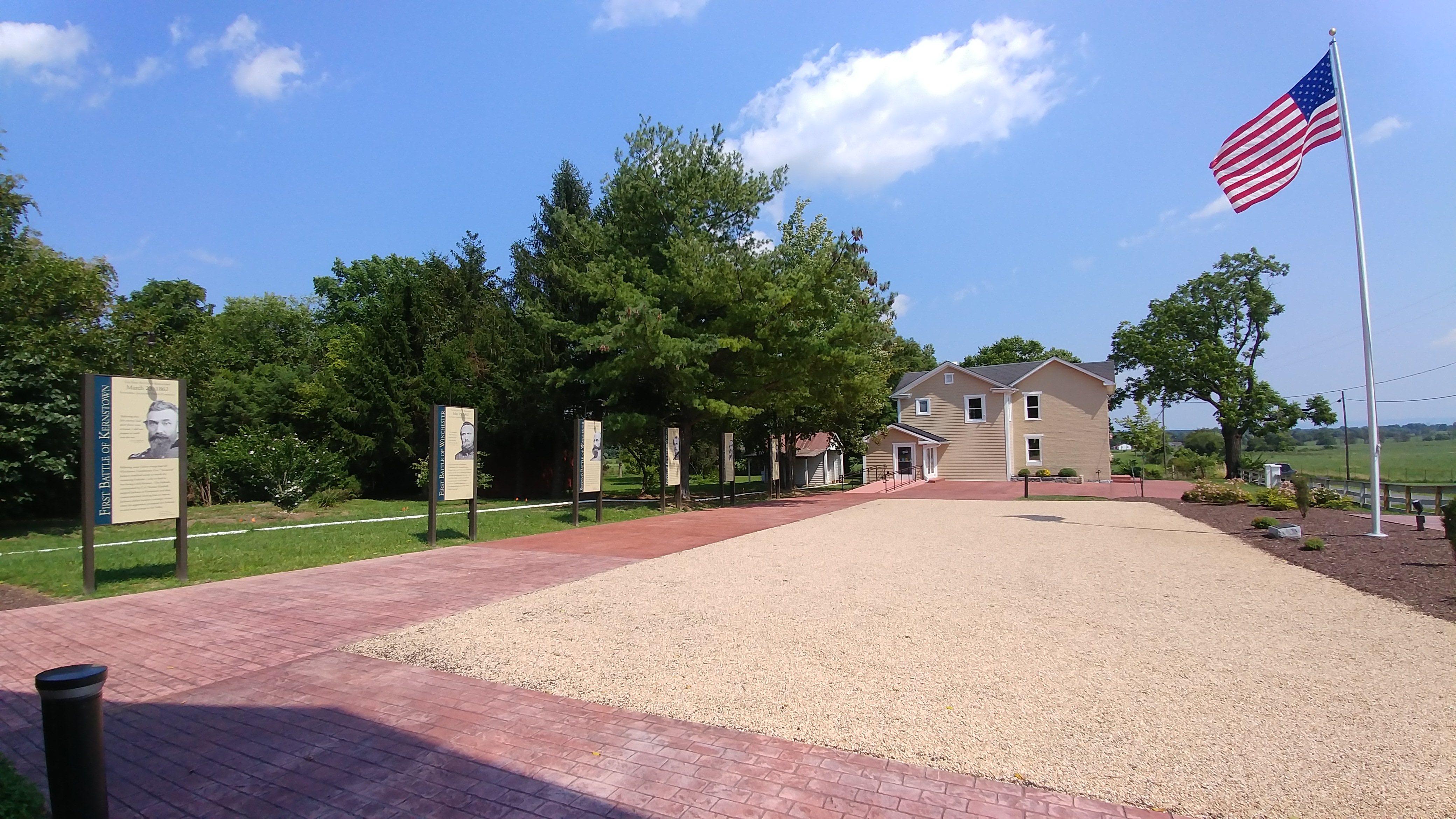
This stop is in the Ritchie Interpretive Plaza at the James R. Wilkins Winchester Battlefields Visitor Center, 541 Redbud Road, Winchester, Virginia. Stops 1–7 introduce the district and six area battles.
Preserving the Valley’s Civil War story
In 1996, Congress designated eight counties in the Shenandoah Valley of Virginia as the Shenandoah Valley Battlefields National Historic District. The district is a national battlefield site associated with the National Park Service. The district is operated by the Shenandoah Valley Battlefields Foundation, which works with partners to preserve the hallowed ground of the Valley's Civil War battlefields, to share its Civil War story with the nation, and to encourage tourism and travel to the Valley's Civil War sites.
The Battlefields Foundation preserves and interprets the Civil War at 20 battlefields and dozens of additional sites including museums, cemeteries, and historic homes. The Foundation operates battlefield parks and trails, historic sites and museums, Civil War orientation centers and visitor centers, and offers historical and educational programs including tours, talks, conferences, classes, kids camps, and much more. Here in Winchester, the Foundation operates the Shenandoah Valley Civil War Museum, the James R.
Wilkins Winchester Battlefield's Visitor Center, and the third Winchester Battlefield Park. We hope you enjoy this Winchester Civil War audio tour. To learn more information about the district, the Foundation, and our programs, visit our website, ShenandoahAtWar.org
The next six stops are located in the Ritchie Interpretive Plaza at the James R. Wilkins Winchester Battlefields Visitor Center. These will provide an overview of the six battles that occurred in Winchester from March 1862 to September 1864.
ShenandoahAtWar.org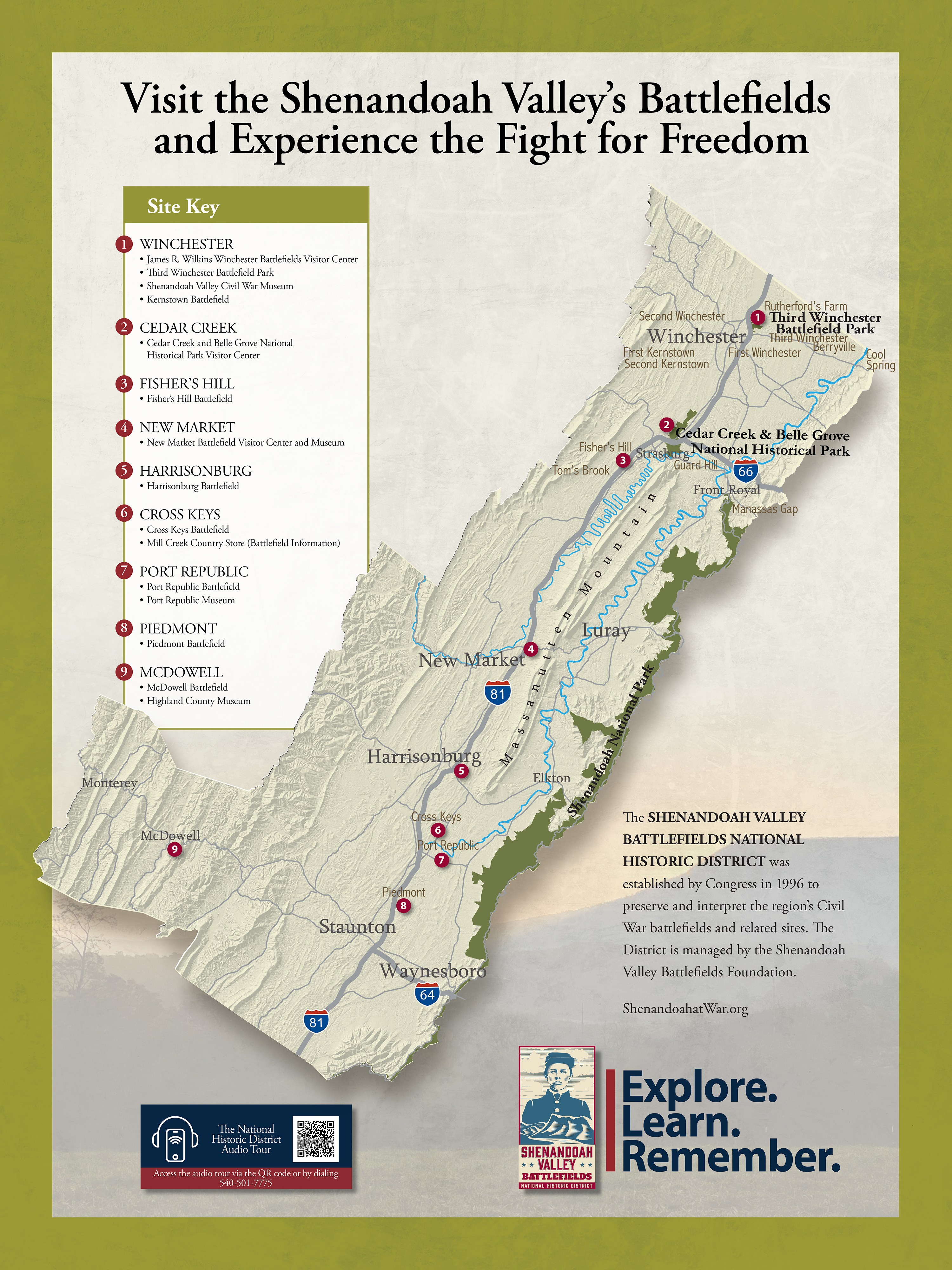
Directions to this stop
DIRECTIONS TO VISITOR CENTERContinue the tour
First Battle of Kernstown First Battle of Winchester Second Battle of Winchester Battle of Rutherford's Farm Second Battle of Kernstown Third Battle of Winchester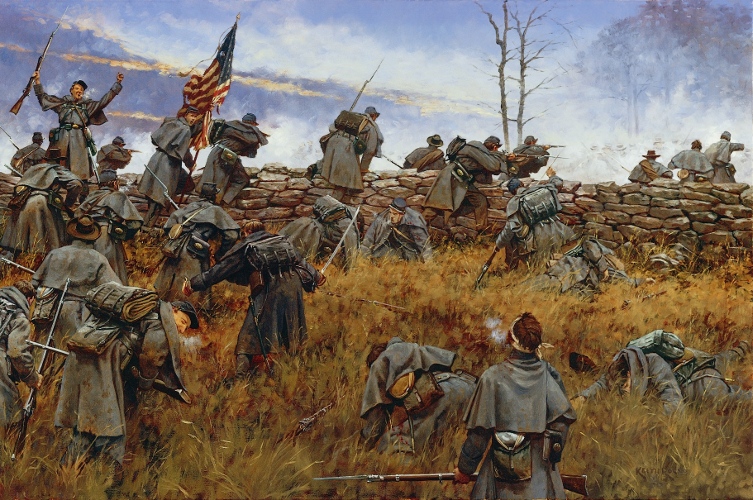
First Battle of Kernstown
This audio tour stop made possible by Wayne and Joy Jordan
This stop is in the Ritchie Interpretive Plaza at the James R. Wilkins Winchester Battlefields Visitor Center, 541 Redbud Road, Winchester, Virginia. Stops 1–7 introduce the district and six area battles.
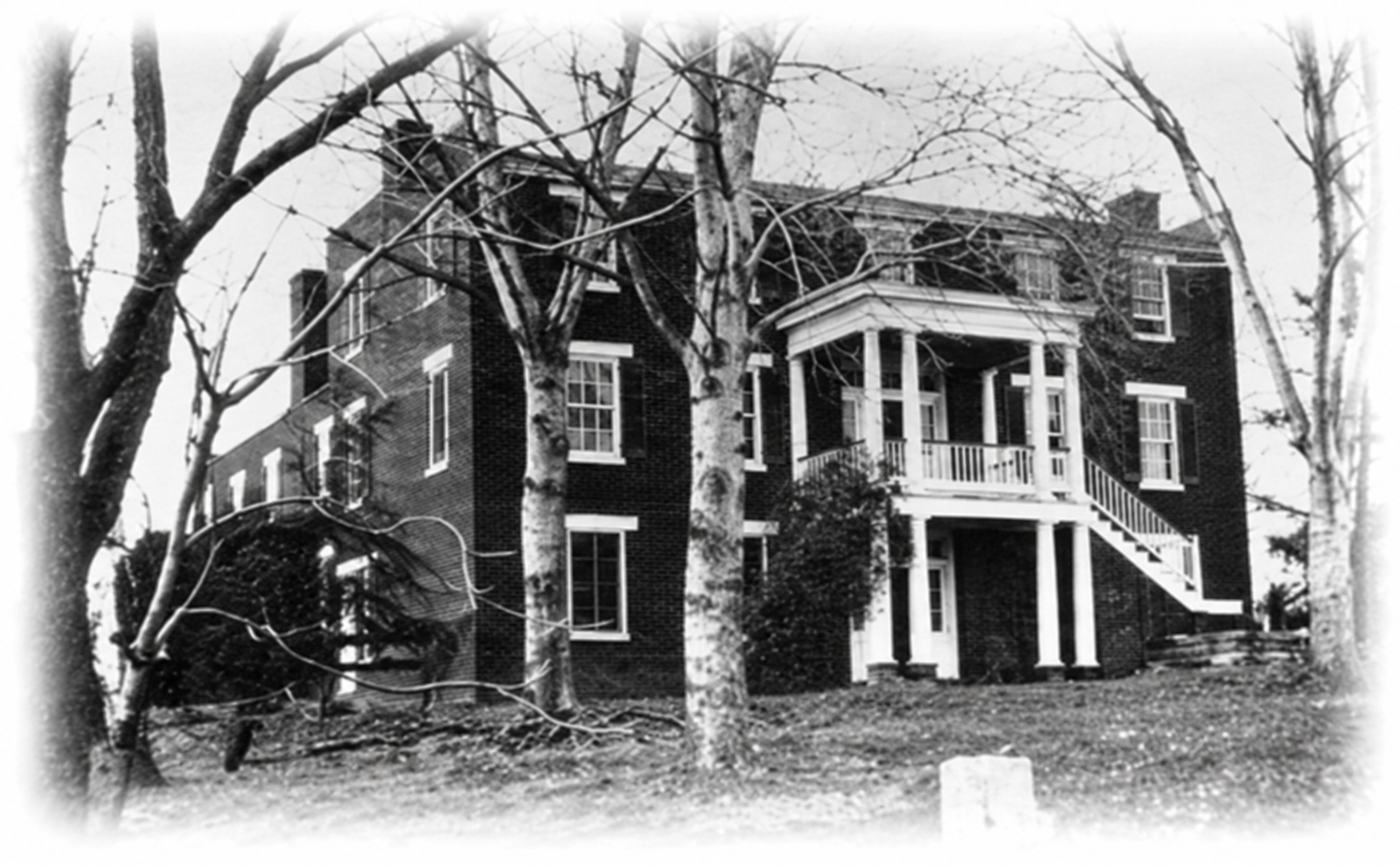
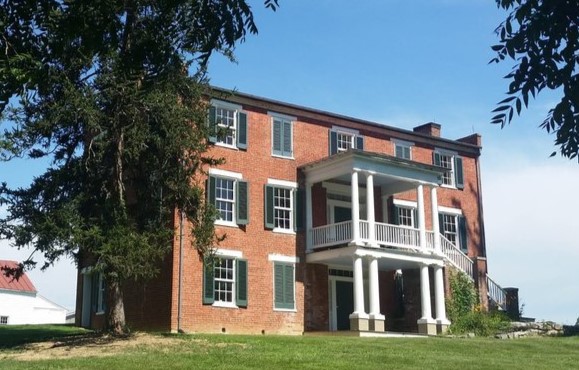
Two views of the site
Jackson’s campaign begins
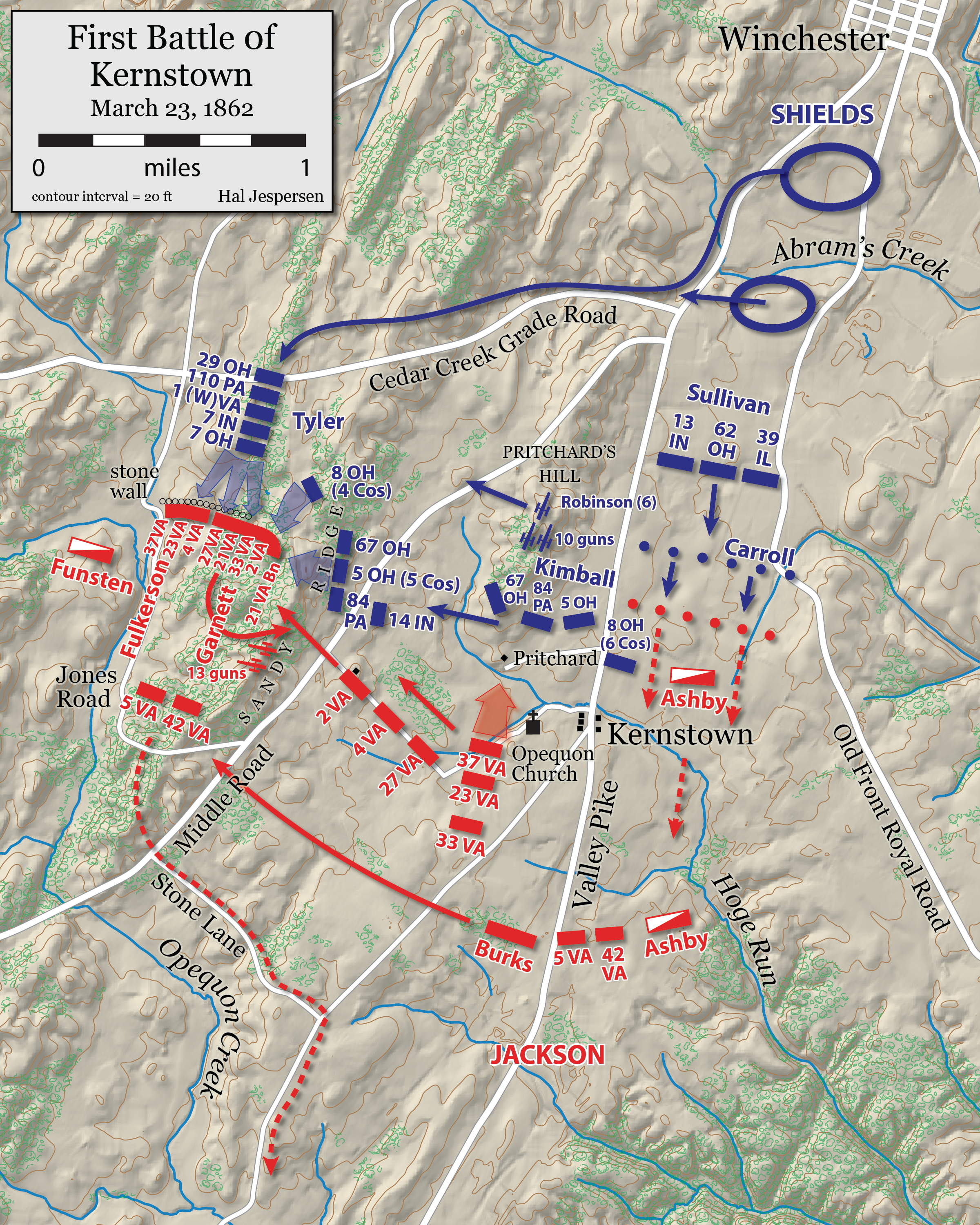
The First Battle of Kernstown was the first battle of Confederate General Thomas Stonewall Jackson's 1862 Valley Campaign. While Jackson suffered his only defeat as a commander, the Union response to Jackson's aggression would turn into a strategic victory. On March 11, 1862, Jackson evacuated Winchester and withdrew south when a larger Union force under Union General Nathaniel Banks approached the city. Banks forces occupied the city on March 12, however, when Banks was ordered to send one of his two divisions east, local residents mistakenly believed he was evacuating his entire command and relayed this faulty intelligence to Jackson who had already begun to march back north towards Winchester.
As Jackson's small army of approximately 3,500 men marched north from Mount Jackson on March 22, Confederate cavalry commanded by Colonel Turner Ashby engaged elements of Union General James Shields's division on the southern outskirts of Winchester. Shields was wounded by a shell fragment during the action, which meant that Union Colonel Nathan Kimball would command the Federals on the field the next day. The skirmish on the 22nd, as well as intelligence gathered from civilians, prompted Ashby to believe that Union forces were leaving the Valley and that only a token force remained behind.
Based on Ashby's information, which later proved incorrect, Jackson planned to attack. On the morning of March 23, Jackson arrived in force and engaged the men of Shields's division, now commanded by Colonel Nathan Kimball at Kernstown. In an effort to hold the position, Kimball placed 16 Union cannons atop Pritchard's Hill, a commanding piece of high ground west of the Valley Pike. When Jackson realized the size of the Union army, he told an aide, Say nothing about it.
We are in for it. Aware that a direct frontal assault against Pritchard's Hill would yield no success, Jackson determined to dislodge the Federals by flanking the position west from Sandy Ridge. Kimball reacted quickly and ultimately countered the Confederate efforts. After hours of desperate fighting on Sandy Ridge, Jackson's men, running low on ammunition and unable to withstand the pressure of Union attacks, withdrew south. After the Union victory, General Shields, who was not on the field during the battle, informed superiors that his division had defeated a Confederate force of at least 15,000 men.
That embellishment turned Kernstown into a strategic success for the Confederacy. Abraham Lincoln believed that Washington, D.C. was in danger of attack and redirected 20,000 Union troops, initially intended to support offensive operations against Richmond to deal with Jackson in the Shenandoah Valley.
Directions to this stop
This stop is located in the Ritchie Interpretive Plaza adjacent to the Winchester Battlefields Visitor Center. Click below for directions.
DIRECTIONS TO VISITOR CENTER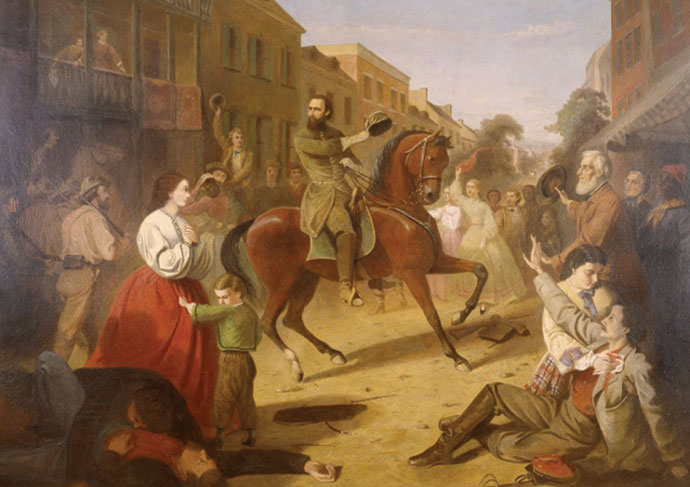
First Battle of Winchester
This audio tour location made possible by Childs and Elaine Burden
This stop is in the Ritchie Interpretive Plaza at the James R. Wilkins Winchester Battlefields Visitor Center, 541 Redbud Road, Winchester, Virginia. Stops 1–7 introduce the district and six area battles.
Victory at Winchester
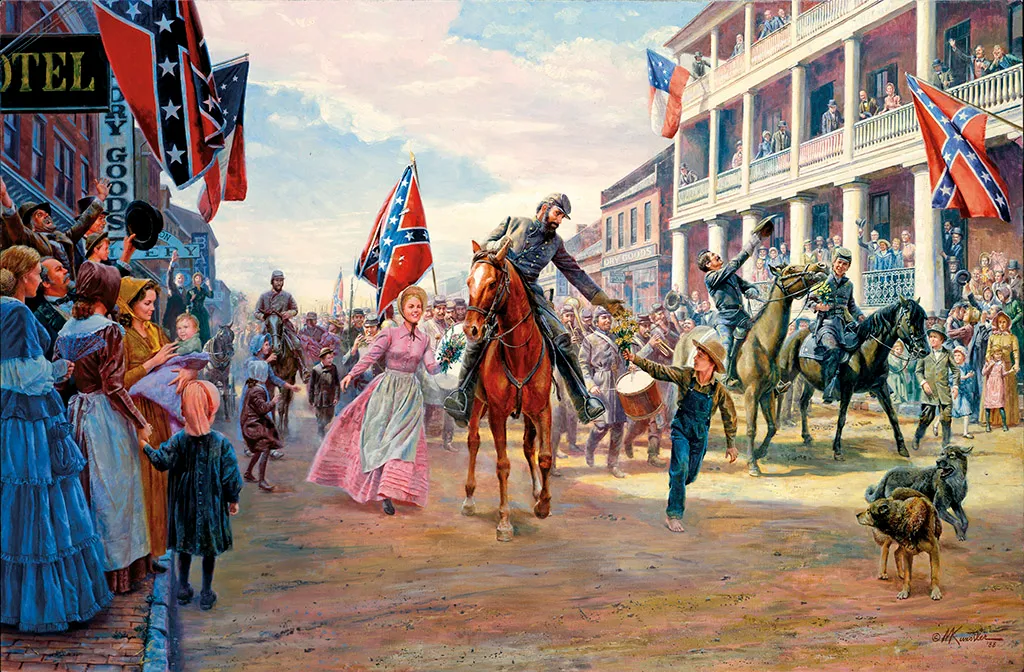
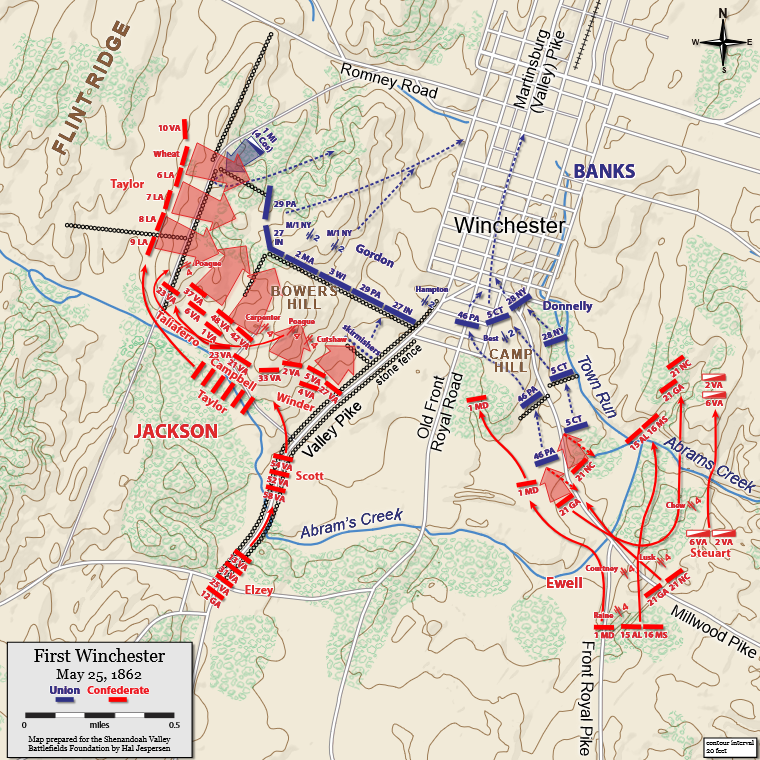
The First Battle of Winchester was one of the high points of Confederate General Stonewall Jackson's Valley Campaign and a decisive southern victory that drove Union troops out of the valley and disrupted northern efforts to capture Richmond. After Jackson destroyed a small Union force at Front Royal on May 23, 1862, he attempted to cut off Union General Nathaniel Banks's army as it retreated north from Strasbourg to Winchester on May 24.
But most of the Federals escaped reaching Winchester with Jackson in close pursuit. By nightfall on May 24, Banks's men were in a defensive position on high ground, south of the city braced for the advancing Confederates. Jackson's attack commenced at daybreak on May 25. He divided his command by taking part of his force along the valley pike while sending General Richard Ewell's division on the Front Royal Road to strike the Union left.
On the east, Ewell's attack was turned back by heavy fire from Union forces deployed behind stone walls to the west. The famous Stonewall Brigade attacked Bower's Hill but ran into a hailstorm of lead and iron from Union defenders that stopped them in their tracks. With his first attack stymied, Jackson decided to hit the other federal flank and sent General Richard Taylor's brigade of Louisianans reinforced by two additional regiments circling around to the west.
Taylor's men took heavy fire as they marched into position. One Confederate recalled that the cannon shots almost took off our hats during the march. Reaching a position that overlapped the Union flank, Taylor formed his 2,000 men into a line of battle 1,000 yards long and then charged forward. As the Confederates swept up the hill, one Union regiment was mistakenly withdrawn and soon the entire flank collapsed. Ewell joined in with renewed attack on the other flank and Banks's entire line crumbled.
As Union soldiers fled through the streets of Winchester, some civilians fired at the Northerners themselves and some soldiers replied in kind. Jackson's men pursued the Federals north of the city but with insufficient cavalry and a weary army, Banks was able to escape. Jackson's men were also slowed by pro-Confederate civilians who poured into the streets to welcome them. When Jackson continued north to the Potomac River, Abraham Lincoln redirected Federal troops to cut him off and by doing so, Lincoln inadvertently fulfilled Jackson's goal of drawing Union forces away from the campaign against Richmond.
Forces that might have helped Federals capture the Confederate capital.
Directions to this stop
This stop is located in the Ritchie Interpretive Plaza adjacent to the Winchester Battlefields Visitor Center. Click below for directions.
DIRECTIONS TO VISITOR CENTERLearn more
The Nurses Didn't Run - Civil War Story
Open video in a new tab →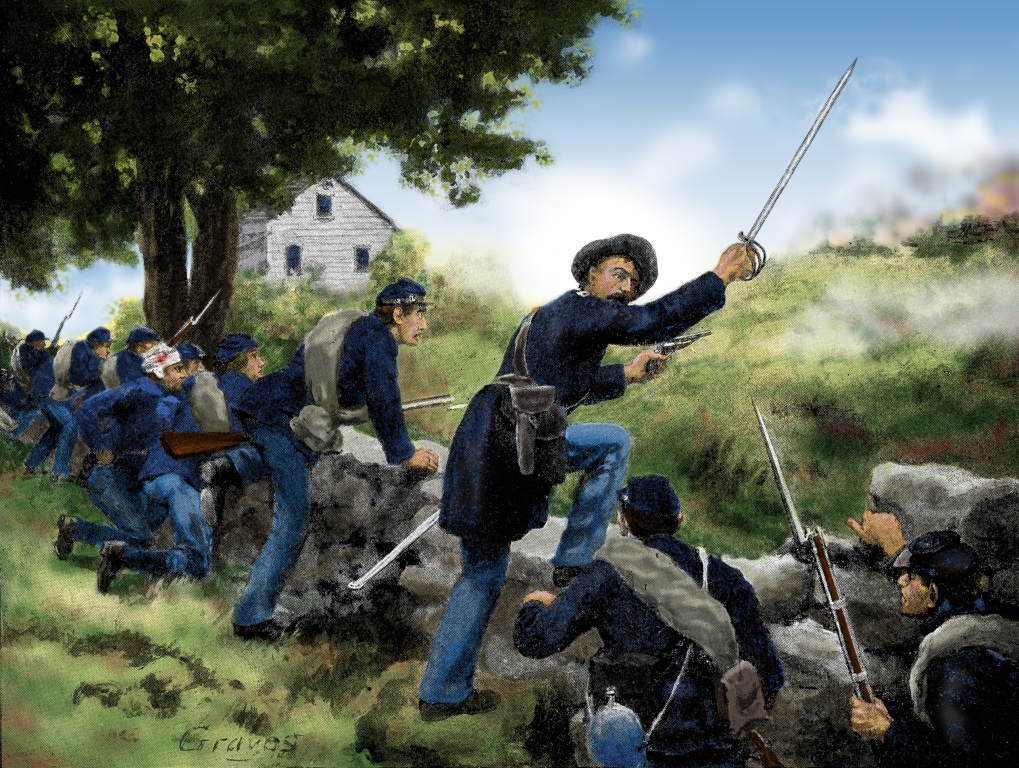
Second Battle of Winchester
This audio tour stop made possible by Dennis Kubicki and White Eagle Consultants
This stop is in the Ritchie Interpretive Plaza at the James R. Wilkins Winchester Battlefields Visitor Center, 541 Redbud Road, Winchester, Virginia. Stops 1–7 introduce the district and six area battles.
The road to Gettysburg
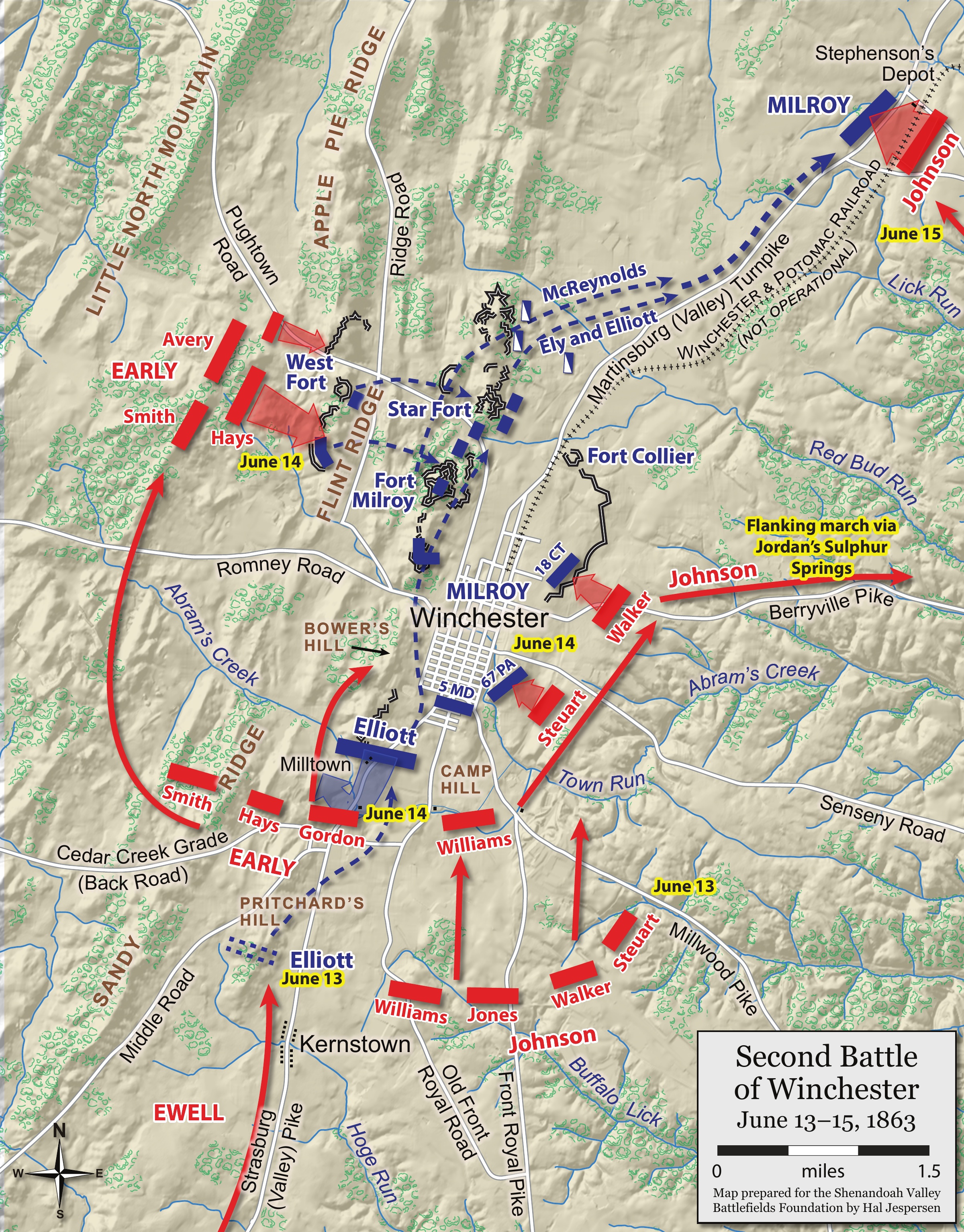
The Second Battle of Winchester, fought on June 13th through the 15th of 1863, opened the door for Confederate General Robert E. Lee's invasion of Pennsylvania that culminated in early July at the Battle of Gettysburg. As Lee prepared to move north in June of 63, he ordered his second corps under General Richard Ewell to clear the northern Shenandoah Valley of Federal Opposition. Ewell's 14,000-man veteran force crossed into the valley on June 12th and converged on Union General Robert H.
Milroy and his relatively inexperienced 8,700-man garrison here at Winchester. Milroy mistakenly believed that the oncoming Confederates for a mere raiding party and stubbornly ignored repeated directives from his superiors to abandon Winchester. He was determined to make a stand and was confident in the strength of his fortifications. He and his men would pay a heavy price for this decision. After initial fighting south of Winchester on June 13th, Milroy pulled his forces back and concentrated them in a triangle formed by three forts, Fort Milroy, West Fort, and Star Fort.
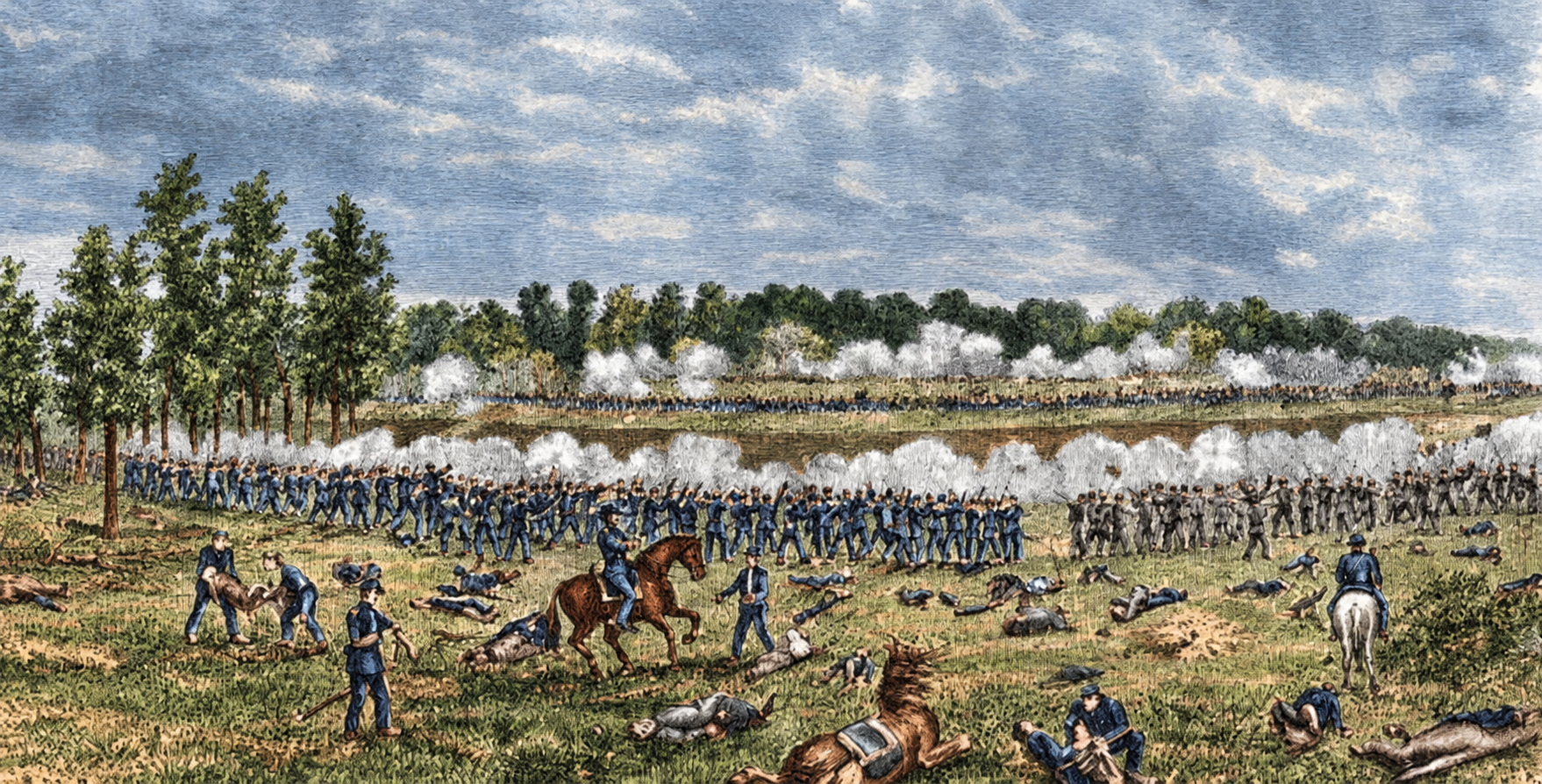
At dawn on June 14th, Ewell sent Confederate General Jubal A. Early's division on a flanking march to the west, out of sight of the Union forces. At 6 p.m., Early unleashed a devastating artillery barrage on West Fort. Under the cover of the artillery fire, Confederate General Harry T. Hayes Louisiana Tigers swept into the works. After a brief hand-to-hand struggle, the Union defenders abandoned the fort, retreating to the other fortifications.
With West Fort now in Confederate hands, the other Union positions were vulnerable. After dark, Milroy abandoned his remaining entrenchments in an attempt to cut his way through to Harper's Ferry. Ewell had anticipated that move, however, and sent Confederate General Edward Allegheny Johnson's division on a night march, and before daylight on June 15th, cut off Milroy's retreat just north of Winchester. The Federals attempted to break out, but despite furious fighting, their efforts failed.
Milroy's force was effectively destroyed, with Milroy himself forced to flee to avoid capture. Ewell's triumph was complete. Milroy lost more than 4,600 soldiers, mostly as prisoners of war, while the Confederates lost only about 300 men. The stunning Confederate victory cleared the Valley of Federal Troops, and by the end of the fighting, the Southerners had an unimpeded path north to Pennsylvania, a path that would ultimately lead them to defeat at Gettysburg.
Directions to this stop
This stop is located in the Ritchie Interpretive Plaza adjacent to the Winchester Battlefields Visitor Center. Click below for directions.
DIRECTIONS TO VISITOR CENTERLearn more
Flank Assault at 2nd Winchester - Civil War Battlefield Visit
Open video in a new tab →Learn more
The Maid of Winchester: Civil War Story
Open video in a new tab →
Battle of Rutherford's Farm
This audio tour stop made possible by Dr. Michael Howard Chancey
This stop is in the Ritchie Interpretive Plaza at the James R. Wilkins Winchester Battlefields Visitor Center, 541 Redbud Road, Winchester, Virginia. Stops 1–7 introduce the district and six area battles.
A Union victory in the Valley
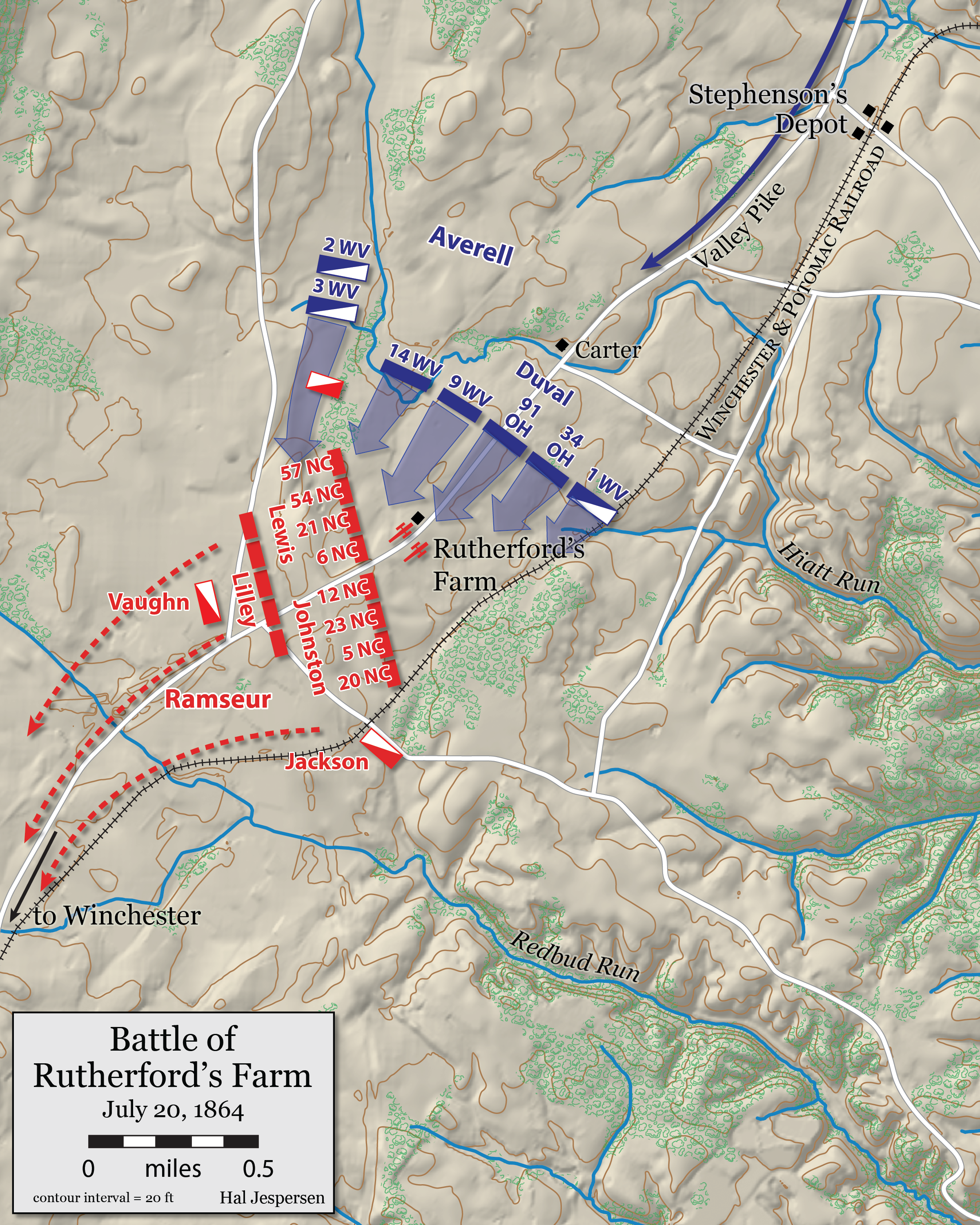
The Battle of Rutherford's Farm, fought on July 20, 1864, was a rare Union victory in the Valley during a steady stream of defeats at the hands of Confederate General Jubal Early. Early had invaded the North at the beginning of July, advancing to the outskirts of Washington, D.C., before the arrival of Union reinforcements compelled him to withdraw back into Virginia. When Federals under General Horatio Wright pursued and caught up with the Confederates along the Shenandoah River, Early defeated them at the Battle of Cool Spring on July 17 through the 18th, then continued moving west toward Winchester, still followed cautiously by Wright.
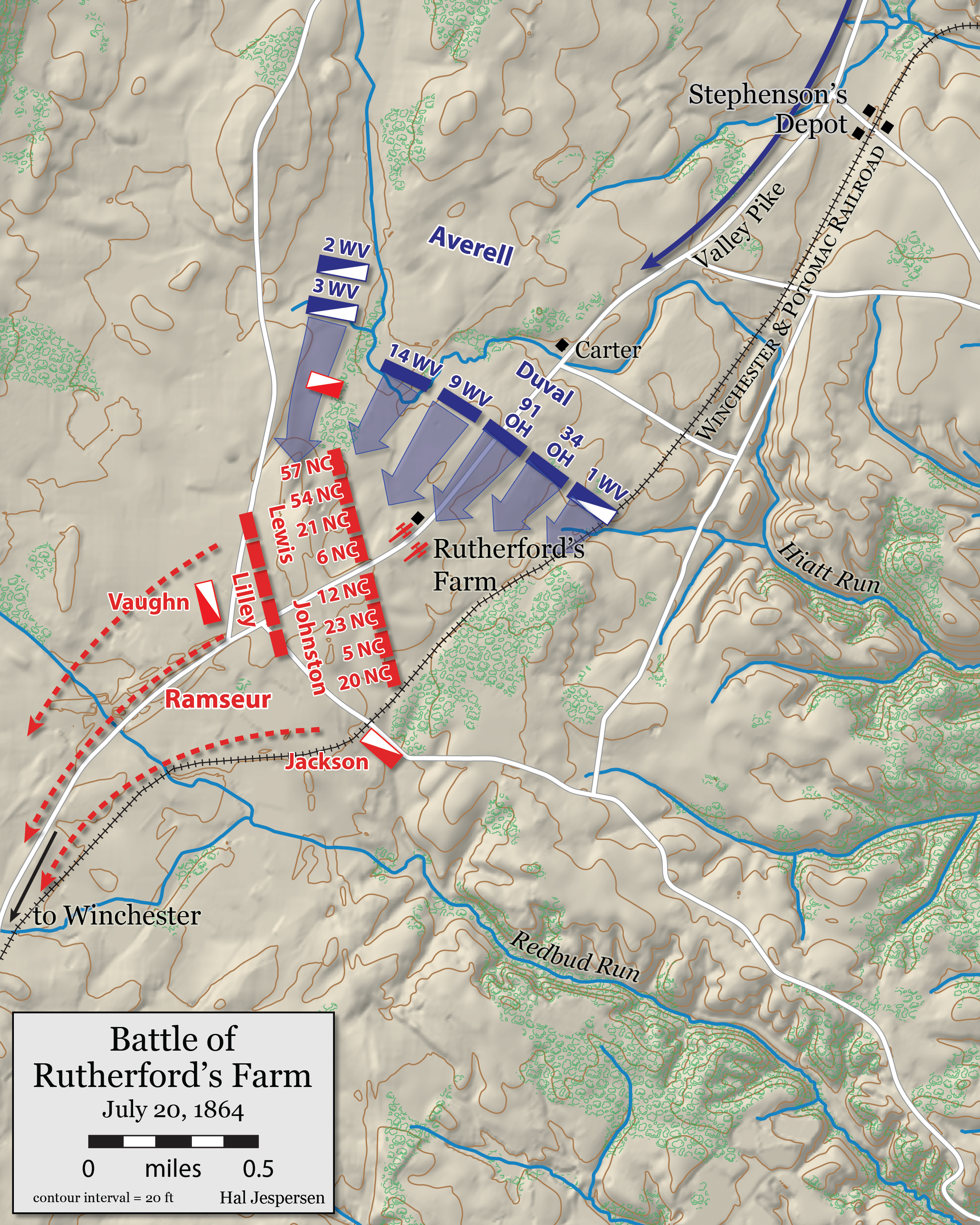
As he approached Winchester, Early was also threatened from the north by additional Federal troops under General William Averell, who were moving south from Martinsburg. Facing threats from multiple directions, Early turned his main force south toward Strasburg, but sent General Stephen Ramseur's division to block Averell. Ramseur took up position on the Valley Turnpike, about two miles north of Winchester. Around 4 p.m. on July 20, Ramseur heard firing to his north.
Ramseur had been ordered to stay on the defensive, but he believed that he outnumbered the Federals and moved north, preparing to launch an assault. Ironically, the Federal commanders, whose view of the advancing Confederates was blocked by the woods, also underestimated the size of their opponents and launched an attack themselves, preempting Ramseur's plans. At first, the Confederate line held firm against the advancing Federals, throwing back an attack along the Turnpike and on the Confederate right.
But the Union right flank soon overlapped the Confederate left, and Federal infantry and cavalry crashed into their vulnerable flank, shattering the end of the Confederate line. The southern defenses began to collapse and retreating men streamed through the ranks of those who tried to stand. Despite Ramseur's efforts to stem the tide, the retreat became a rout. Confederate Colonel Charles Blackwell said, “This was the first time that Yankees ever saw my back.
But it was run or die, and of course, we preferred the former.” The Confederates retreated towards Winchester in confusion, with the Federals capturing four pieces of artillery and nearly 300 men. While their victory temporarily boosted the spirits of the Federals, it had little long-term impact on the campaign. In response to this setback and converging threats, Early withdrew to Fishers Hill, some 20 miles south. Early's withdrawal convinced Wright that he had accomplished his task of driving off the Confederate invaders.
He therefore ordered much of his army to return to Alexandria, where they would be transported to join General Ulysses Grant and the Army of the Potomac. Wright left General George Crook with three small infantry divisions and a cavalry division in Winchester to cover the valley. The Federals' opportunity to enjoy their victory at Rutherford's farm would be short-lived. Under a standing directive to prevent Union reinforcements from reaching Grant, Early would be quick to take advantage of Wright's departure just days later at Kernstown.
Directions to this stop
This stop is located in the Ritchie Interpretive Plaza adjacent to the Winchester Battlefields Visitor Center. Click below for directions.
DIRECTIONS TO VISITOR CENTER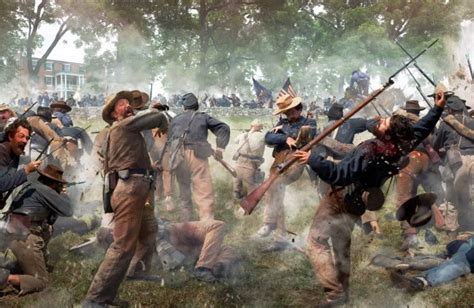
Second Battle of Kernstown
This audio tour stop made possible by The Bowers, Woolf, and Baggett families
This stop is in the Ritchie Interpretive Plaza at the James R. Wilkins Winchester Battlefields Visitor Center, 541 Redbud Road, Winchester, Virginia. Stops 1–7 introduce the district and six area battles.
The last major Confederate victory
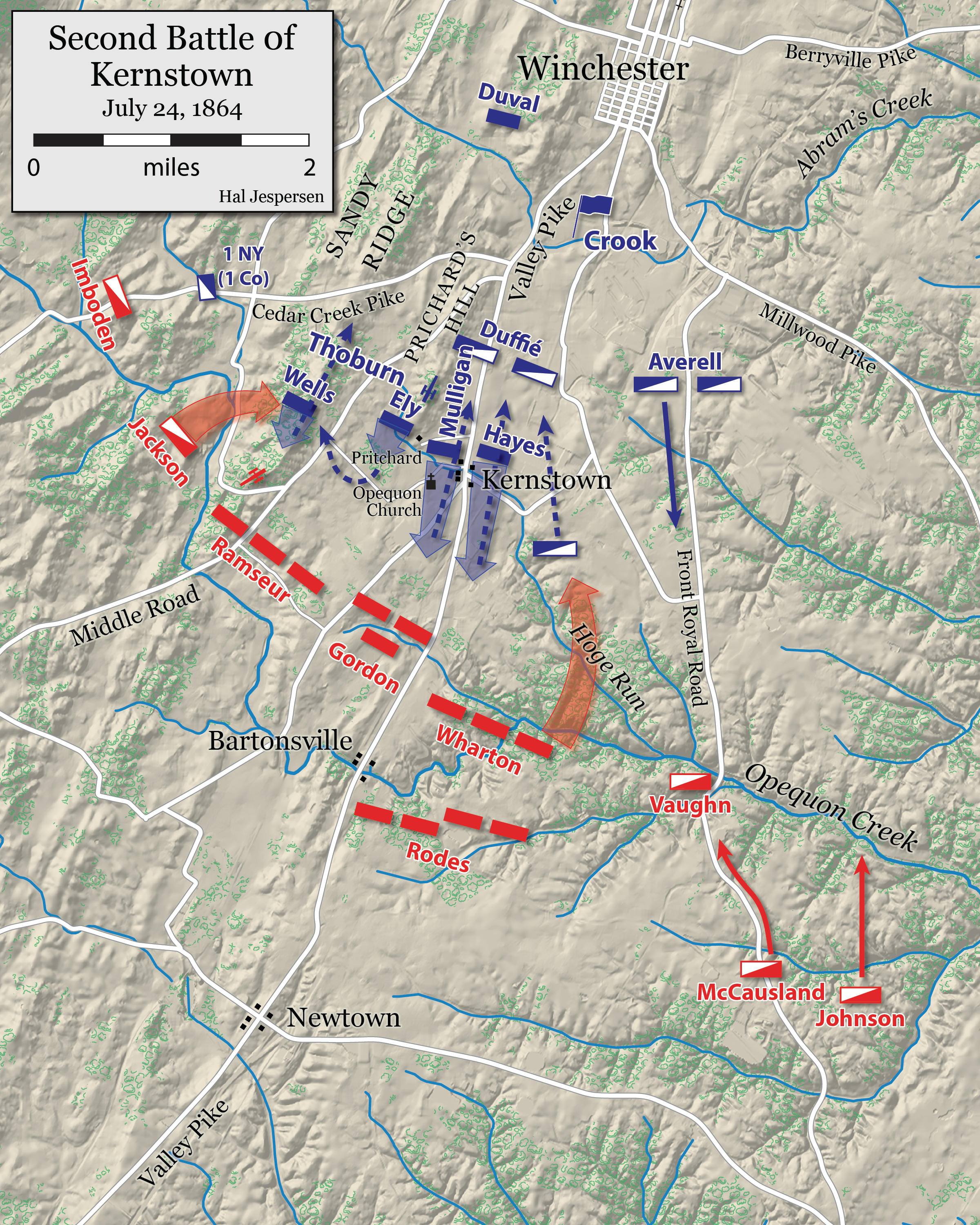
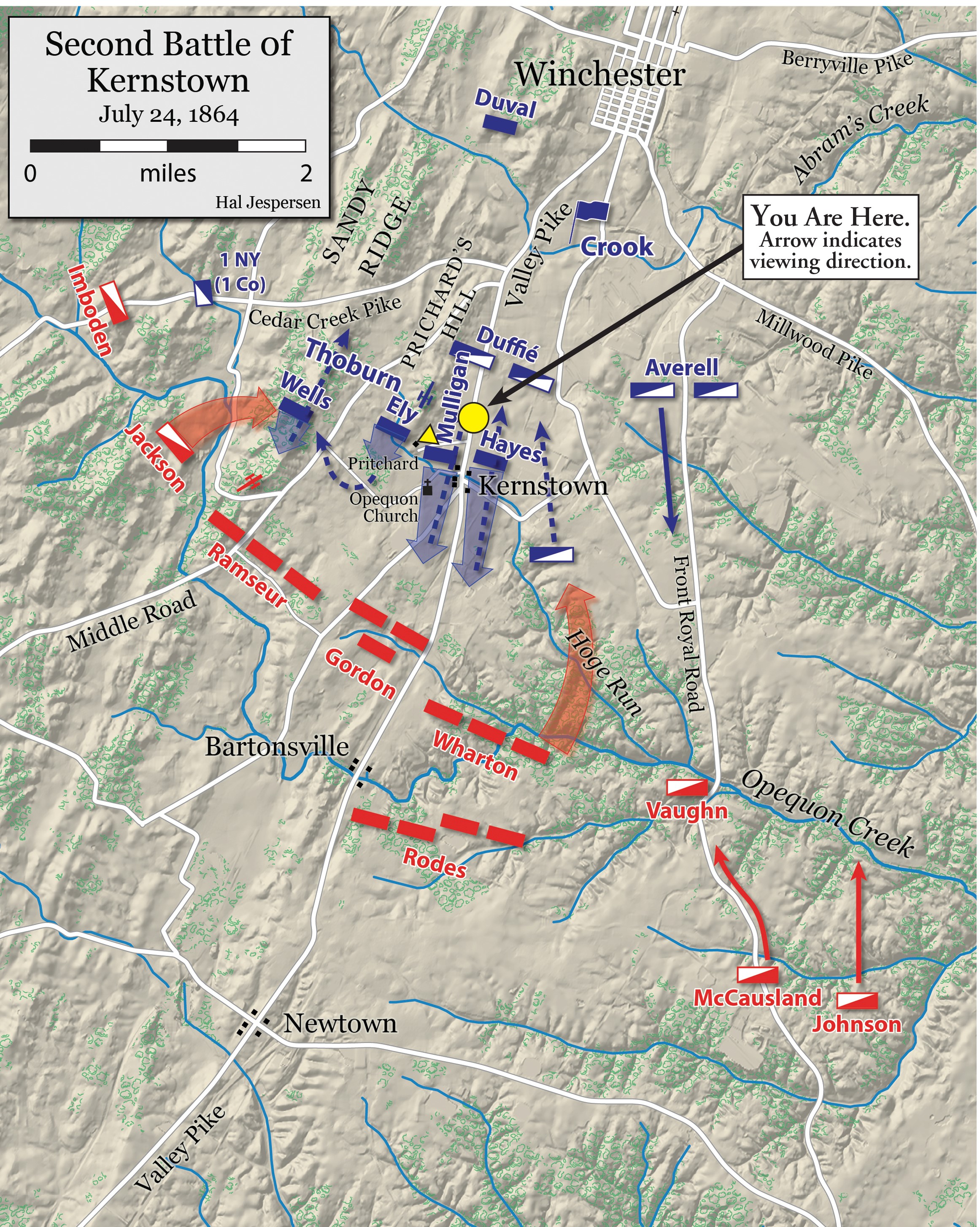
The Second Battle of Kernstown, fought on July 24th, 1864, was the last major Confederate victory in the Shenandoah Valley and a high point for Southern fortunes in 1864. After federal troops defeated one of Confederate General Jubal Early's divisions at the Battle of Rutherford's Farm north of Winchester on July 20th, Early withdrew 20 miles south to Fishers Hill. Believing that Early's army was no longer a threat in the Shenandoah Valley, Union General Horatio Wright abandoned his pursuit and ordered the bulk of his force to return to Washington, where they were to be sent to join General Ulysses S.
Grant's federal forces at Petersburg. Wright left General George Crook with three federal divisions in the Valley and some cavalry to hold Winchester. Early, under orders to prevent reinforcements from being sent to Grant, marched north to attack Crook at Kernstown on July 24th. Crook's forces were positioned on the high ground of Pritchard's Hill with Colonel James Mulligan's division at the center. Crook, who believed Early was still retreating southward, discounted reports of the size of Confederate forces and ordered his own smaller force to advance.
Mulligan moved forward to the vicinity of Opequon Church, but after some back-and-forth fighting, was forced back to a position behind a stone wall along Pritchard's Lane. The Confederates followed up aggressively, driving back the forces on both Mulligan's flanks. One Union soldier recalled, “The missiles of death flew thick and fast. It was madness to remain where we were.” When the Federals there broke, one Confederate recalled, “The valley below us seemed to be a dark blue irregular moving mass.”
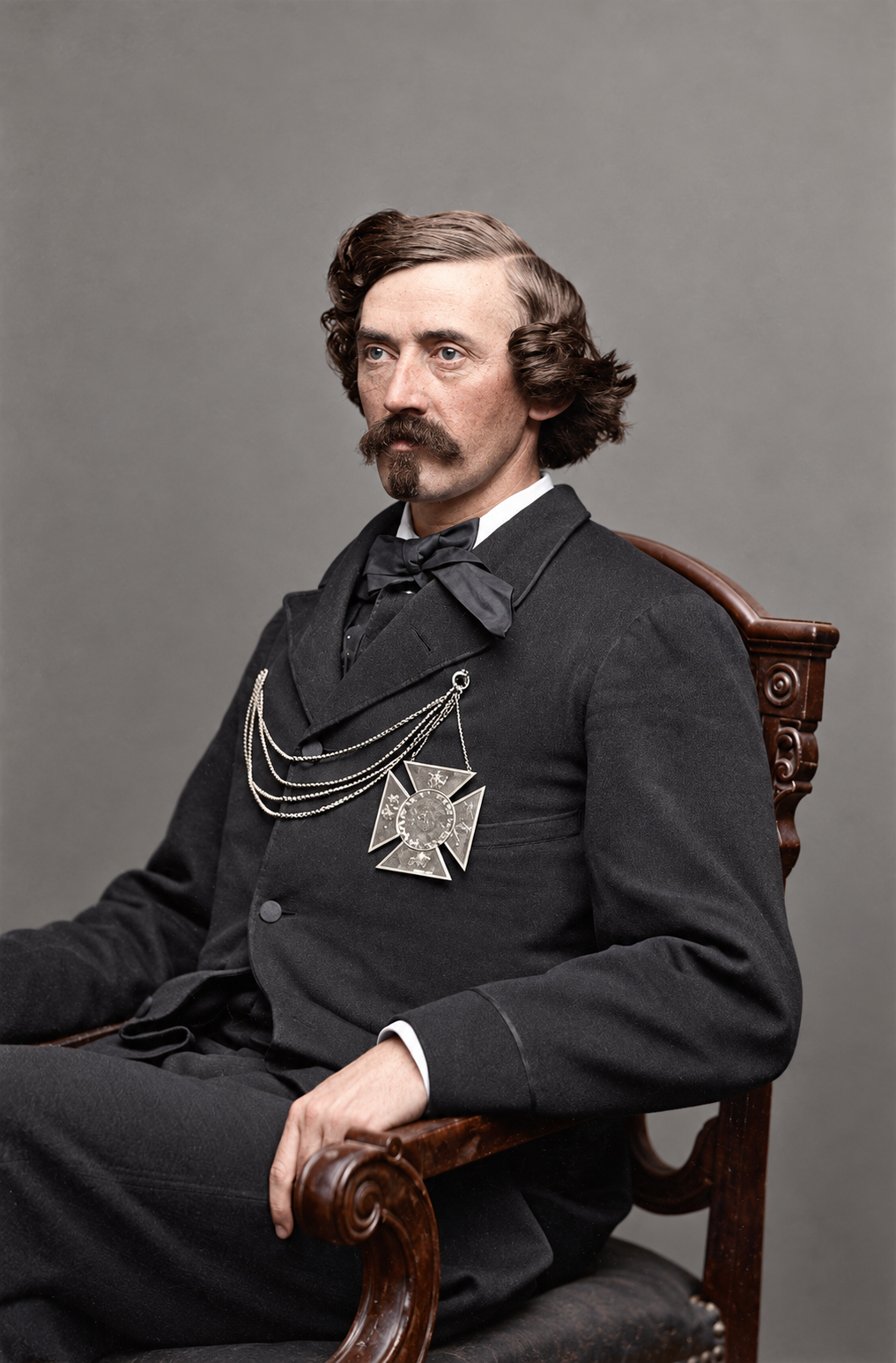
Mulligan was hit from three sides and overwhelmed. Mulligan was mortally wounded, hit multiple times, and the entire Union line collapsed. Crook's divisions streamed back in disarray through the streets of Winchester. During the fighting, future U.S. President Rutherford B. Hayes commanded a federal brigade that fought against the division of Confederate General John C. Breckinridge, a former U.S. Vice President. Crook retreated north, crossing the Potomac River into Maryland.
Early followed up by sending his cavalry on a raid into Pennsylvania, where they demanded ransom of $100,000 in gold from the town of Chambersburg and burned the town when they refused to pay. Early's exploits had far-reaching consequences. They not only drew troops away from the Union effort to capture Richmond, but they also endangered Abraham Lincoln's re-election that November. In response, Union leaders dispatched General Philip Sheridan to the valley to take command of a greatly reinforced army with orders to end Confederate control of the region once and for all.
The final act of the struggle for the valley was about to begin, bringing with it a level of combat and destruction that would dwarf everything seen there before.
Directions to this stop
This stop is located in the Ritchie Interpretive Plaza adjacent to the Winchester Battlefields Visitor Center. Click below for directions.
DIRECTIONS TO VISITOR CENTER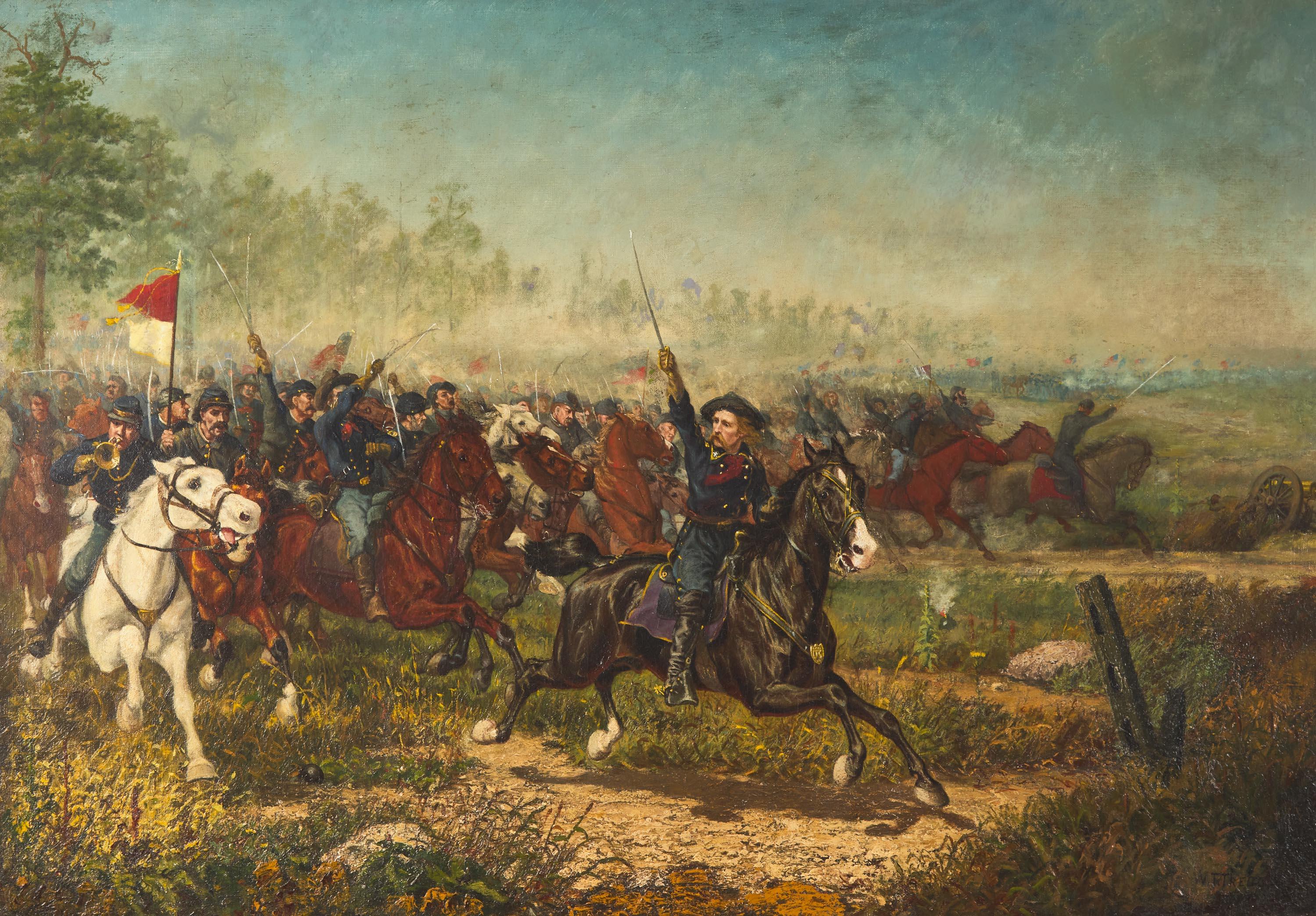
Third Battle of Winchester
This audio tour stop made possible by Alexander MacLeod
This stop is in the Ritchie Interpretive Plaza at the James R. Wilkins Winchester Battlefields Visitor Center, 541 Redbud Road, Winchester, Virginia. Stops 1–7 introduce the district and six area battles.
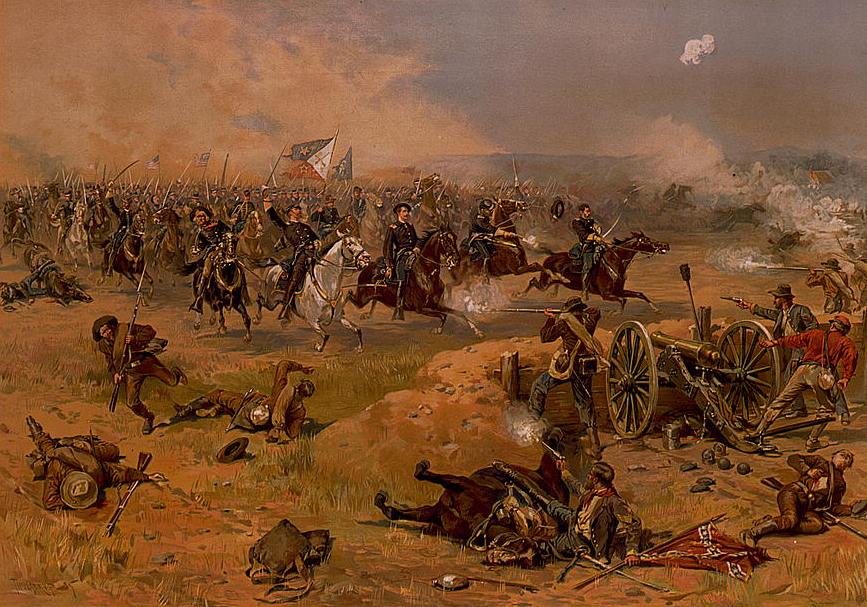
A turning point in the Valley
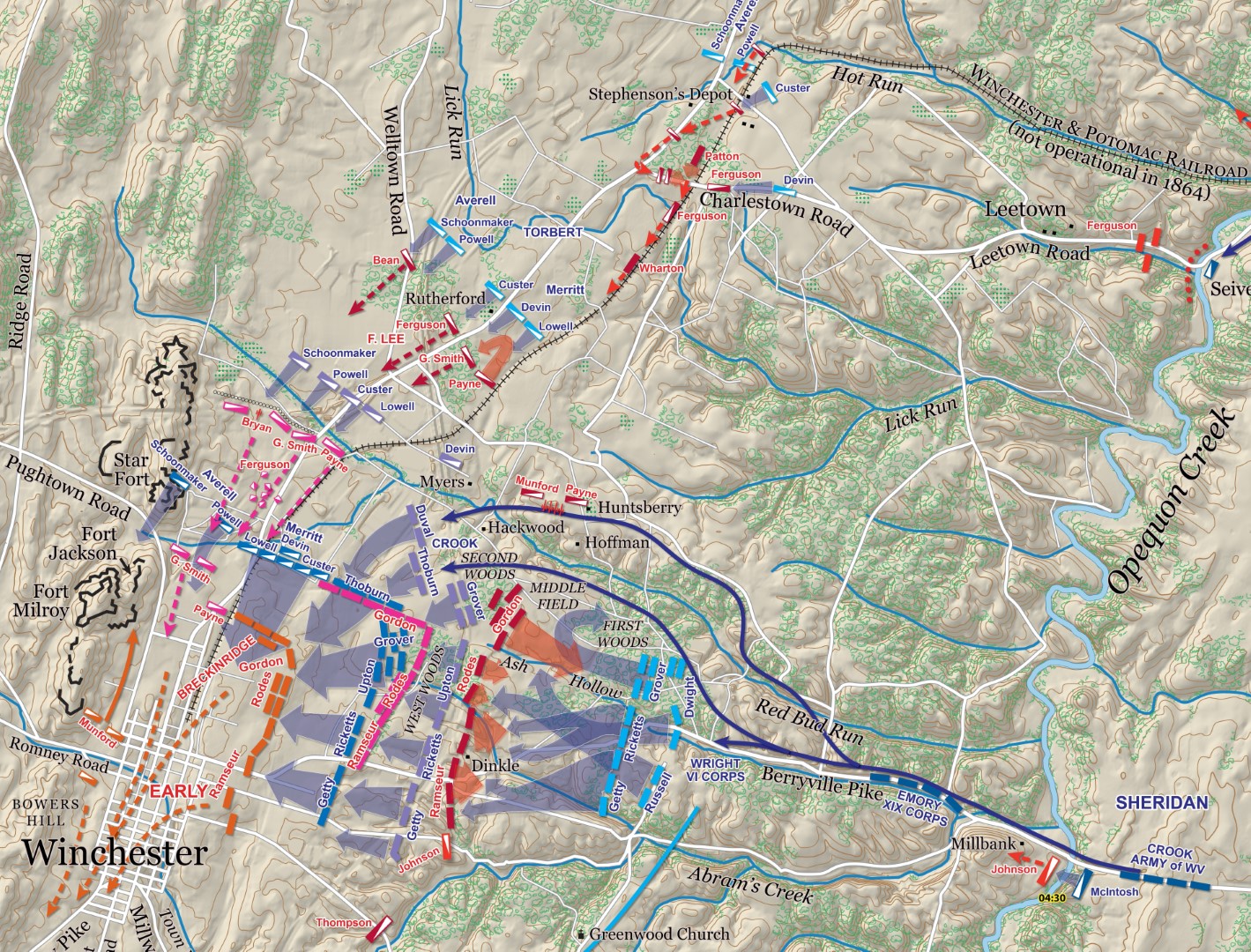
The Third Battle of Winchester, also known as the Battle of Opequon, was one of the pivotal battles of the Civil War, beginning a string of Union victories that would enable the Federals to seize permanent control of the Shenandoah Valley. In August of 1864, Union General Philip Sheridan was sent to the Shenandoah Valley to bring an end to Confederate control of the region. Uncertain of the size of Confederate General Jubal Early's army and unwilling to risk a politically disastrous defeat, Sheridan was cautious at first and the initial skirmishes between opposing forces were relatively small and indecisive.
Early mistakenly believed that Sheridan's caution reflected a lack of aggressiveness and felt safe in dividing his forces between Winchester and Martinsburg, some 20 miles to the north. Learning about Early's risky maneuvers and that one of his divisions had left for Richmond, Sheridan moved to attack Early on September 19th. But his slow advance through the narrow Berryville Canyon delayed his attack by hours and gave Early time to concentrate his forces.
The battle that followed raged all day on the hills east and north of Winchester, reaching levels of combat and ferocity that had never been seen in the valley. One Confederate soldier said, “Third Winchester was one of the hottest times I'd ever seen. Gettysburg could not hold a light while it lasted.” More than 54,000 men fought and over 8,600 of them became casualties in a ferocious seesaw struggle that saw the Confederates gradually forced back to the city until a final decisive attack by Federal infantry and cavalry struck the Confederate left flank, breaching the defenders’ lines and sending the Confederates whirling through Winchester.
The Third Battle of Winchester spelled the beginning of the end for the Confederate supremacy in the Shenandoah Valley. Additional northern victories at Fishers Hill, Tom's Brook, and Cedar Creek, coupled with the devastation of the region's agricultural bounty in the burning, gave the Union permanent control of the Valley, aided Abraham Lincoln's re-election, and helped speed the surrender of Robert E. Lee and the Army of Northern Virginia at Appomattox the following spring.
Directions to this stop
This stop is located in the Ritchie Interpretive Plaza adjacent to the Winchester Battlefields Visitor Center. Click below for directions.
DIRECTIONS TO VISITOR CENTERLearn more
Thomas Laws - Civil War Intelligence gathering - Fridays at the Front
Open video in a new tab →Learn more
Breathed's Confederate Battery - Battle of 3rd Winchester
Open video in a new tab →Learn more
Caught in the Mud - future President Rutherford B. Hayes
Open video in a new tab →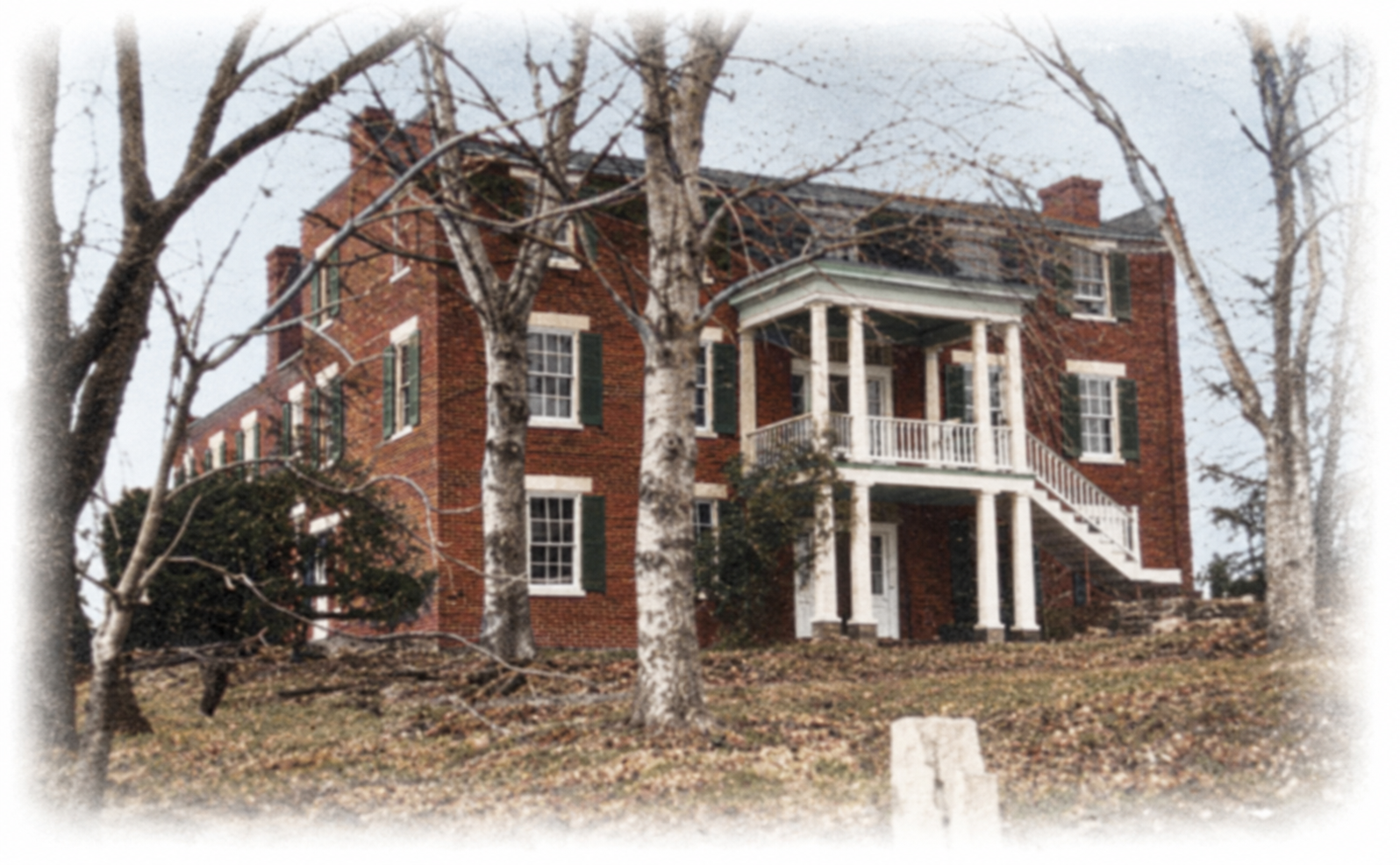
The Pritchard-Grim Farm (First Kernstown)
This audio tour stop made possible by Steve and Susan Chesley
Two views of the site
The fight for Pritchard’s Hill
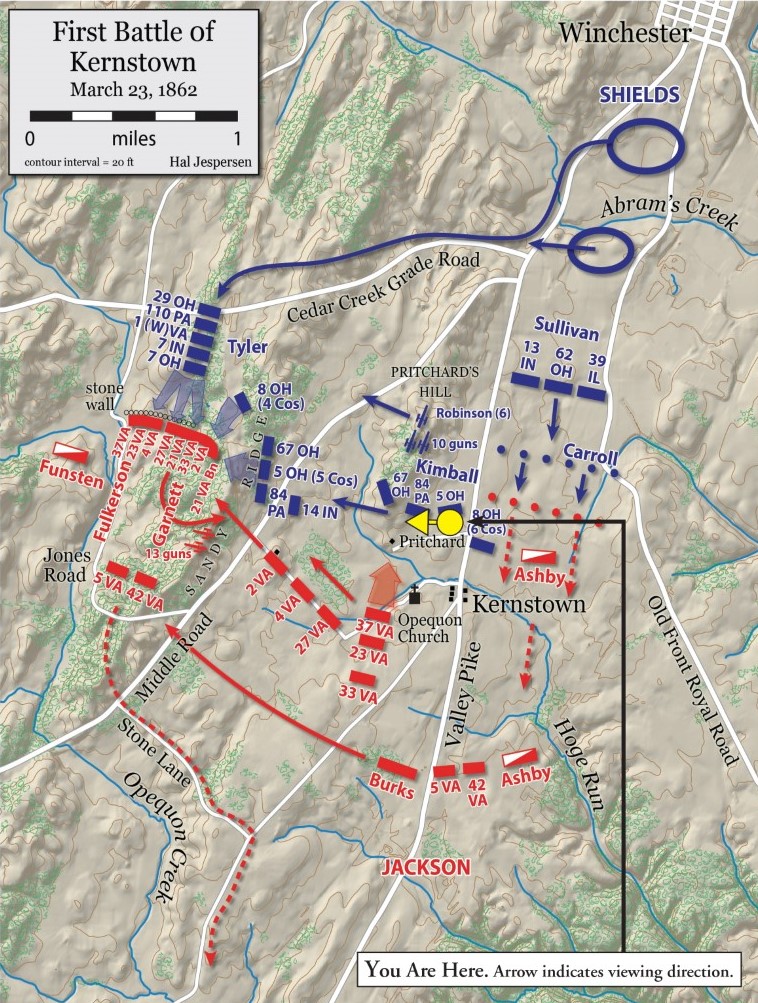
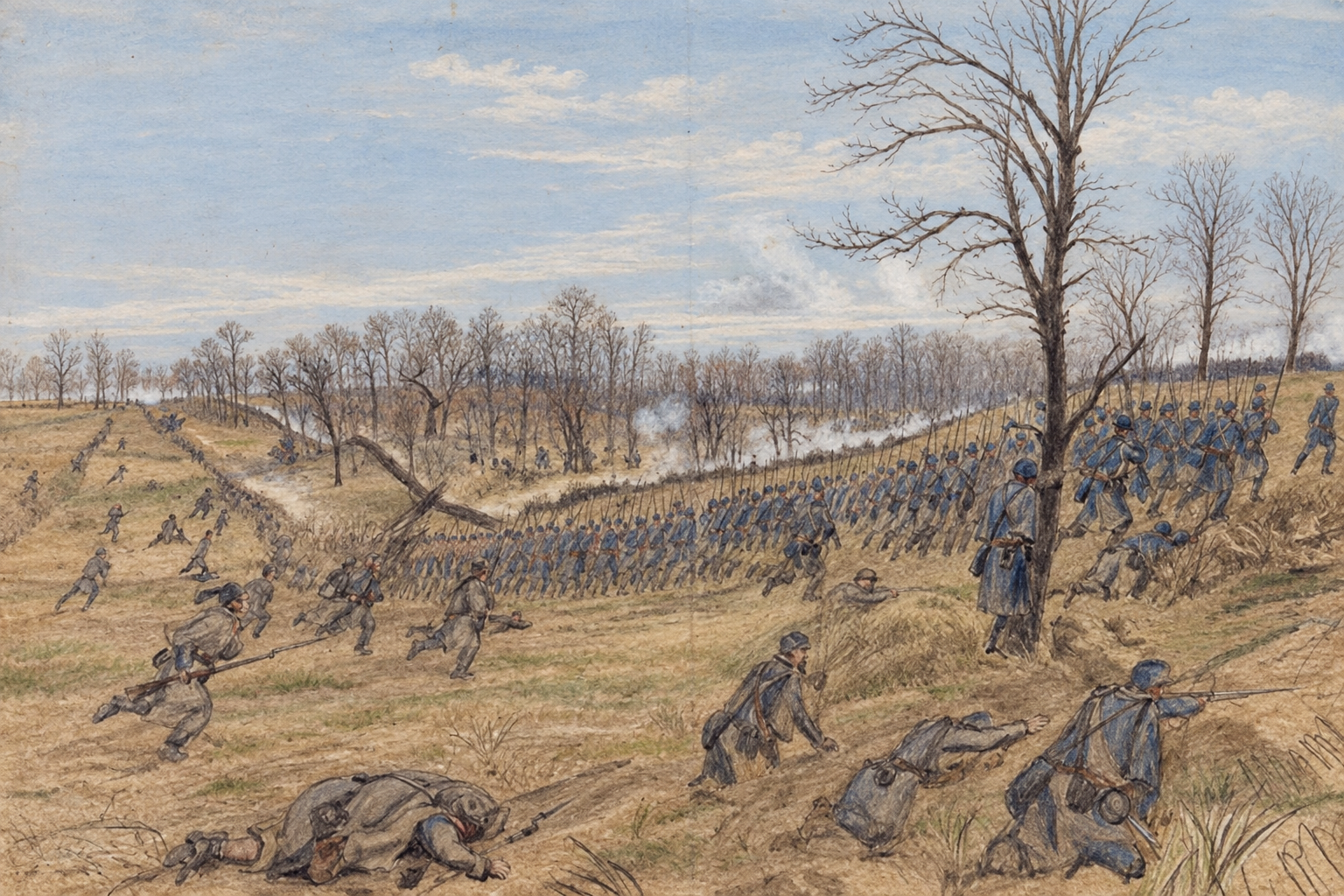
You are standing on the grounds of the historic Pritchard Farm. The fight on Pritchard’s Hill was the fight that sparked Stonewall Jackson’s 1862 Valley Campaign. In March of 1862, Jackson moved his small force toward Winchester believing that the town had been almost completely evacuated. Jackson’s intelligence proved to be wrong and Jackson’s small force of about 3,800 men now faced an entire Union division of 8,000 men. The Federal soldiers here on the morning of March 23, 1862, were expecting a battle and at 9 am they were fired on by Col. Turner Ashby’s artillery.
Two brigades of the Union division were under the command of Col. Nathan Kimball. They occupied Pritchard’s Hill and placed 10 rifled artillery guns on the frontline.
Meanwhile, 2,500 Federals under Col. Jerimiah Sullivan advanced from your left to your right against a Confederate force consisting of only about 450 men from four companies of the Stonewall Brigade. They were driven back within an hour and held their position. Jackson reached the battlefield around noon about 2 miles to your left and began moving his troops through the woods just before 2 pm. Jackson’s primary objective wasn’t to attack the batteries but to flank them closely enough to reorient the guns and allow the Confederates to claim the high ground.
Three Confederate regiments moved across the open ground but were pummeled by Union artillery and forced to fall back. Within the hour, they advanced upon the hill and Jackson enacted the next part of his plan which was to move his artillery from the Valley Turnpike to the high ground west of Pritchard’s Hill called Sandy Ridge. By 3 pm, Jackson placed 13 cannons on the heights and managed to suppress the Union guns on Pritchard’s Hill.
Union Commander Nathan Kimball sent his reserve brigade on a sweeping mission to drive Jackson’s artillery off Sandy Ridge. What occurred here over the next few hours is a heavy infantry attack that will resulted in over a thousand casualties for both sides. Shortly after sunset, Jackson’s Confederates, facing mounting casualties and running low on ammunition, were forced to withdraw.
Please note that Stop #15 covering the Second Battle of Kernstown is also located here.
Directions to this stop
This stop is located at the entrance to the Kernstown Battlefield located near 3050 Saratoga Dr. Winchester, VA. Click below for directions.
DIRECTIONS TO THIS STOPSandy Ridge
This audio tour stop made possible by Peter Dessauer
The battle on Sandy Ridge
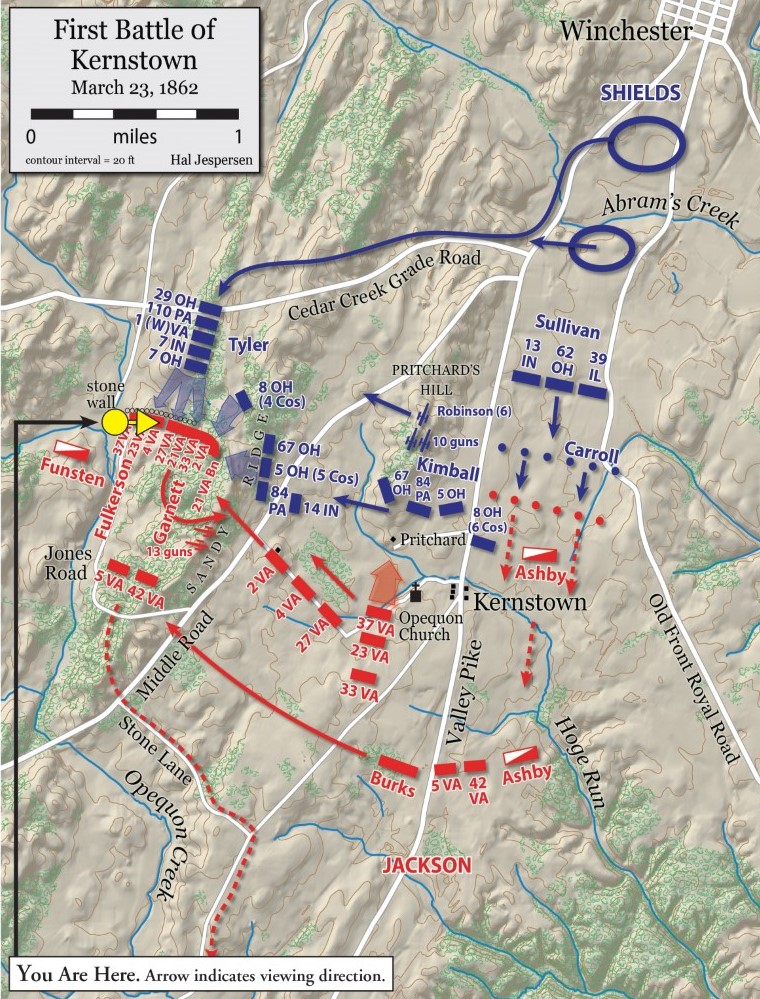
You are facing east toward the high ground known as Sandy Ridge. The walking trail near the pavilion will lead you back to a reconstructed portion of a 400-yard stone wall that ran east to west and about shoulder high. The battle of Kernstown began at nine in the morning on March 23rd, 1862. Union commander Nathan Kimball protected a hill to the east of Sandy Ridge called Pritchard's hill with artillery and set up his headquarters there.
He is then tested by the Confederate commander, Thomas J. “Stonewall” Jackson who attacks this position. When Jackson arrived on the field, around noon after his advanced forest started the engagement in the morning. Jackson came with an undersized force of about 3,700 infantry, Calvary and artillery, and attempted to dislodge the union force off of Pritchard's hill by flanking it. After this proves unsuccessful, he tried to suppressing them by aligning 13 cannons on the Eastern side of Sandy Ridge in front of you.
This also failed and he then sent a regiment of 230 men northward on a sweeping maneuver to capture the union artillery position. Ironically, Nathan Kimball has also sent a force southward starting at the base of Sandy Ridge. They leave from the Cedar Creek grade road on the same mission to capture those Confederate artillery positions on Sandy Ridge. Confederates are outnumbered ten to one
The union force is brigade of 2,300 men. The Confederates is a regiment of 230. This led to an unsuspecting clash that occured along that 400 yard long Stonewall from a just after three in the afternoon. The fight continues until past sunset at 6:08 PM. This part of the battle was marked by its ferociousness of musketry, something that had never been seen at this level before in the Shenandoah valley.
The fight that occurred on Prichard’s Hill was mostly an artillery duel. However, this ground was a 400 by 150 yard box of opposing gunfire, which inflicted hundreds upon hundreds of casualties. A little after 6PM Jackson's force is weakened by lack of ammunition by loss of valuable officers. Union reinforcements sent by Nathan Kimball, continued to stretch out Jackson's defensive line to the east and to the south and eventually the Confederates are forced to retreat from that hill.
The result will be a rout of Jackson's army which was only defeat as an independent commander defeat as an independent commander. Colonel Nathan Kimball won the day with a loss of about 575 men on his side. Jackson lost a little over 700 officers, men as well as two cannons, which represented a little over 20% of his entire army. The battle of Kernstown was the first battle of the Shenandoah valley campaign, and it will result in Abraham Lincoln to send 20,00 troops into the Shenandoah valley to deal with Stonewall Jackson
Directions to this stop
This stop is located at the parking lot of Rose Hill Park located at 1871 Jones Rd, Winchester, VA. Click below for directions.
DIRECTIONS TO THIS STOPLearn more
Flanking the Stone Wall - Fridays at the Front in the Shenandoah Valley
Open video in a new tab →
Ewell's Attack
This audio tour stop made possible by Brent and Norma Bozell
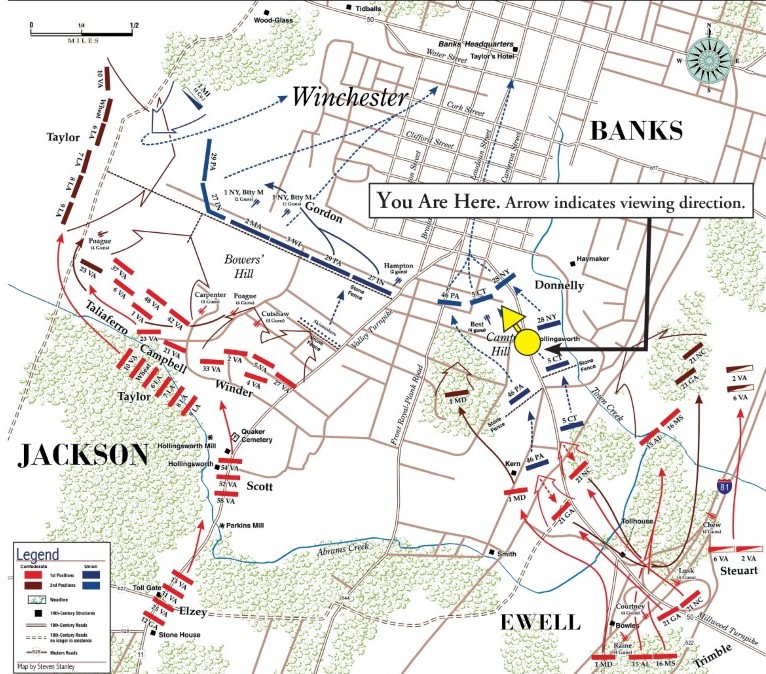
The Confederate advance
For this stop, you should be standing in front of the Winchester-Frederick County Visitor Center, looking left toward the traffic light at the intersection of Pleasant Valley Road and Millwood Pike, about 500 yards to your front. After Confederate General Thomas J. “Stonewall” Jackson destroyed the Union outpost at Front Royal on May 23, 1862, Union General Nathaniel Banks hurried his army north from Strasburg to Winchester to avoid Jackson’s attempt to cut him off.
On May 25, Jackson moved to attack Banks’s outnumbered force in Winchester on two fronts. While Jackson attacked with his main force along the Valley Pike, about a mile to the west of here, General Richard S. Ewell advanced here along Millwood Pike. At dawn, Ewell deployed his brigades. “The Yankees are before you,” he told the 21st North Carolina. “Drive them out of town.” The Confederates advanced across the ground around you but had little idea of what they faced.
Ewell had failed to scout the Union position, and dense morning fog limited visibility. The North Carolinians were met by a sheet of flame near modern-day Pleasant Valley Road, in front of where you’re standing now, by a Union brigade under Colonel Dudley Donnelly that was concealed behind stone walls on either side of the road. “My men fell like autumn leaves,” said the 21st’s commander, Colonel William Kirkland. Colonel Kirkland himself was wounded in both legs, and the North Carolinians were sent reeling back, having lost a third of their men.
Attacks by the 21st Georgia and the 1st Maryland had no greater success, but Ewell’s assaults had drawn Federal attention and unneeded reinforcements to this sector—reinforcements that would have been of more use against Stonewall attacking from the south. Jackson was also stalled in his initial assault, but a flanking attack by his Louisiana brigade farther west broke the Union line and sent the Federals streaming through Winchester.At the same time on this front, Confederate General Isaac Trimble’s brigade under Ewell moved to the right, threatening Colonel Donnelly’s left and rear.
That threat, combined with the Federal retreat to the west, prompted Donnelly to pull his men out and withdraw. Unlike the Federals farther west, Donnelly and his men were able to conduct an orderly, if hurried, retreat through the eastern side of town, avoiding Jackson’s men on the flank and the chaotic scenes farther to the west. Most would escape and join the Federal withdrawal north on the Martinsburg Pike.
Directions to this stop
This stop is located at the Winchester-Frederick County Visitor Center located at 1400 S Pleasant Valley Rd. Winchester, VA. Click below for directions.
DIRECTIONS TO THIS STOP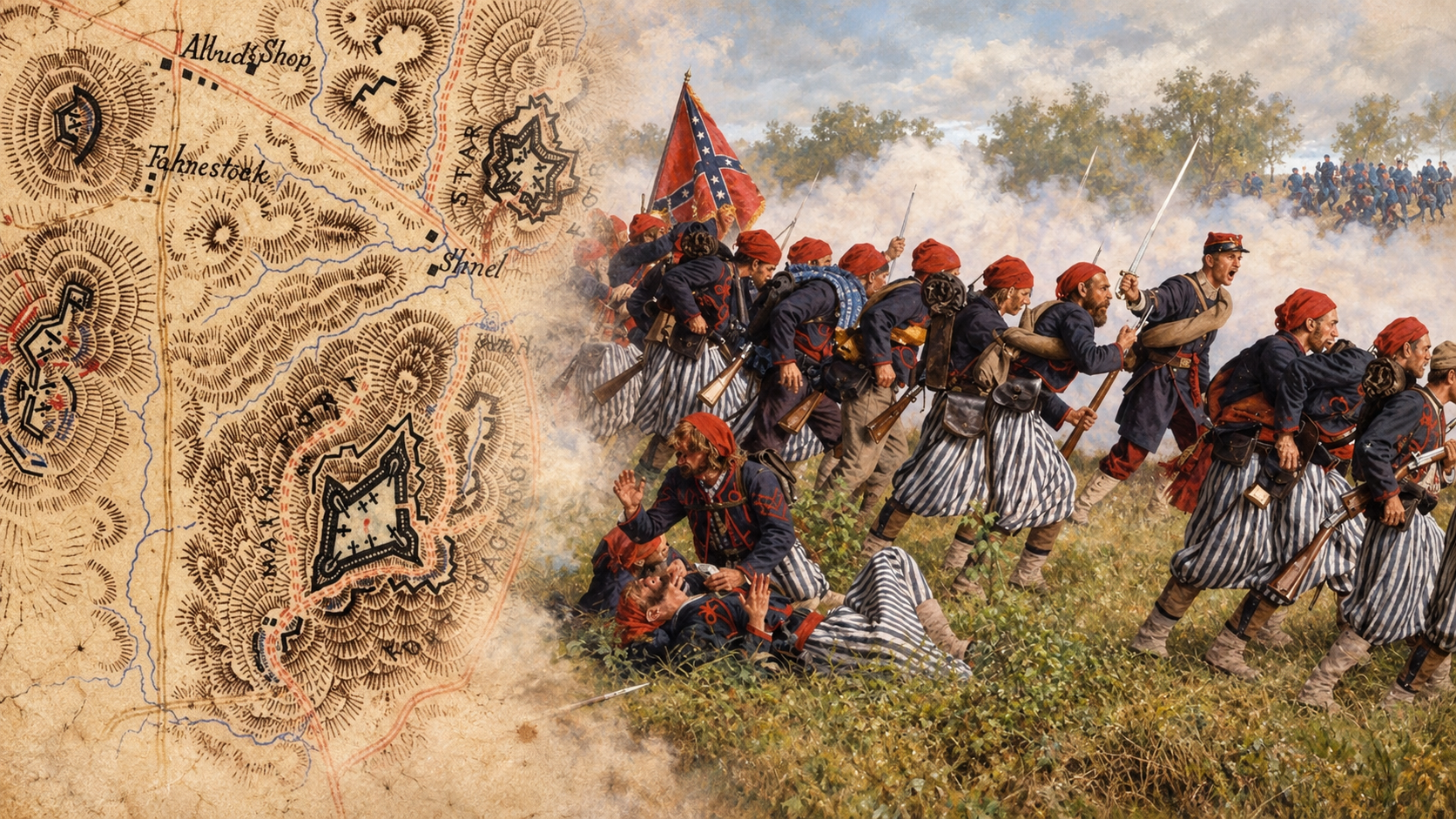
West Fort
This audio tour stop made possible by John, Ann, and Mike Killian
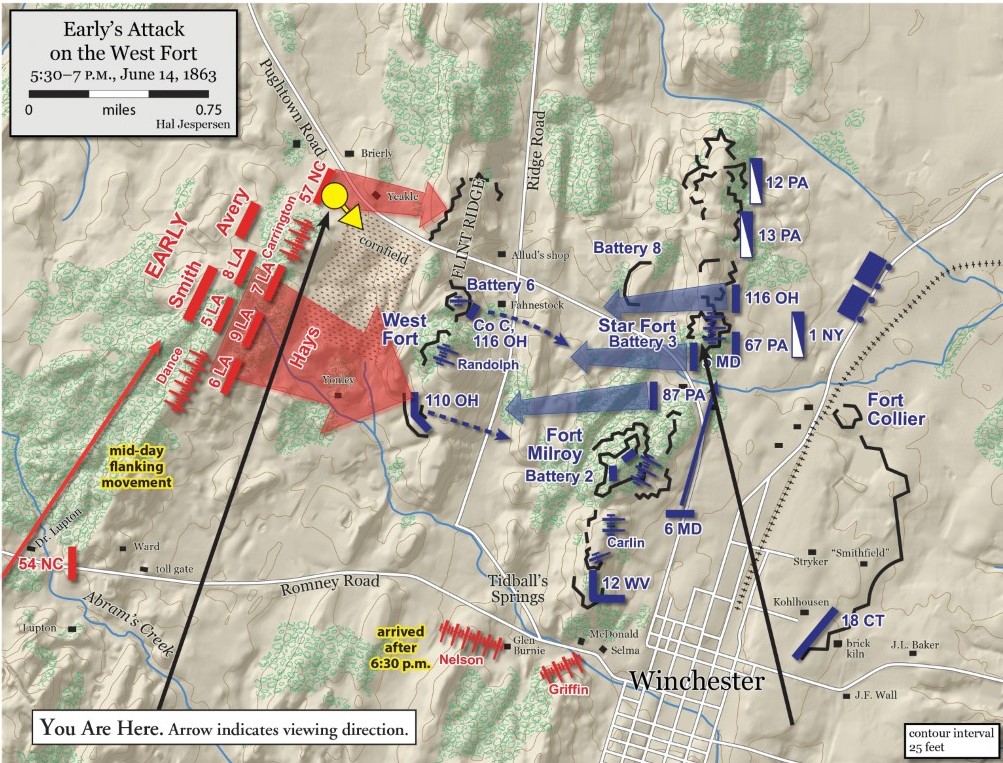
The fight for West Fort
You are standing in front of the historic location of West Fort, the wooded ridgeline you can see less than a mile in front of the Civil War Trails sign. On June 13th, 1863, the first day of the Second Battle of Winchester, Confederate General Richard Ewell’s soldiers had driven Union General Robert Milroy's men from Pritchard’s hill near Kernstown, just south of Winchester, to a series of earthen forts north and northwest of Winchester.
On the afternoon of Sunday June 14th, 1863, West Fort, and nearby auxiliary positions are manned by more than 700 Union soldiers from 2 Ohio regiments and a 6-gun battery of the regular U.S. Army artillery. This vulnerable forward outpost screened the main Union Fort named Fort Milroy.
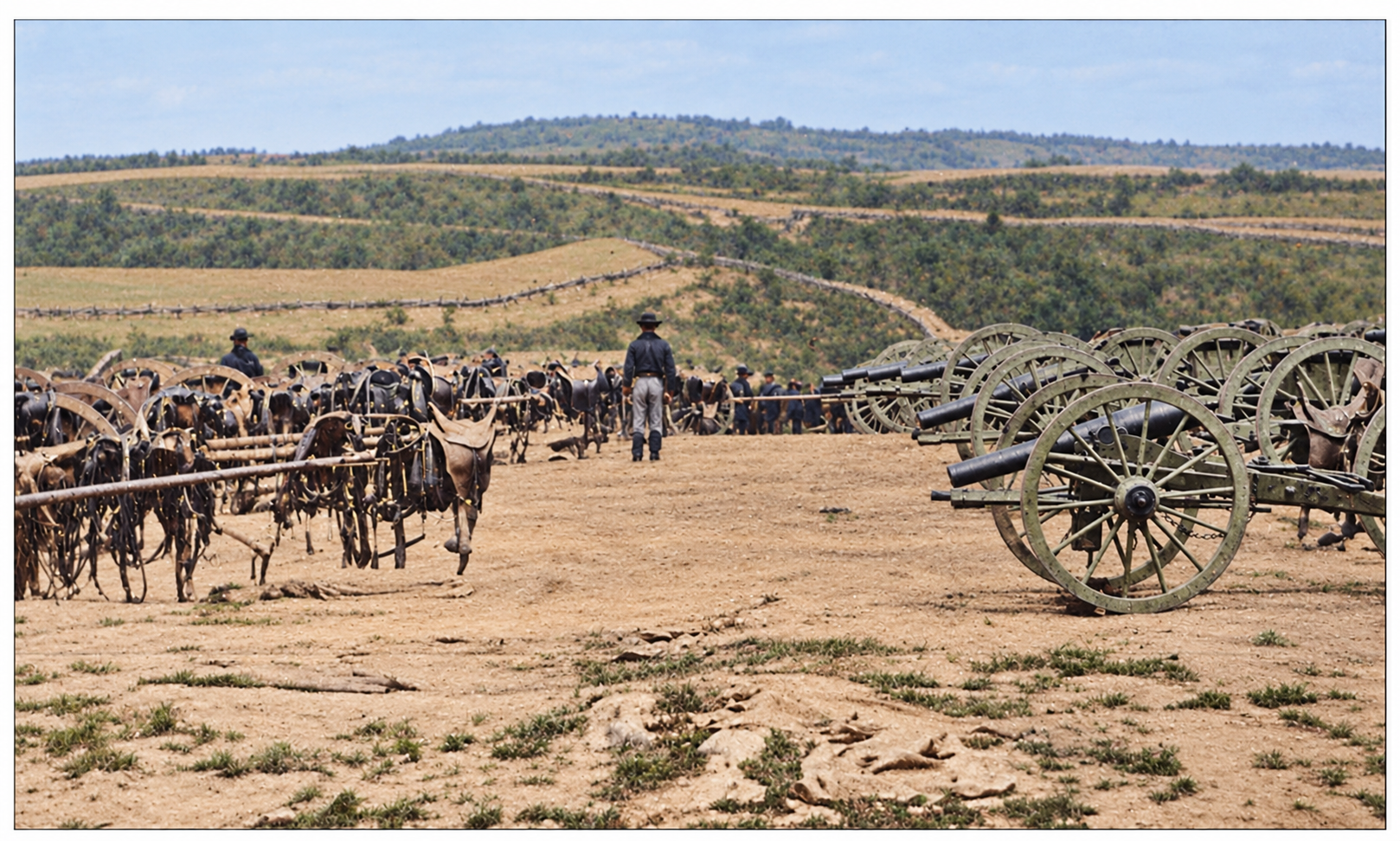
What the Union defenders did not know was that Confederates under General Jubal Early had made a flanking march to this position. At 5:00 PM, two dozen confederate artillery pieces suddenly opened fire and subjected West Fort to an intense 45-minute bombardment that was heard for miles.
As the cannonades subsided, Jubal Early ordered part of his division to attack the West Fort and the nearby artillery battery. He selected general Harry Hayes 1st Louisiana brigade for the assault. Widely famed as the Louisiana Tigers, these were some of the hardest fighting troops in Ewell’s Second Corps and the same soldiers that had spearheaded the successful attack on Pritchard’s Hill the previous afternoon.
Located on the ridge to your right, beyond the Winchester Equipment Company, the 1,200 Louisianans aligned in two long parallel lines and swept across the low open farmland, charged up the distance slope to your front, and easily dislodged the Buckeyes capturing all six Union cannons. The Union soldiers not shot or captured retreated to Fort Milroy and Star Fort.
Directions to this stop
This stop is located next to the Virginia Farm Market located at 1881 N Frederick Pike, Winchester, VA. Click below for directions.
DIRECTIONS TO THIS STOP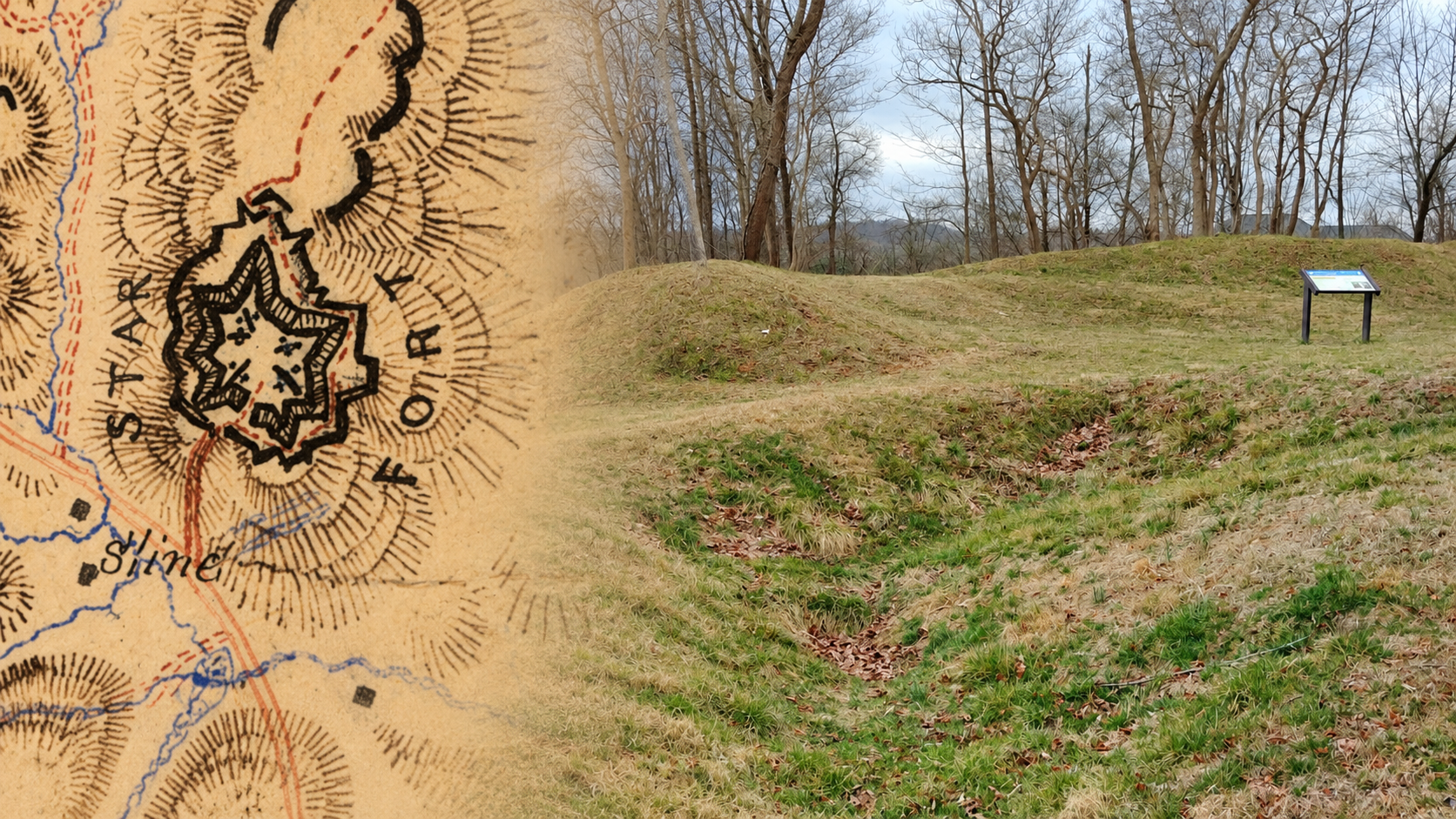
Star Fort
This audio tour stop made possible by Dennis and Nancy Buttacavoli
Inside the earthen walls
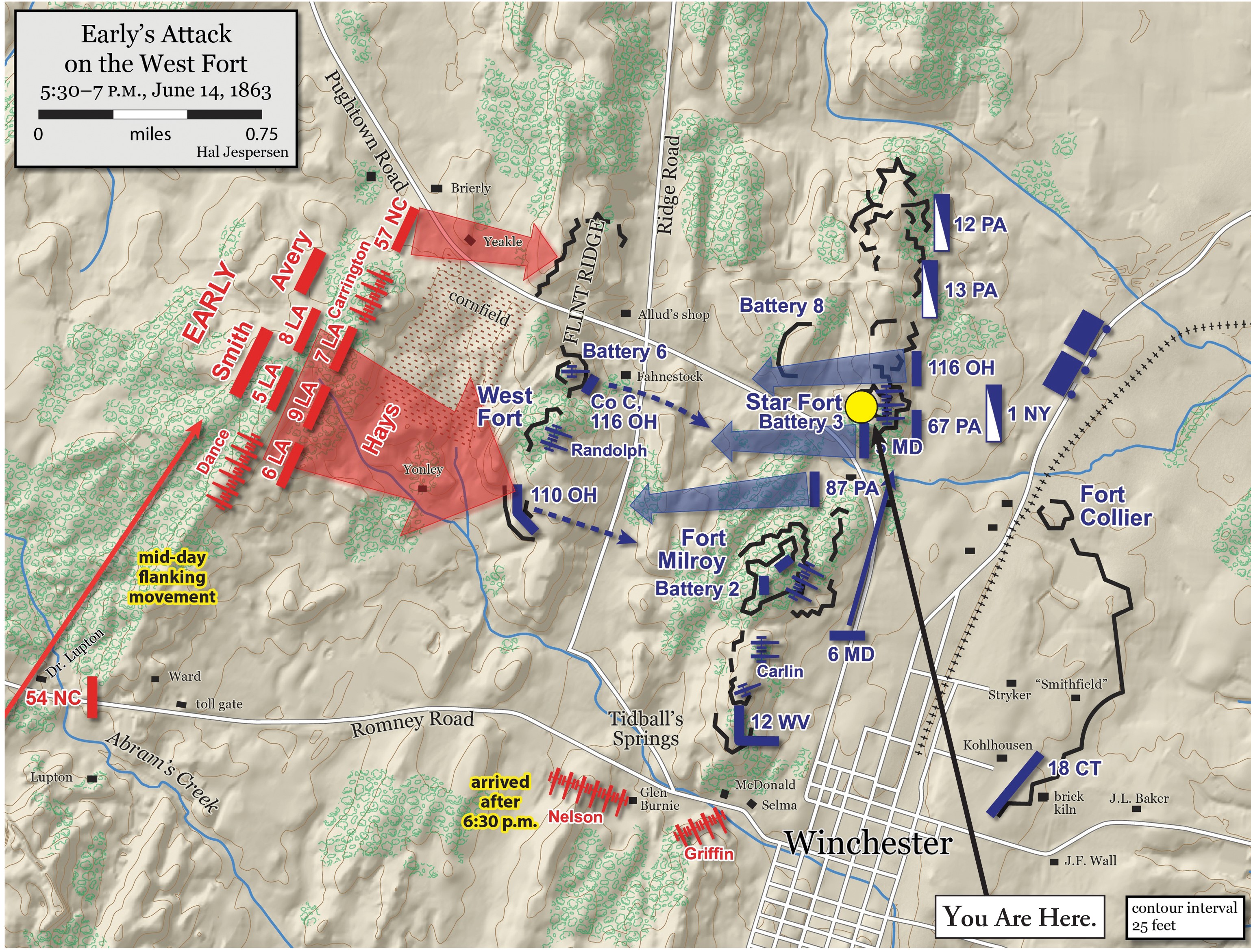
You are standing at what was known as Star Fort where you can see the still-standing earthen walls. Star Fort is one of the finest remaining examples of Civil War forts in the Shenandoah Valley thanks to the efforts of civic leaders and battlefield preservationists.
Confederate troops constructed the initial earthworks in 1862 to protect Winchester from an advance from the north. Union General Robert Milroy’s men refitted the fort after occupying Winchester in January of 1863. On the evening of Sunday June 14th, 1863, hundreds of Milroy's Federals, as well as a relatively inexperienced 6-gun artillery battery from Baltimore MD, occupied the irregularly shaped Star Fort.
Early in the evening, the Louisiana Tigers seized some 2,000 yards southwest of where you are standing. Shortly afterwards, the Baltimore Light Artillery here in Star Fort, as well as Massachusetts artillery in Fort Milroy, dueled with Confederate guns well into the night. Before the prolonged artillery exchange finally waned, General Milroy feared he would be surrounded and forced to surrender, and decided to withdraw north towards Harpers Ferry.
Before dawn on June 15, he abandoned all 24 of his artillery pieces, threw ammunition down wells and pulled out of Star Fort and his other positions leaving his sick and wounded men to the mercy of the Confederates. General Milroy marched his men in utter silence north along the Valley Turnpike hoping to escape detection.
However, General Ewell had anticipated this move and dispatched much of General Edward Johnson’s 6,500-man division on a roughly parallel path to cut off the Union retreat. Johnson’s four brigades arrived at a key bridge over the Winchester and Potomac railroad blocking Milroy’s route.
Directions to this stop
This stop is located at the Star Fort Civil War Historic Site located at 503 Fortress Dr, Winchester, VA. Click below for directions.
DIRECTIONS TO THIS STOPLearn more
Little Lieutenant Leary - Shenandoah Valley Civil War Story
Open video in a new tab →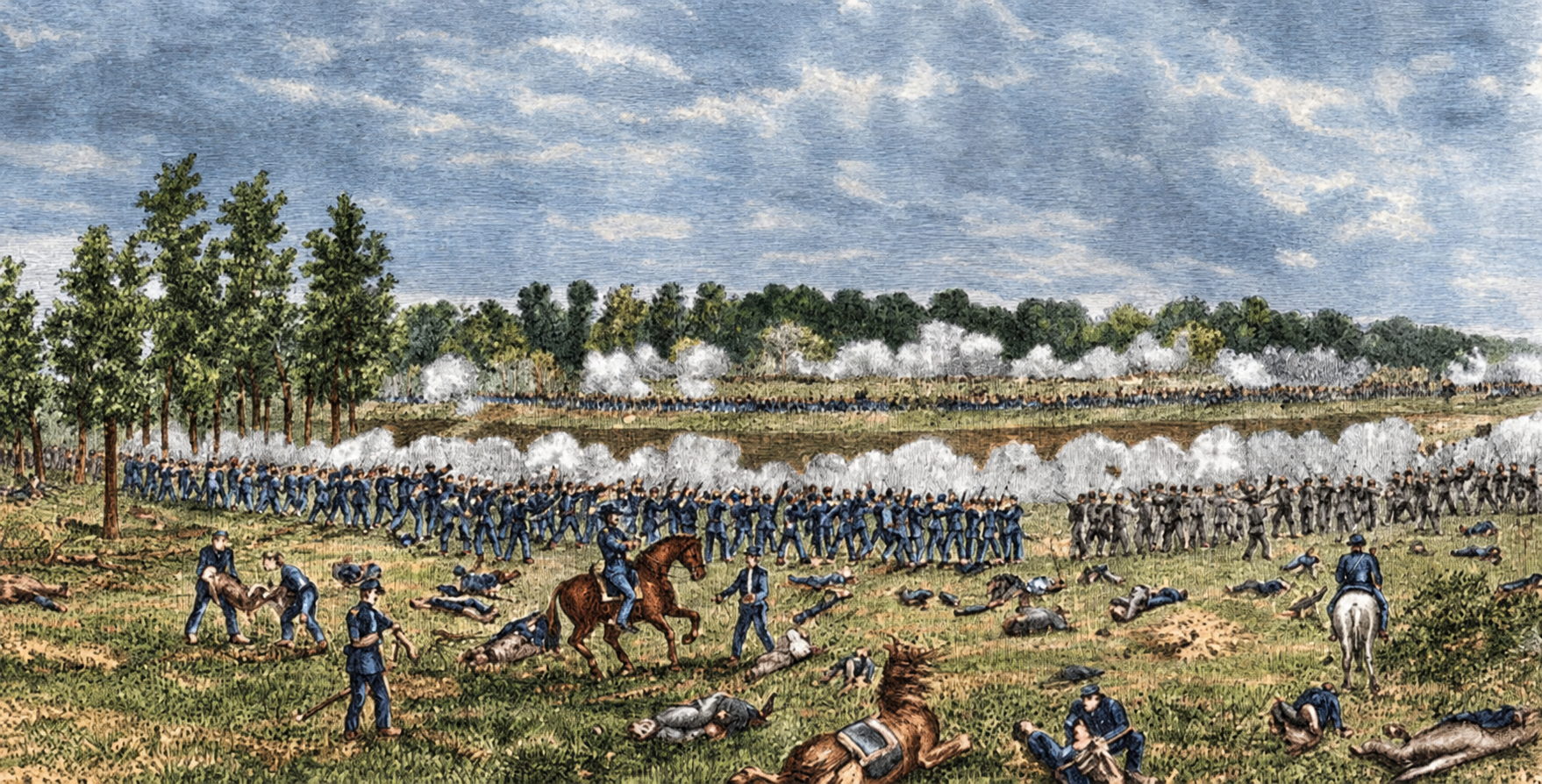
Stephenson's Depot
This audio tour stop made possible by Lieutenant Colonel Rex M. Holmlin
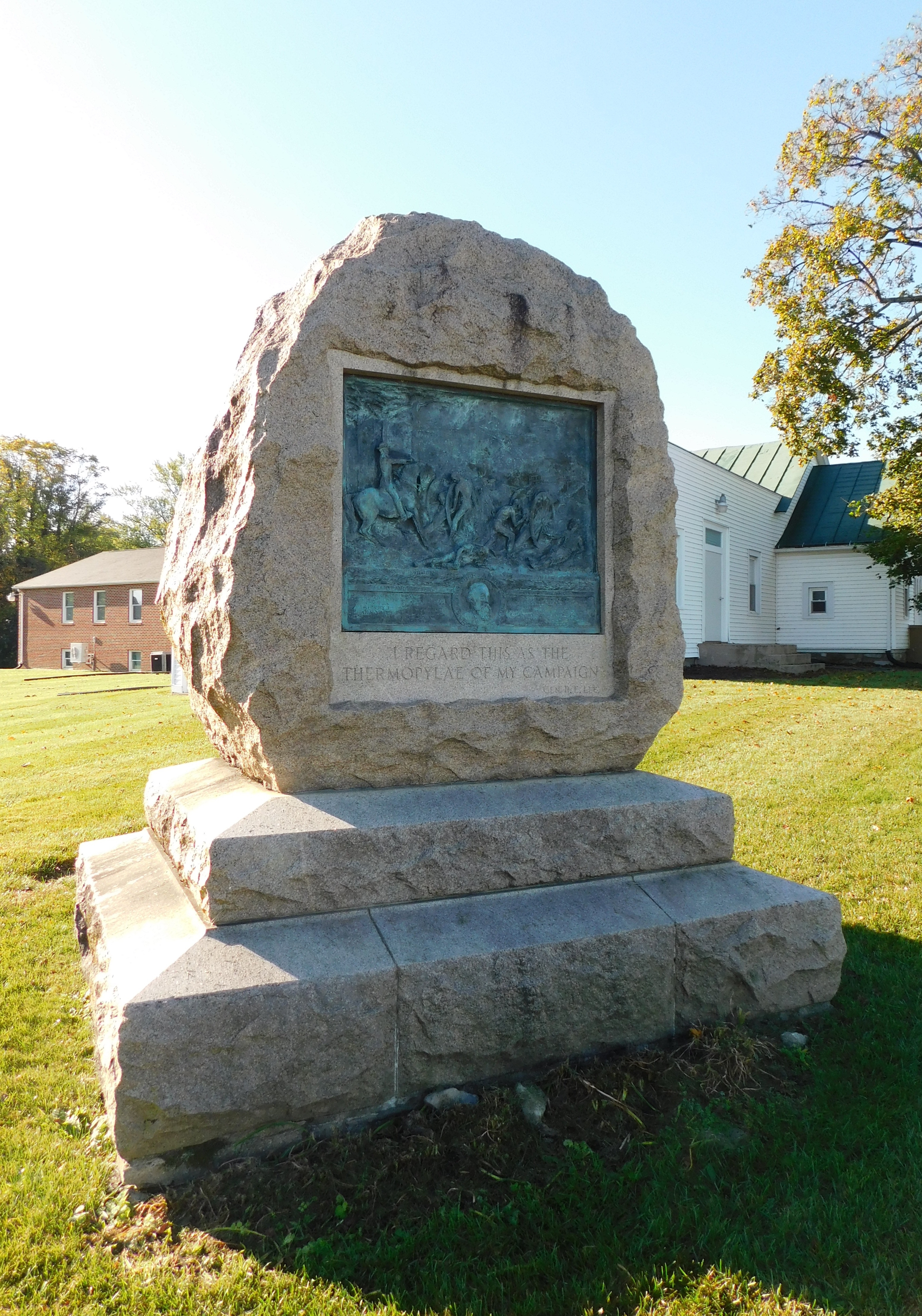
The Union escape closes
In the early morning of June 15th, 1863, Union troops under General Robert Milroy were trying to escape the pursuing Confederates by moving north along the Valley Turnpike some 500 yards to your left. Anticipating that movement, Confederate commander General Richard Ewell sent General Edward Johnson's division on circling march to block Milroy’s withdrawal.
The left of the mile-long Confederate line was along the railroad tracks some 500 yards from here. Milroy's Pennsylvania Calvary encountered Johnson's men in the darkness. Milroy then began a series of desperate attacks to try to drive off the Confederates.
the townhouses on your left mark the southern part of Milroy’s battle line. During one of Milroy’s assaults, the 13th Pennsylvania Cavalry charged across the field in front of you but failed to make any headway. Milroy sensed disaster and galloped off the battlefield as the individual regiments and brigades tried to break through the Confederates and escape.
Some succeeded but more than 4,000 union soldiers, almost half of Milroy’s entire division, surrendered. Percentage wise, it was the largest mass surrender of United States Army troops until World War Two. After processing the prisoners in the former Union-held Star Fort, General Ewell took his second corps northward deep into Pennsylvania.
They would approach the banks of the Susquehanna River at Wrightsville and Harrisburg before being recalled as General Robert E. Lee concentrated his scattered army of Northern Virginia for battle. Thousands of Confederates who fought here at Second Winchester would become casualties at Gettysburg.
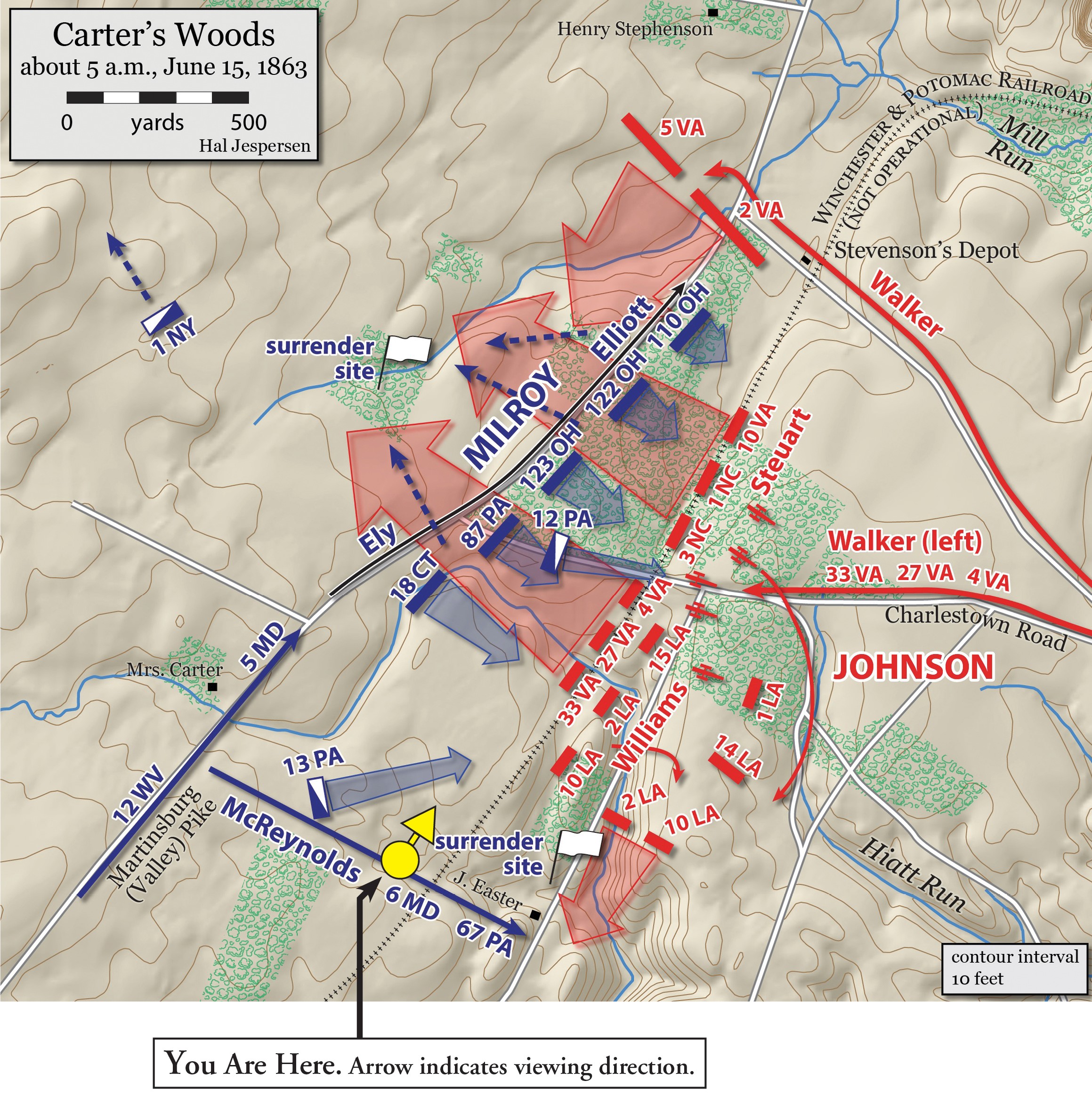
Find this stop
This stop is located on the side of McCanns Road just off of Route 11 (Martinsburg Pike). It can be reached by traveling west of the Winchester Battlefields Visitor Center down Redbud Road, turning right onto Route 11 (Martinsburg Pike) and then taking a right on McCanns Road. The stop will be approximately 1,000 feet down on the left.
Directions to this stop
DIRECTIONS TO THIS STOP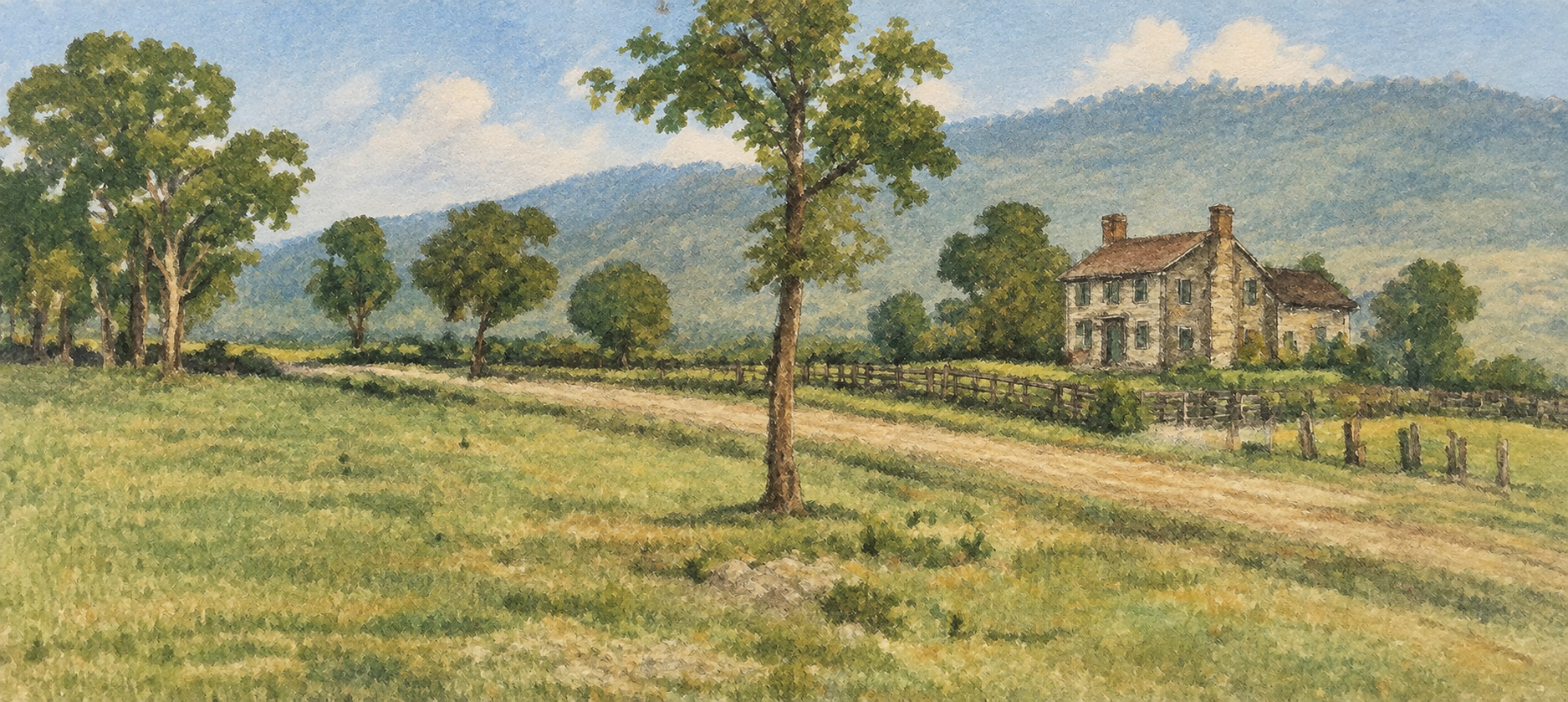
Rutherford's Farm
This audio tour stop made possible by Ron and Karol Hottle
Fighting at Rutherford’s Farm
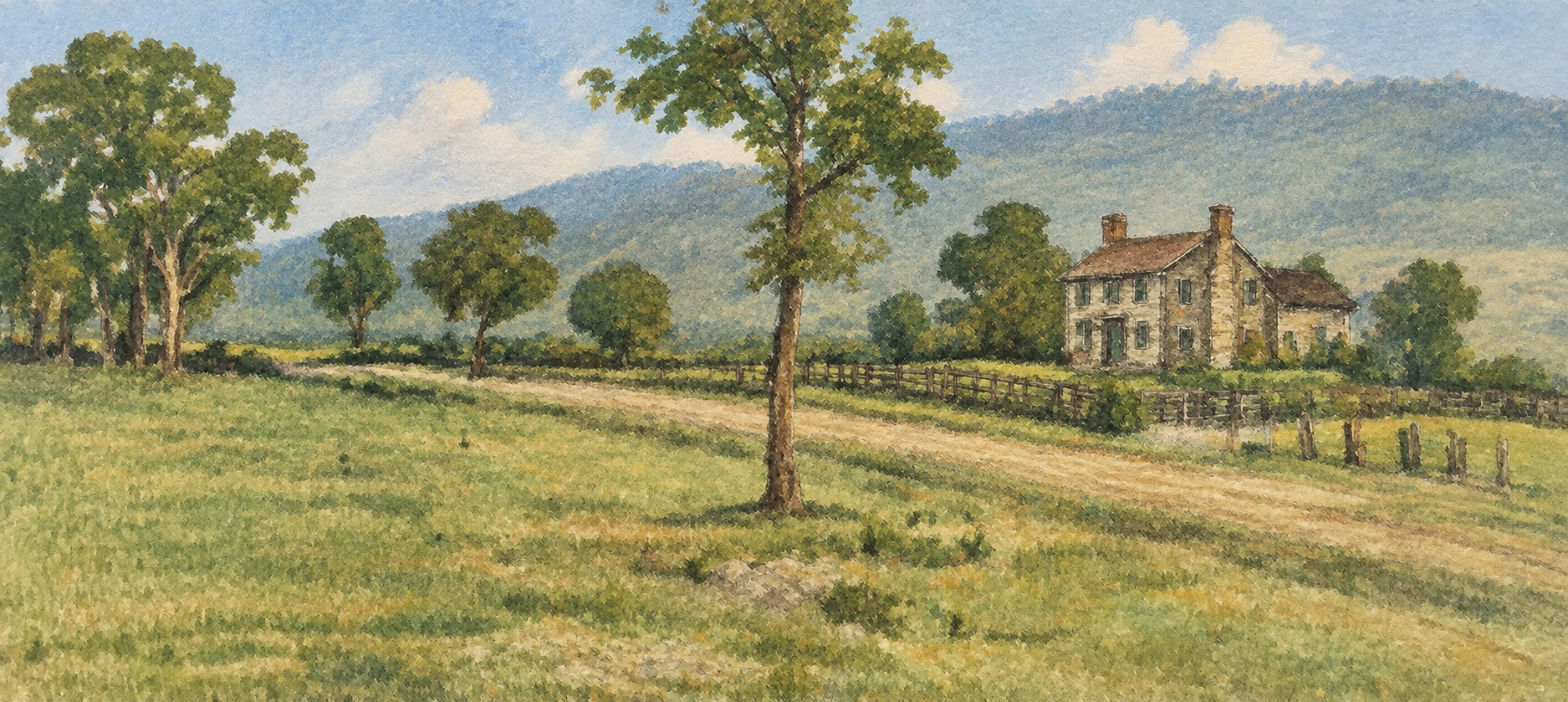
You're standing on the historic site of Rutherford's Farm, which was at the center of the action during the Battle of Rutherford's Farm. When Confederate General Jubal Early moved south of Winchester following the Battle of Cool Spring in July of 1864, he left General Stephen Ramseur's division north of the city to block a Union force under General William Averell. Early instructed Ramseur to remain on the defensive.
But when Ramseur learned that Averell's force was approaching, he moved aggressively forward to this position, deploying his men in an open wood lot along a slight ridge about 200 yards to your left. His troops stood astride the Valley Turnpike - modern-day U.S. 11 - which is directly behind you. But there was a major weakness with Ramseur's position. Because of the line of the ridge, his battle line was at an angle to the advancing Federals, making his left flank dangerously vulnerable. Union Commander Averell ordered an attack mistakenly believing he had the larger force.
The 9th West Virginia made their assault across the ground in front of you, their progress disrupted by a fence around the Rutherford farmhouse. The Confederates rose up from behind the timber, tall grass, and weeds and poured a deadly fire into the Federals, stopping them in their tracks. Farther north, the 14th West Virginia advanced toward the vulnerable Confederate left with the two sides exchanging fire.
One Union soldier said, "It looked more like pictures you have seen of battle lines firing than anything I ever saw before or since." On the other side of the Turnpike behind you, the Confederates repulsed the Federals in what one Northerner called the hottest five minutes of the war. For a time, the Confederate pressure there threatened to break that part of the Union line, but the 14th West Virginia continued advancing on the Federal right, smashing into the Confederate left flank near where the Lowe's store stands today and routing two North Carolina regiments.
Ramseur attempted to shift troops to stem the tide, but that only eased the pressure on the other flank behind you, allowing them to join the advance. As more Federals joined in the advance, the Confederates found themselves under attack from multiple directions. Hearing firing behind them, many of the Southerners feared being cut off, and soon the entire Confederate force broke and retreated in disorder south toward Winchester. "I had to run about two miles to keep the Yankees from getting me," one soldier recalled. The Federals' opportunity to enjoy their victory at Rutherford's Farm would be short-lived.
Under a standing directive to prevent Union reinforcements from reaching Ulysses Grant, Early would be quick to take advantage of Wright's departure just days later at Second Kernstown.
Find this stop
This stop is located along U.S. Route 11 across the street from the Weber's Garden Center. It can be reached by traveling west from the Visitor Center down Redbud Road, turning right onto U.S. Route 11 (Martinsburg Pike), and traveling 0.35 miles. The stop is in a small grassy area with several Civil War markers. Click below for directions.
Directions to this stop
DIRECTIONS TO THIS STOPThe Pritchard-Grim Farm (Second Kernstown)
This audio tour location made possible by Lieutenant Colonel and Mrs. William J. Peterson
The battle returns to the farm
You're standing at the gate to the Kernstown battlefield on the Pritchard Grim Farm. About 450 yards in front of you is the historic Pritchard House and the stone wall along Pritchard's Lane, which were at the center of the climactic action during the Second Battle of Kernstown. Learning that much of the Union Army had marched out of the Shenandoah Valley, Confederate General Jubal Early moved to attack the smaller force remaining in Winchester, commanded by General George Crook.
On the morning of July 24th, 1864, Early's troops were advancing from the south to your left. Learning of their approach, Crook deployed two divisions here to block their advance. Union Colonel James Mulligan's division, which manned the center of the federal line, was positioned on top of Pritchard's Hill about 500 yards to your right in front. Although Union commanders at the front reported that Early had a larger force, Crook refused to believe them and ordered Mulligan to attack. Mulligan moved forward to the vicinity of Opequon Church, some 600 yards to your left until Confederate resistance brought him to a halt.
Mulligan's men took cover behind the stone fence surrounding the churchyard and the two sides exchanged intense fire. Soon Mulligan's flanks were uncovered by the withdrawal and repulse of other units, and he pulled his troops back to the stone fence along Pritchard's Lane in front of you. Mulligan's men were isolated, and the Confederates attacked from three directions overwhelming the small force. In the end, only the 23rd Illinois remained.
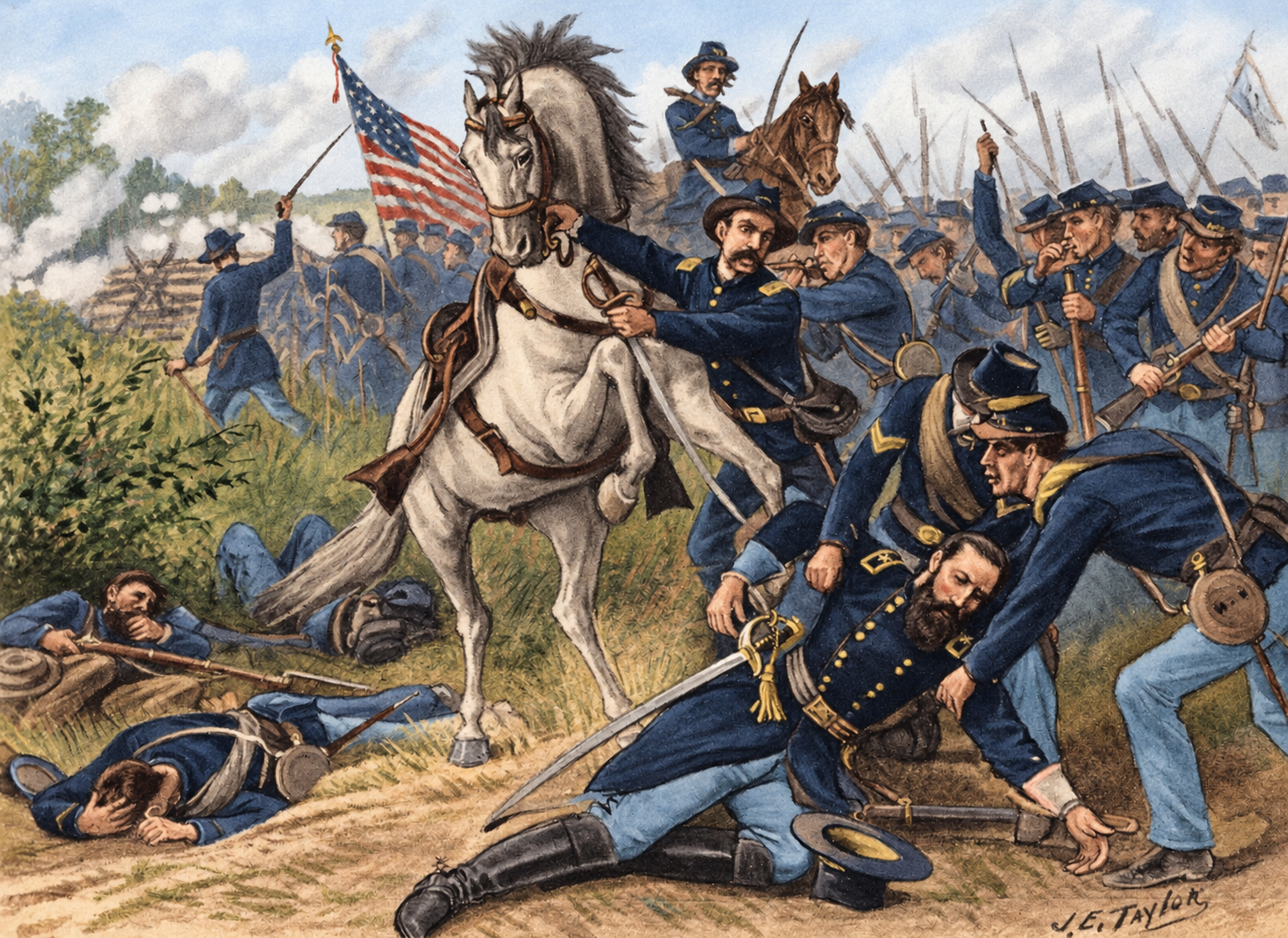
Mulligan rode his horse along the line, waving his hat in the air, and shouted, "Stand firm, 23rd!" But realizing the position was hopeless, he attempted to withdraw only to be struck by multiple bullets. His men tried to carry him from the field, but many of them were also hit, including his brother-in-law, Lieutenant James Nugent, who was killed instantly. Mulligan pleaded, "It is no use. Lay me down and save the flags." Reluctantly, the survivors obeyed and fled up Pritchard's Hill. The Confederates followed with one passing close enough to Mulligan to hear him groaning in pain.
After the fighting subsided, the Confederates carried the wounded Mulligan into the Pritchard House where he would die two days later. Crook withdrew to the north into Maryland, leaving the valley once again in Confederate hands.
Please note that Stop #8 covering the First Battle of Kernstown is also located here.
Directions to this stop
This stop is located at the entrance to the Kernstown Battlefield located near 3050 Saratoga Dr. Winchester, VA. Click below for directions.
DIRECTIONS TO THIS STOP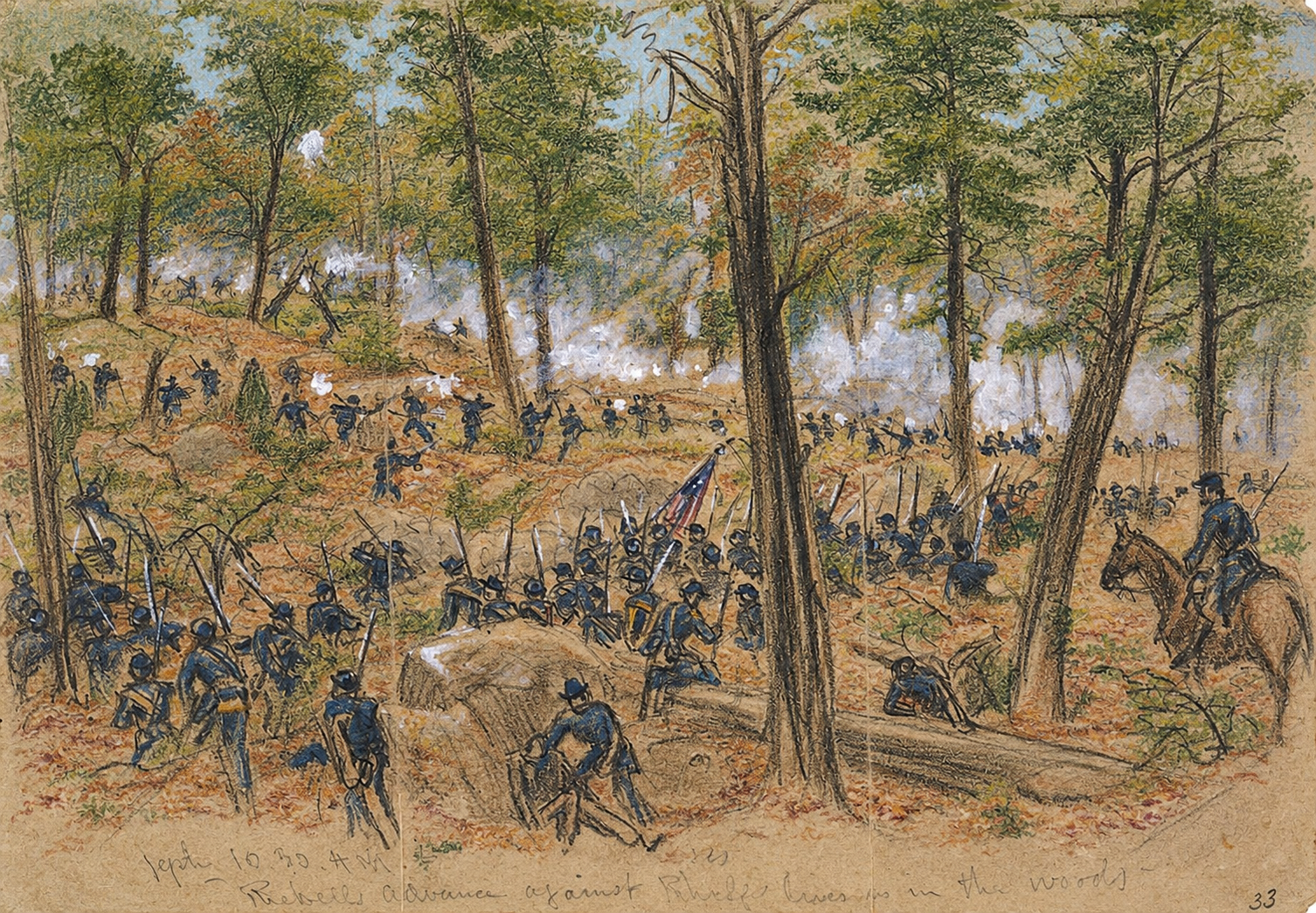
West Woods
This audio tour location made possible by Commander Craig Morin
The fight in the West Woods
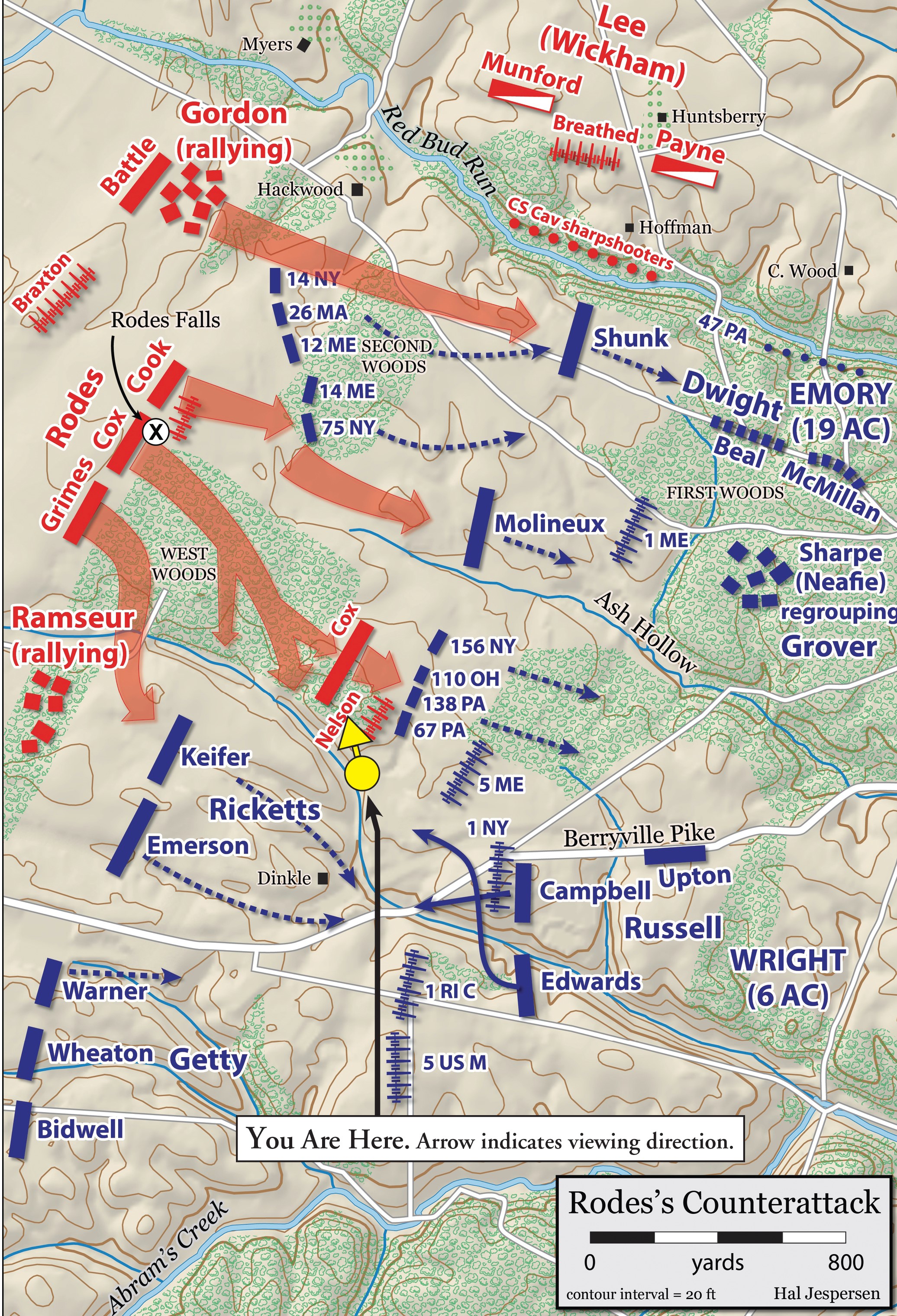
You're standing on the southern edge of the famous West Woods. During the Third Battle of Winchester, no ground was more constantly embroiled in the action or more hotly contested. This was the scene of nearly constant fighting where the tide of battle raged back and forth. The fighting here began early that morning when dismounted Confederate cavalry posted along the eastern edge of the woods sparred with Federal skirmishers across the open middle field.
Later Confederate artillery in these woods sent shells thundering into the ranks of the main Union forces as they began to deploy some 1,200 yards to the east beyond where the hotel stands today. Just before the main Union attack and just in time for the Southerners, Confederate General John Gordon's division arrived on the battlefield. He deployed his men in a long, defensive position that started near the Hackwood Farm almost a mile north of where you're standing and ran south all the way to these woods. At 11:40 that morning, the Union forces began their advance.
Seen from here and looking in the distance beyond the hotel, it would have been an awe-inspiring spectacle with the Northerners advancing in a long blue line covering a front a mile and a half wide. But the defenders here were ready. General Zebulon York's Louisiana Tigers met the Federals advancing on this point with a withering fire that sent the Northerners tumbling back. But the Federals kept coming and their numbers and persistence wore down the Confederates.
Gordon's division started to give way and Union troops surged into the edge of the West Woods only to find themselves facing newly arrived Confederates of General Robert Rodes's division. Rodes counterattacked with a fury that made it sound to one Confederate as if "a terrific thunderstorm was raging in the woods." Rodes was killed, but Colonel William Cox's North Carolina brigade charged across these woods and smashed into the already battered Federals, sending them reeling backward. Cox's troops were able to hold a defensive line in these woods, but the Federals again began to wear them down.
Union General David Russell coordinated yet another assault into these woods. Russell, like Rodes, was killed, but General Emory Upton took command of the Federals and they again charged into the woods, driving back the weakened Confederates so quickly that many were captured among the trees. The Federals cleared the last of the Confederates from the West Woods by 4 that afternoon and the battle moved west.
Find this stop
This stop is located at the West Woods Trailhead entrance to Third Winchester Battlefield Park. It is directly across from the parking lot of the Marriott TownPlace Suites located at 170 Getty Ln, Winchester, VA. You will see a small grassy area by the curb as well as the North Carolina monument. Click below for directions.
Directions to this stop
DIRECTIONS TO THIS STOPLearn more
Whirlwind at Winchester - Fridays at the Front Civil War Battlefield Visit
Open video in a new tab →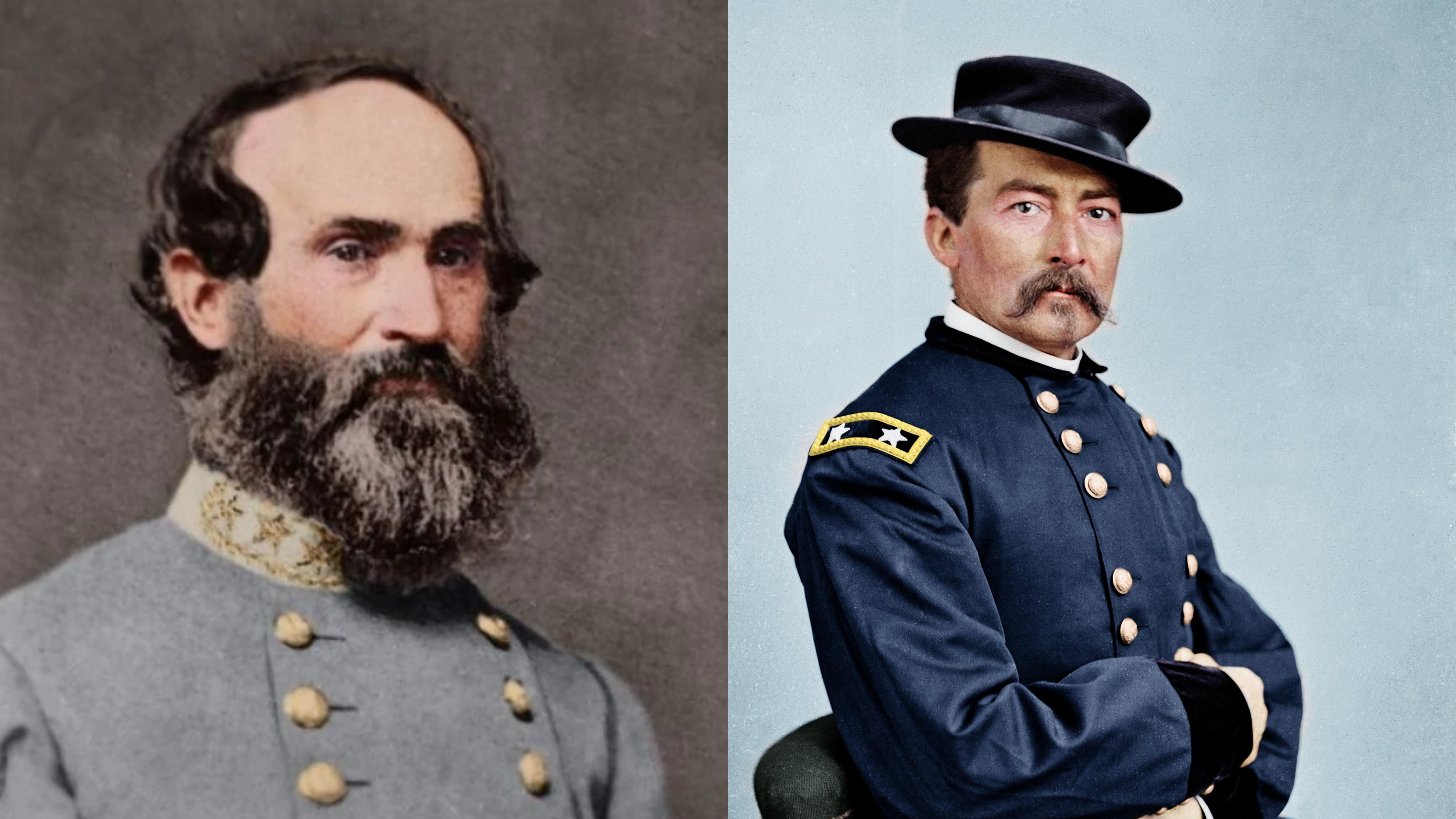
Road to Battle
This audio tour location has been made possible by Joan Slebos
The armies converge
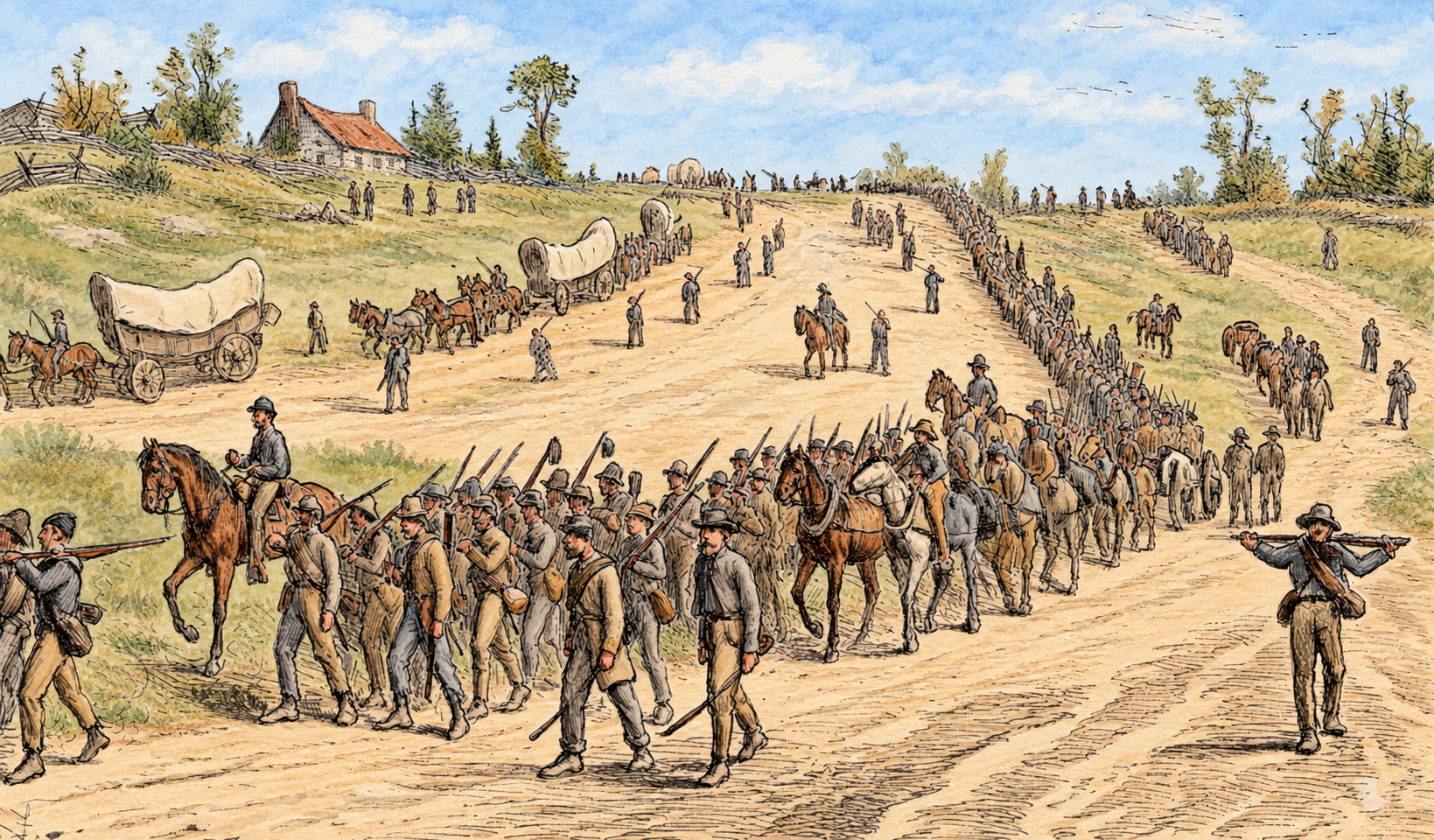
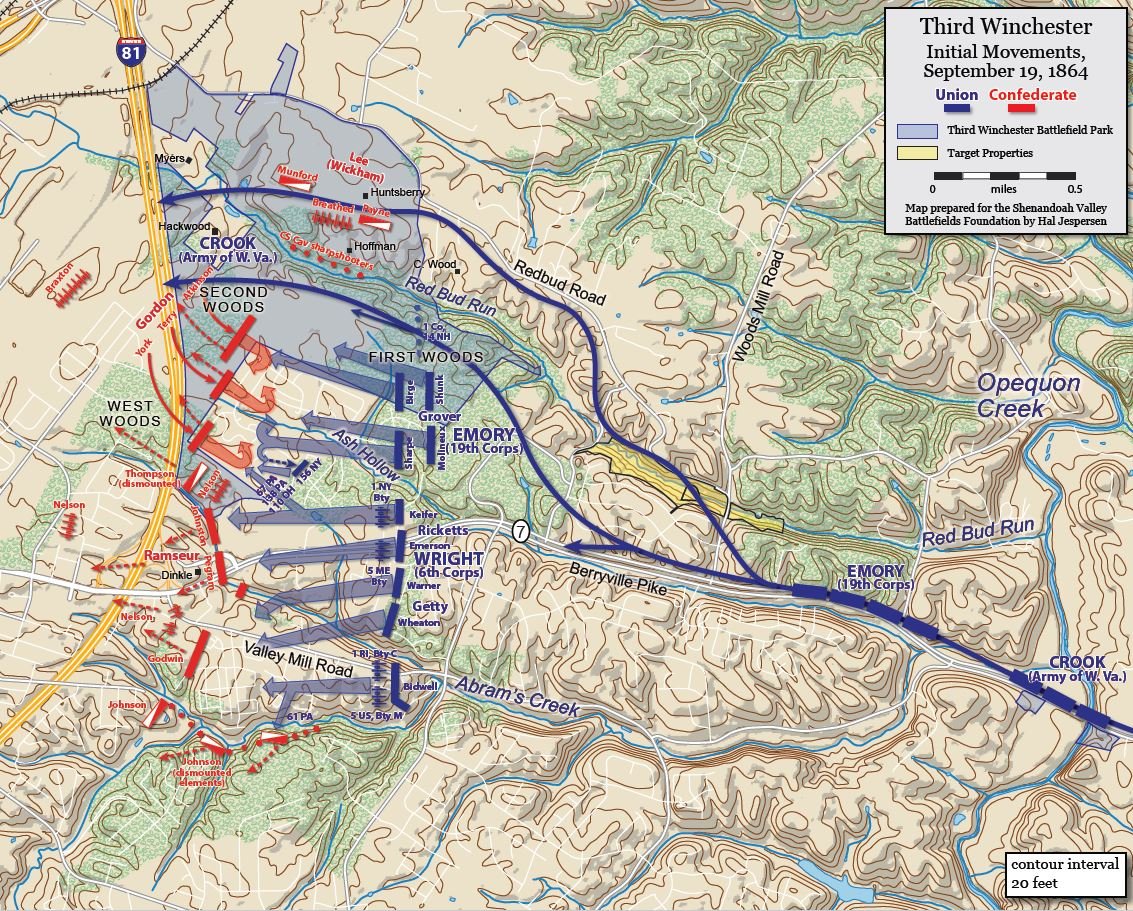
You're standing on the northern flank of the Third Winchester Battlefield. The Third Battle of Winchester was a huge sprawling battle fought over 30 square miles. Fighting began far to the east and to the north, but throughout the day it moved closer to the city. Throughout the day attacking and retreating troops, fast riding horse soldiers, cannon and wagons hurried across the ground where you are standing. Earlier in the day Confederate horse artillery under Major James Breathed crossed here on their way to the Huntsberry Farm.
The heavy guns bouncing as the horses galloped across this very ground. Reaching the farm some 800 yards to your left and front, they poured a murderous cannon fire into the Federals on the other side of Red Bud Run. Confederate infantry also crossed this ground as they raced to the battlefield.
Confederate Private George Nichols was on the far left of his division when he marched near here and he recalled, "We could hear heavy cannonading on our left front, the guns on the Huntsberry Farm." A short time later Nichols was surprised and captured by Federals, but escaped by hanging back and playing dead. At one point he was laying on the ground between the opposing lines as a hail of bullets passed above him. Later in the day Union cavalry was fighting its way south along the valley turnpike. One thousand yards behind you.
Their advance endangered the Confederate left, so Confederate Colonel William Payne's cavalry was sent from the Huntsberry Farm to help. Payne's force galloped across this ground then joined in the attack on the Federals, their sabers flashing in the sunlight. Although Payne's men had some initial success, the Federals counterattacked and the Confederates were sent tumbling back south. When the Federal cavalry continued south, Union General Thomas Devin's brigade crossed over this ground, riding toward the historic Hackwood House, 900 yards in front of you.
Colonel George Patton's Confederate brigade had just been forced from its position along the Hackwood lane and Devon's men crashed into the retreating Confederates hacking and slashing with their sabers. Although the Southerners put up what resistance they could, with one Confederate officer picking up a wooden fence rail and using it to knock a Federal officer's horse, their force was decimated. After that, the fighting would move south and west with the battle inching closer to the city until the Confederate lines finally broke and the southerners were sent whirling through Winchester.
Directions to this stop
This stop is located in the Ritchie Interpretive Plaza adjacent to the Winchester Battlefields Visitor Center. Click below for directions.
DIRECTIONS TO THIS STOP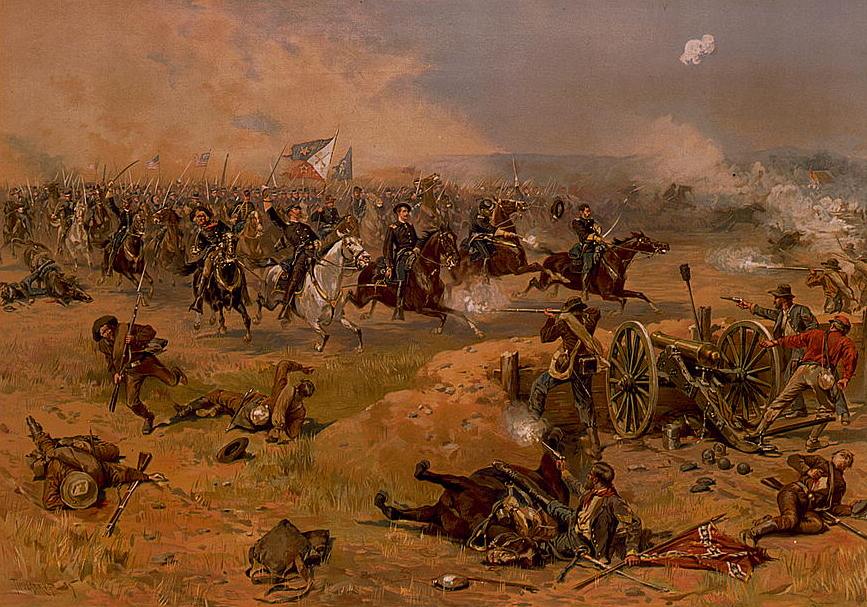
Fort Collier
This audio tour location made possible in memory of Private Henry Halstead - Chapman's Battery - Virginia Light Artillery
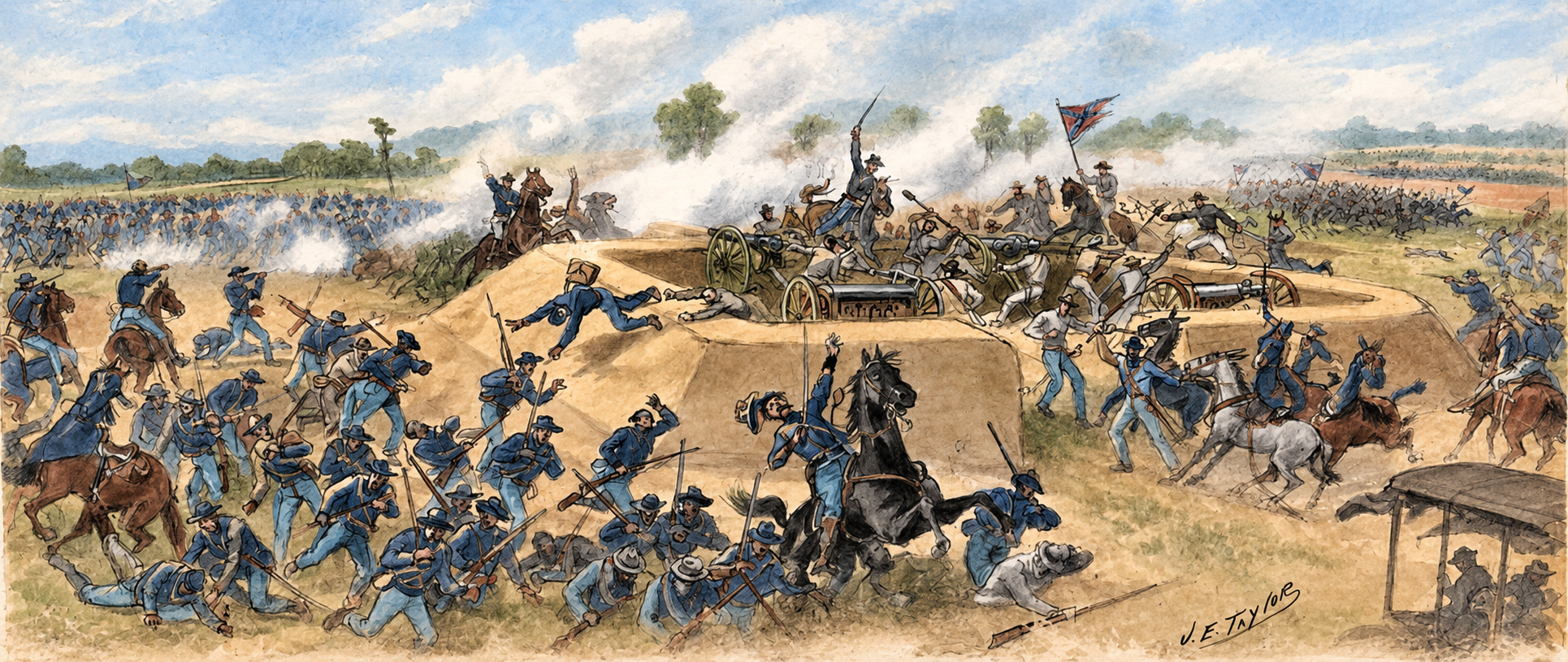
The defense of Fort Collier
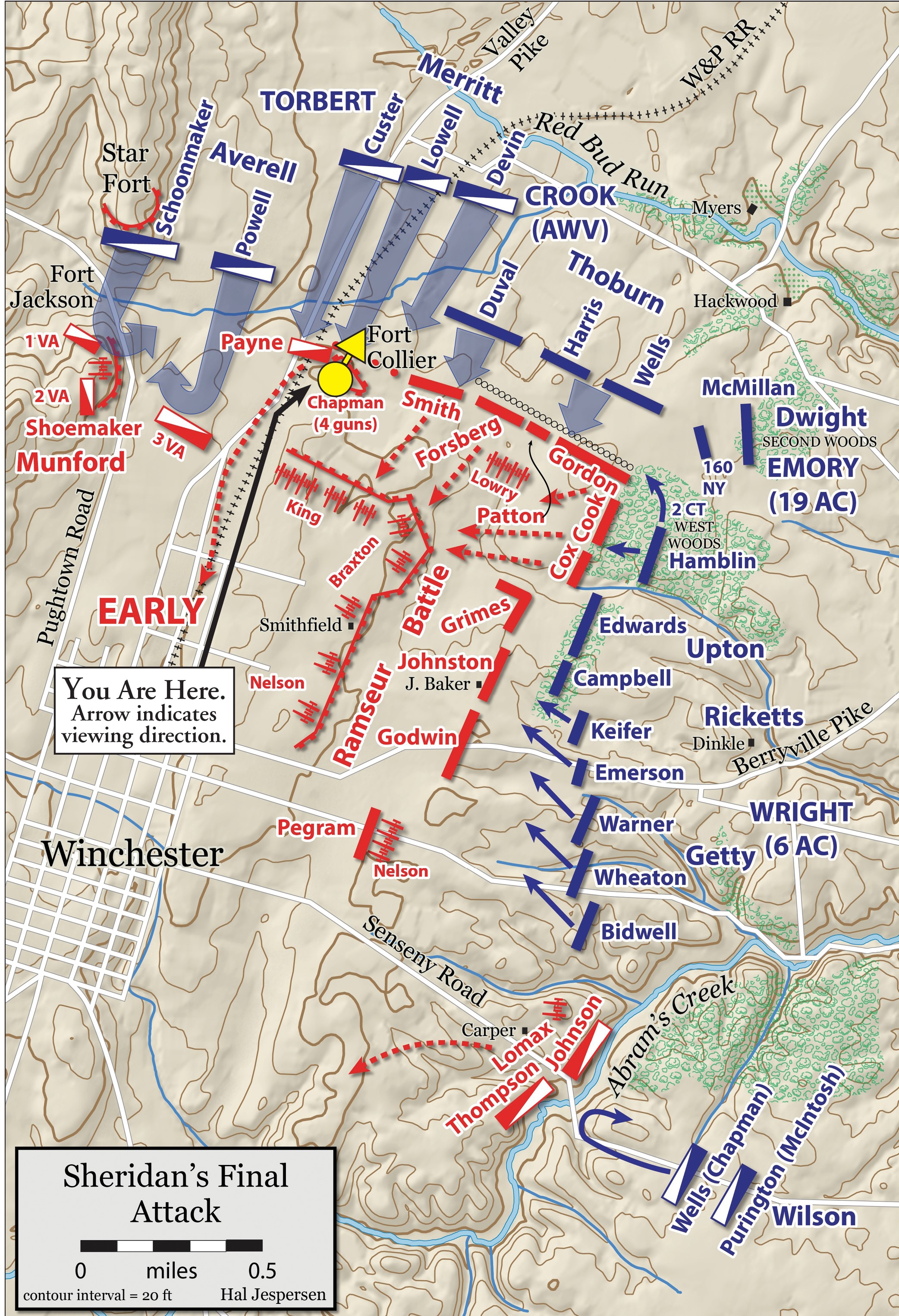
You're standing at Fort Collier, a fortification that served as a key anchor for the left of the Confederate defensive line during the Third Battle of Winchester. Late that afternoon, Confederate General Jubal Early's army had been forced back into an L-shaped defensive line on the north and east sides of Winchester. You're standing near the center of the northern part of that line on the Confederate left flank. Early had stationed a battery of artillery commanded by Captain George Chapman here at Fort Collier.
As the Union cavalry stormed down from the north in front of you, Chapman held fast to his position, the blast from his cannon aided by infantry commanded by former U.S. Vice President John C. Breckinridge. Breckinridge drove the Union cavalry back several hundred yards, forcing them to regroup. But then Breckinridge was called to the right to help hold off the growing pressure from Union infantry, weakening the Confederate defenses in this area. As Chapman's guns continued to fire on the Union cavalry, the Northerners brought up their own battery and began to send shells screaming into the fort.
The fire here was devastating, killing 34 horses, causing severe casualties, and mortally wounding both Captain Chapman and his second in command. The remaining defenders struggled to withdraw two of their guns amidst the chaos. Sensing that the defenders were wavering, General Averell ordered Colonel Charles Russell Lowell to attack with his United States regular brigade of cavalry. As Lowell's men galloped toward the fort, the defenders fired a volley that staggered the attackers, but the cavalrymen kept coming. They leapt their horses over a ditch and then surged over the ramparts of the fort, overwhelming the defenders and capturing two cannons.
The Union cavalry would continue south joining the Federal infantry and applying an intense pressure that would soon break Early's lines and send the Confederates south out of Winchester. As one Confederate soldier later admitted, "I ran from a mile the other side of Winchester to four miles south," and he was not alone.
Directions to this stop
This stop is located at Fort Collier Civil War Center at 922 Martinsburg Pike, Winchester, VA 22601
DIRECTIONS TO THIS STOPLearn more
Fort Collier - Civil War battle site
Open video in a new tab →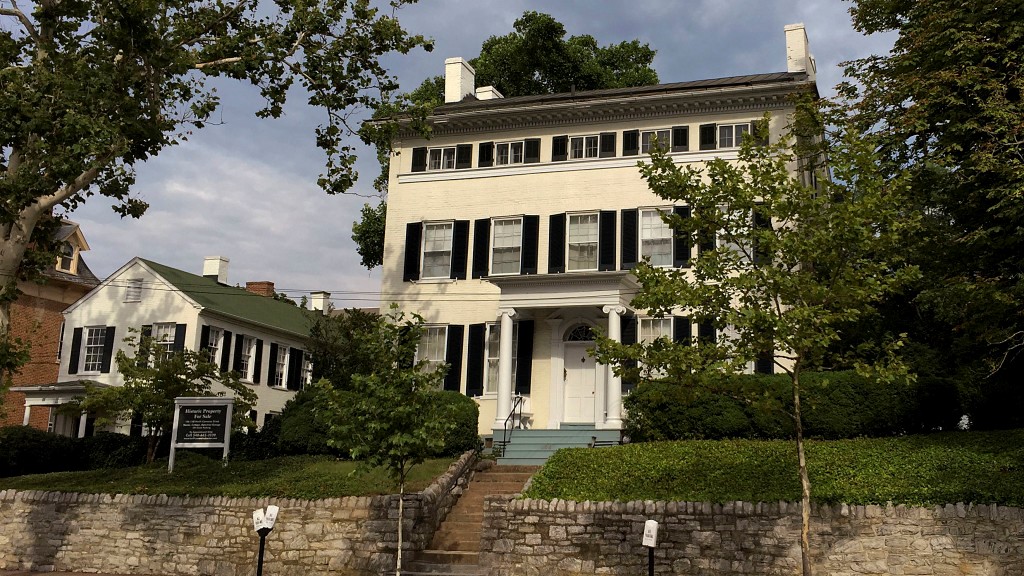
The Bell House
This audio tour stop made possible by Mark Seelebinder
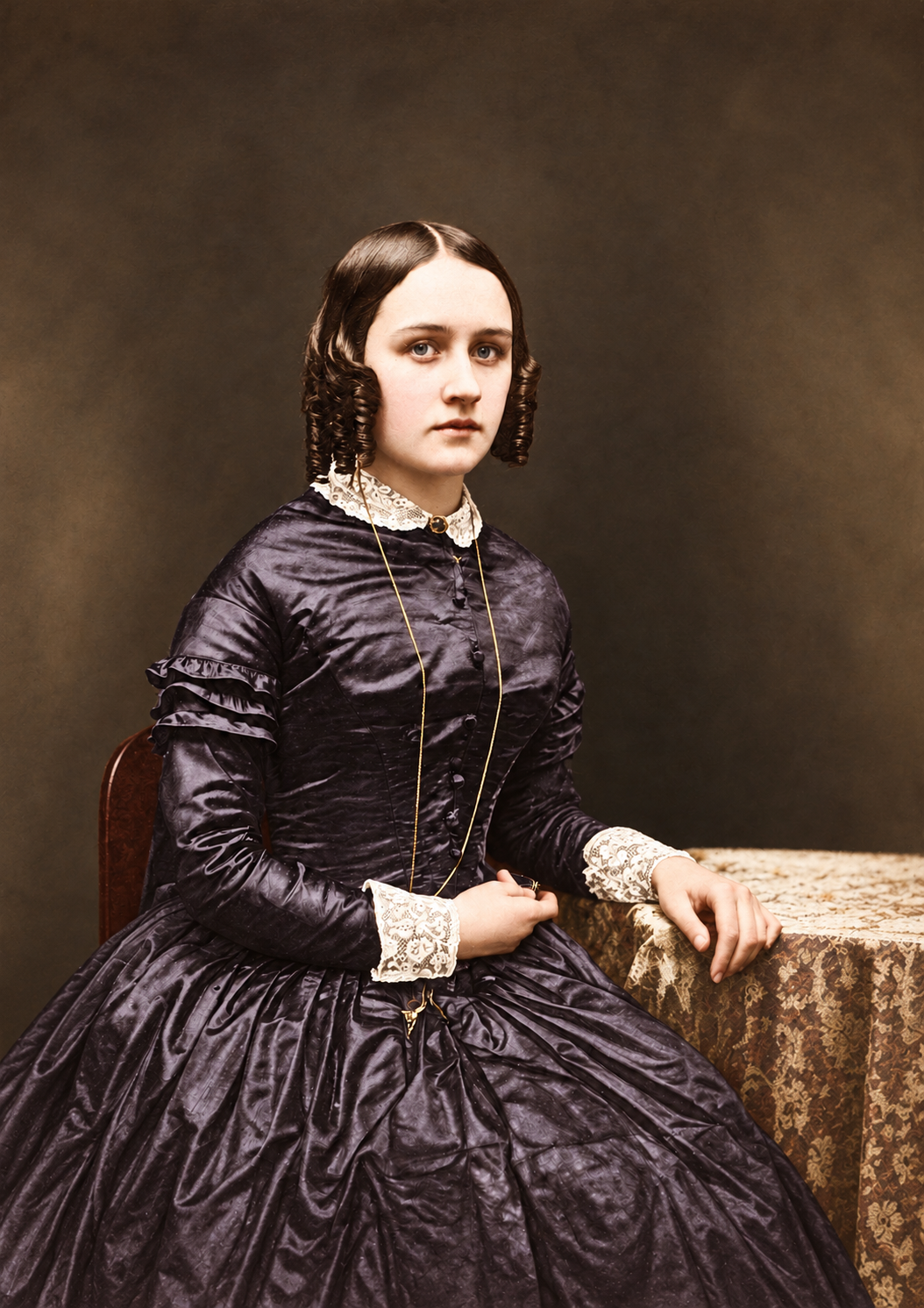
A house amid the fighting
You're standing in front of the Bell House, one of the most historic buildings in Winchester. The house was built between 1809 and 1811 by John Bell II. When he died in 1838, the house passed to his son, John Newton Bell. John and his second wife, Margaretta Hutton Brown, lived here at the time of the Civil War.
Like most families in Winchester, the Bells faced hard times during the war, and like many, they suffered personal loss when Robert Bell, one of John's children with his first wife, was killed at Rappahannock Station in November of 1863. The war also came to the Bell House itself, most notably during the Third Battle of Winchester, fought on September the 19th, 1864. Just the day before, on September 18th, Margaretta had given birth to a child, Stuart Bell.
Adding to the strain on the family, John Bell had been imprisoned by the Union military and was being held at Fort McHenry in Baltimore at the time. When the battle began early on the morning of September the 19th, many residents initially thought it was just another small action. But as the roar of combat grew louder and louder, it became clear that this was no ordinary fight. The last epic struggle for Winchester had begun, and it was coming toward the city. As the fighting moved closer, Union cannon fire crashed around the Bell House.
Mrs. Bell, her newborn son, family, and enslaved workers all huddled in the cellar for safety. The ground-shaking impact of the shells was terrifying. The concussions from the artillery blast were so powerful that they stopped the grandfather clock in the main hall, leaving the hands frozen at 4:32 p.m. As the explosions rocked the building, a slave rushed to the attic to close a hatch on the roof that had been opened for ventilation earlier that day. Almost immediately, the shelling seemed to move away, bringing some relief.
Later, the Bells had come to believe that the inside of the roof hatch had been used for the sighting of the cannons by the Union gunners who were pummeling the town. Later, when the Confederate defensive line was broken, the streets around you were a scene of madness and chaos, full of retreating Confederates, pursuing Federals, and panicked civilians. The third battle of Winchester ended major fighting in the city, but the winter that followed was hard and bitter. The temperatures were brutally cold and food and supplies were very scarce. In this time of crisis, the Bells stepped forward.
Margaretta Brown Bell reached out to her family and friends in Baltimore. Margaretta's mother traveled to Winchester and convinced Union Commander General Philip Sheridan to permit food to be sent from Baltimore, providing badly needed relief to the destitute. Even after the war ended, the Bells continued to import aid. Some of that aid was by gift, but much of it was by loan, and it took the Bell family decades to repay the loans. John Newton Bell died in 1890, and the house passed to his son, Stuart Bell, the boy who had been born the day before the third battle of Winchester.
The small building that you see to the left of the main house was the summer kitchen before the current kitchen was installed in 1948. More recently, for many years, the small building was the local office of Congressman Frank Wolf. Congressman Wolf was one of the greatest driving forces behind the creation of the Shenandoah Valley Battlefields National Historic District.
Today, the Bell House is part of the Battlefields Foundation's museum system and is occasionally open for tours, giving visitors a chance to see the remarkable collection of historic furnishings and artwork, including the grandfather clock that was stopped by cannon fire, a still standing witness to the impact of war.
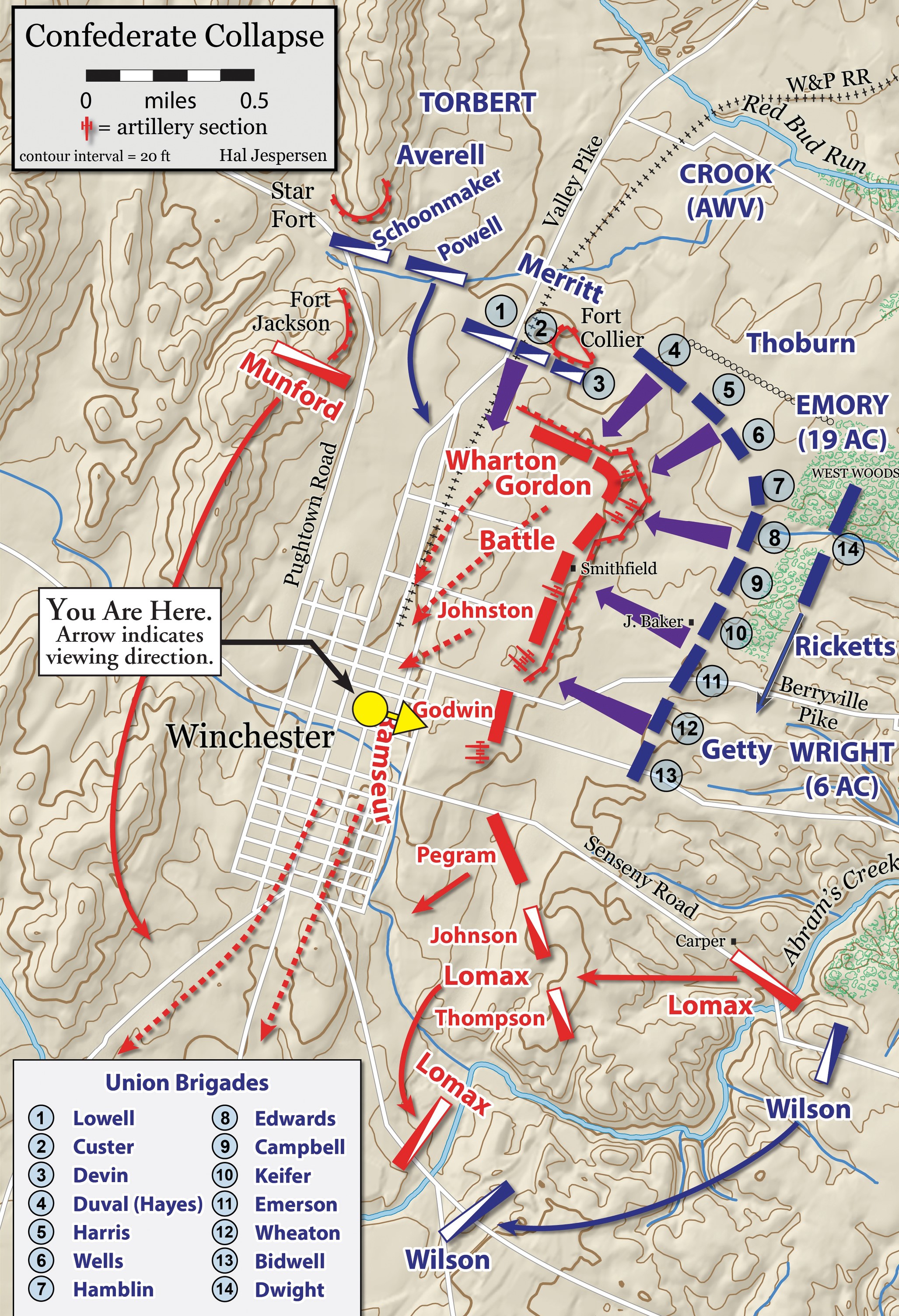
Directions to this stop
This stop is located across the street from Rouss City Hall (15 N Cameron Street, Winchester, VA) along the east side of Cameron Street.
DIRECTIONS TO THIS STOP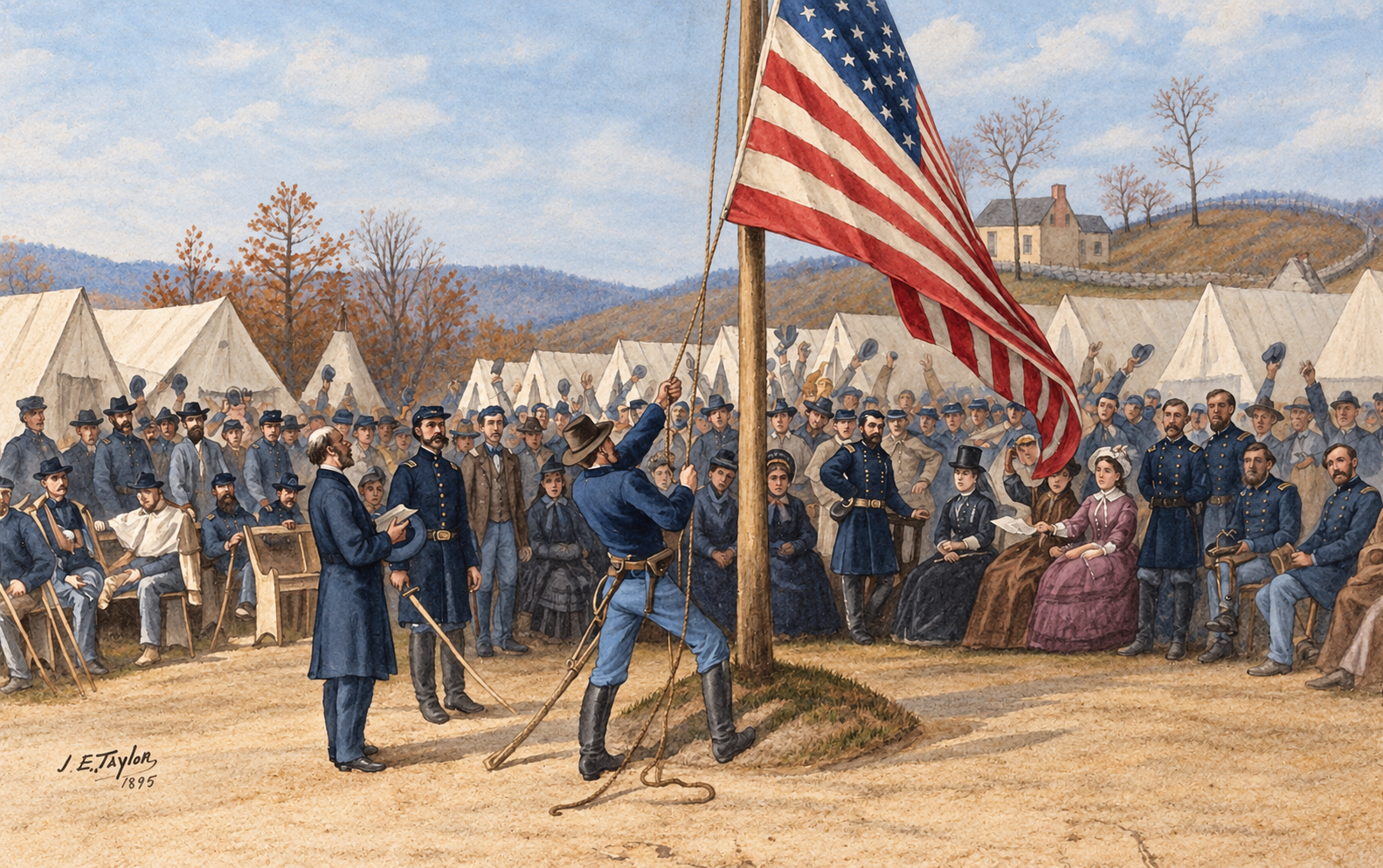
Sheridan's Field Hospital
This audio tour stop made possible by Bill and Vicki Christensen
Caring for the wounded
You're standing at the site of Sheridan's Field Hospital, the largest temporary field hospital of the Civil War. When Union forces entered Winchester after the Third Battle of Winchester on September 19, 1864, they were confronted with a medical crisis. Virtually every church, public building, and suitable private house was already a Confederate hospital or had to be taken over for Union casualties.
Union medical officers responded by implementing a previously conceived contingency plan for the processing and evacuation of the wounded. 500 hospital tents, medical supplies for 5,000 patients, and 20 medical officers were dispatched to Winchester. Union surgeon John H. Brinton developed a layout for a tent city, and 500 soldiers helped prepare the ground and get the tents pitched and ditched. By September 28, Sheridan's Field Hospital was fully operational. It treated and evacuated over 4,000 casualties from Third Winchester before becoming more of a clearing and evacuation facility.
The largest surge of patients came after the Battle of Cedar Creek on October 19, when every available ambulance and wagon had to be used to move casualties to Winchester. The hospital was an impressive site with hundreds of tents covering over 45 acres and rising into view on one of the beautiful elevations southeast of the town. Approximately 30 physicians, 20 U.S. Sanitary Commission employees, and as many as 400 soldiers worked at the hospital at the height of its operation. The hospital's tents featured a unique heating system where a sheet-metal-covered trough radiated heat inside the tent.
While the hospital chiefly housed Union casualties, it also treated Confederates. Some of them were relocated from Confederate hospitals in Strasburg, Woodstock, and Harrisonburg that the federal surgeons encountered as Sheridan moved south, with large-scale combat in the valley ending after Cedar Creek. Union officials decided to close the hospital with the last patient sent off on December 28, 1864, and the facility was closed on January 4, 1865. The remains of some of the hospital tent sites still exist. Continue on the walkway to your right for 90 yards, then take the branching trail to your left.
In 80 yards, you'll come to a location where living historians created a replica of a tent site. Continue for another 50 yards into the woods, and you'll see some of the visible tent sites to the left of the trail.
Directions to this stop
DIRECTIONS TO THIS STOP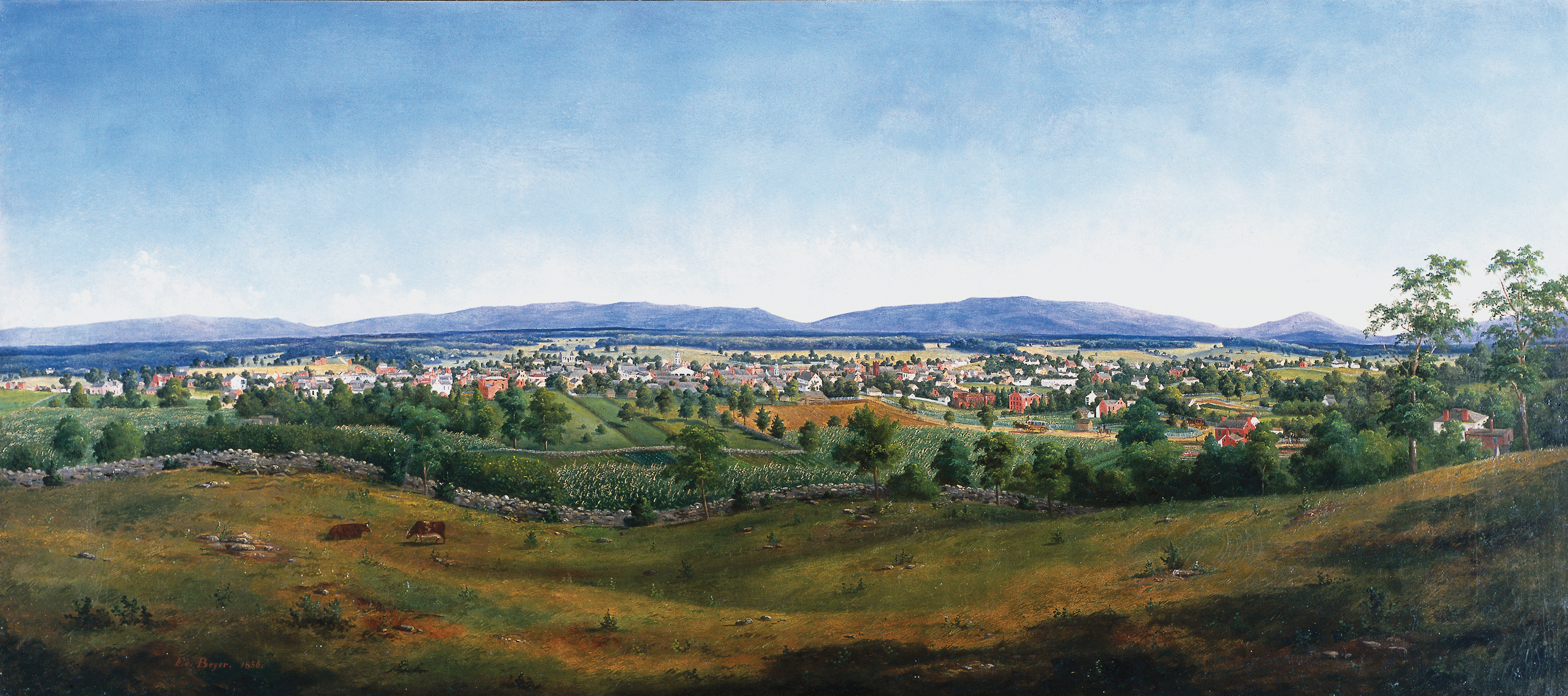
Civil War in Winchester
This audio tour stop made possible by the Maria & Bob Taylor Jr. family, in memory of Bob & Sylvia Taylor of Winchester
A city between the armies
You’re standing at the center of downtown Winchester, the most contested city in America during the Civil War. Winchester had the misfortune to spend much of the war between the shifting front lines of the armies, leading to six major battles and innumerable smaller clashes in and around this community, with the city itself changing hands over 70 times.
This building—today’s Shenandoah Valley Civil War Museum—was the Frederick County Courthouse during the war. A short distance in front of the museum, you can see the downtown walking mall. During the war, the famous and well-traveled Valley Turnpike ran where the mall is today and was heavily used by both armies.
When the war began, Winchester was the largest city in the Shenandoah Valley. It was a thriving market town that benefited from converging roadways, a rich agricultural region, and a strategic location that made it a bridge for commerce and travel between North and South.
Unfortunately, those same features made it an often-contested prize during the war. The war brought military occupation, restrictions on trade and travel, shortages, privations, destruction, and the horrors of battle.
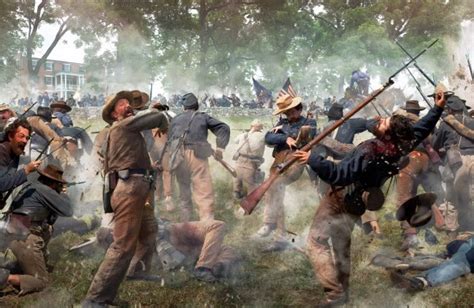
Winchester was repeatedly engulfed by fighting, and at times the combat spilled through these very streets. When the Confederates routed the Federals at the First Battle of Winchester on May 25, 1862, they pursued the retreating Northerners through the city. At times, the opposing forces raced on adjoining roads, exchanging fire, and some pro-Confederate civilians shot at Union soldiers from their windows.
When the Confederates were, in turn, defeated at Third Winchester on September 19, 1864, they streamed through the city, “a whirling mass of gray, madly pouring through the streets of Winchester amid shells shrieking and moaning their death cries.”
After the fighting, Winchester was often overwhelmed with wounded. Following the First Battle of Kernstown, local resident Cornelia McDonald described how every available place was turned into a hospital: “The courthouse was full, the vacant banks, and even the churches.”
The impact of the war was devastating. One observer wrote that Winchester “used to be a most agreeable little town, but many of its houses are now destroyed or converted into hospitals. The rest looked miserable and dilapidated.”
By the end of the war, constant combat, requisitioning and pillaging, caring for the wounded, and widespread destruction had made the city a shell of its former self. The Winchester that existed before the war was just a memory.
Note: The downtown walking mall contains stops 21-25
Directions to this stop
This stop is located at the Shenandoah Valley Civil War Museum at 20 North Loudon Street, Winchester, VA. The sign for this stop is on the door of the museum. Click below for directions.
DIRECTIONS TO THIS STOP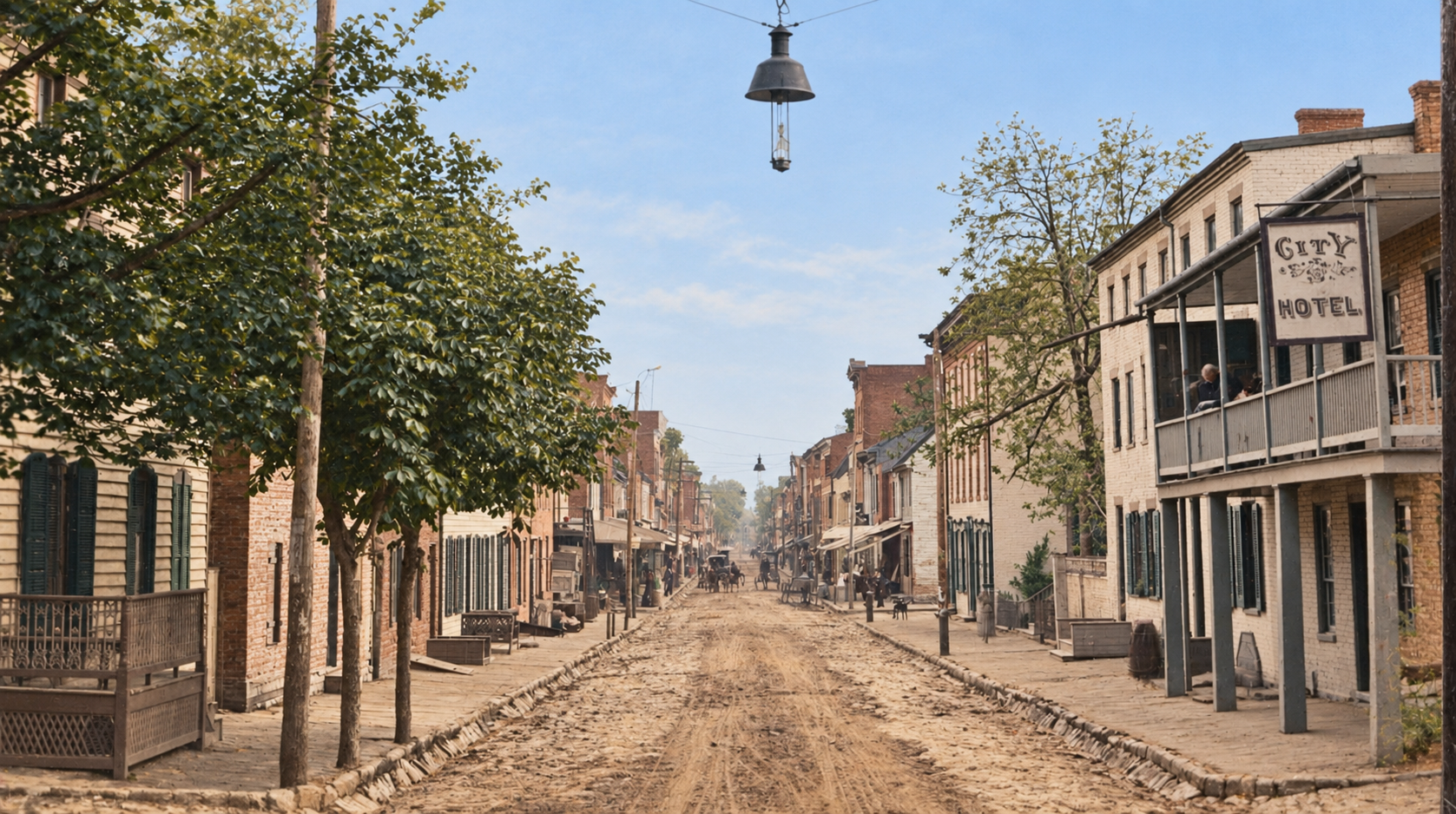
Life in Civil War Winchester
Life under occupation
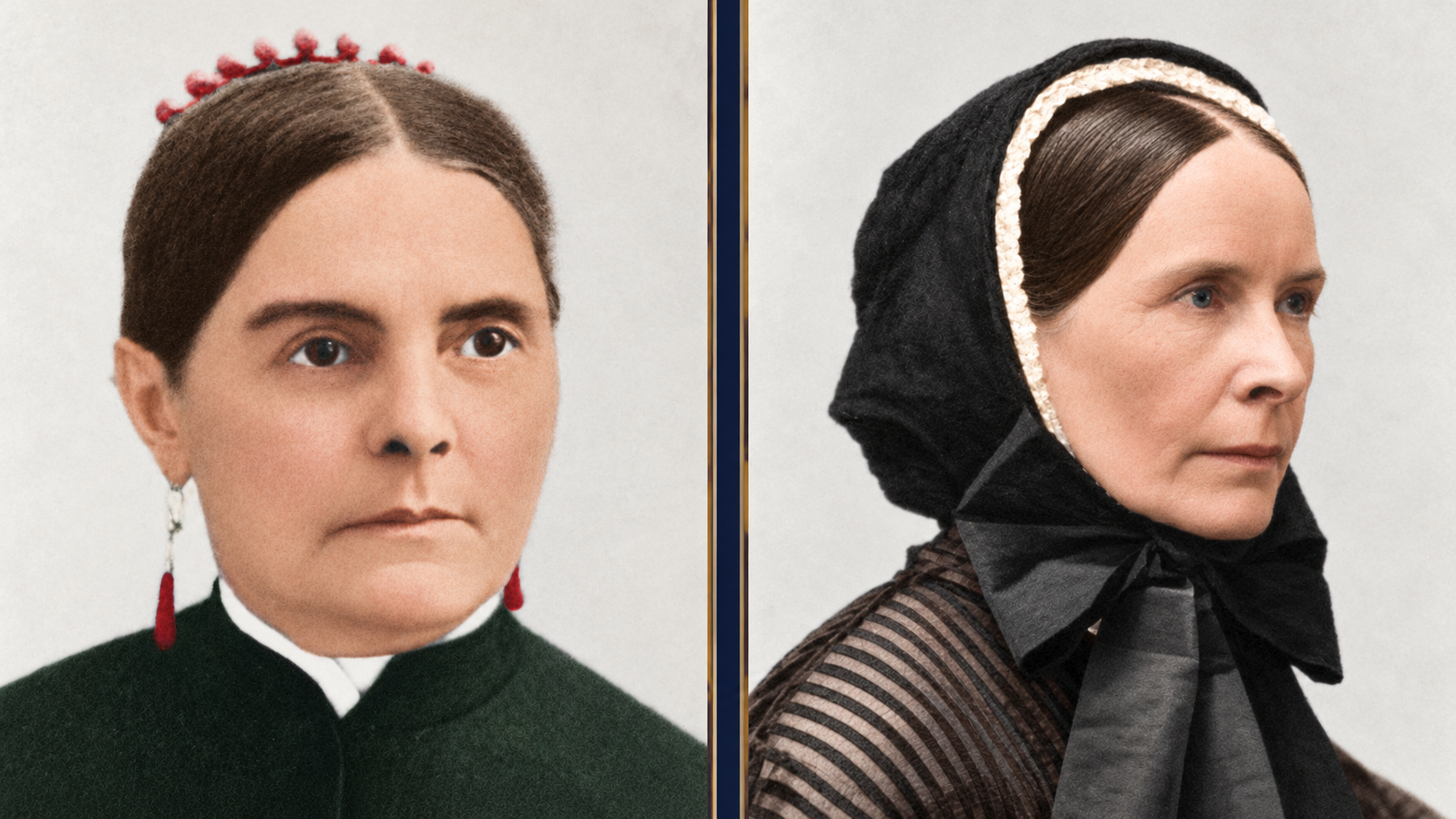
You're standing at the center of historic downtown Winchester. During the Civil War, Winchester's civilians included firebrand pro-Confederates, defiant Union loyalists, and free and enslaved African Americans who dealt with uncertain futures during both war and peace. Many of their experiences were documented by wartime diaries, including those of the famed Devil Diarists: ardent Confederates such as Mary Greenhow Lee and Cornelia Peake McDonald, as well as pro-Union diarist Julia Chase. Their writings provide remarkable accounts of living in a city engulfed by war.
Even everyday life was difficult as Winchester was so often occupied by both Union and Confederate armies. The influx of so many men overwhelmed the community with the crowded conditions, bringing disease and causing dire shortages and skyrocketing prices. People used to have a basket to carry their money to market, but it bought so little they could carry their provisions home in their pocketbooks. Civilian life was full of anxiety.
Cornelia McDonald wrote, "I have had so many startling visits, and been so often summoned to surrender my house, that if I hear a step on the porch, my heart palpitates and flutters in a way to frighten me." Battles added to this fear, and sometimes the loss of battle struck close to home. McDonald described one such scene after the First Battle of Winchester. Mrs. Barton stood at her door with baskets of food, distributing to the hungry men, and while she did so, someone touched her and told her that her eldest son Marshall had been shot not far from her house.
"Bring him to me," she said, and went on distributing her bread to the men. Soon a squad of men came up with the body of her son. He was already dead, shot in the neck. She led the way into her house and directed them where to lay him. "He was born in that room, and there he shall lie," she said. During the First Battle of Kernstown, McDonald's own two young sons were missing.
"I sat all that fearful afternoon in terror for fear my boys had come to harm." The boys returned that night safe but having witnessed frightful scenes of that day's battle. Battles also brought vast numbers of wounded to the city. Visiting the courthouse building directly in your front after the First Battle of Kernstown, Cornelia McDonald found that the porch was strewn with dead men. By the time peace came, many residents had seen their lives shattered, and many had left.
Cornelia McDonald left in July of 1863 and hoped to return after the war, but discovered that her home had been so ruined as to be uninhabitable. Like so many others, the life she had known before the war was now gone forever.
Note: The downtown walking mall contains stops 21-25
Directions to this stop
This stop is located on the downtown walking mall in front of the Shenandoah Valley Civil War Museum at 20 North Loudon Street, Winchester, VA
DIRECTIONS TO THIS STOP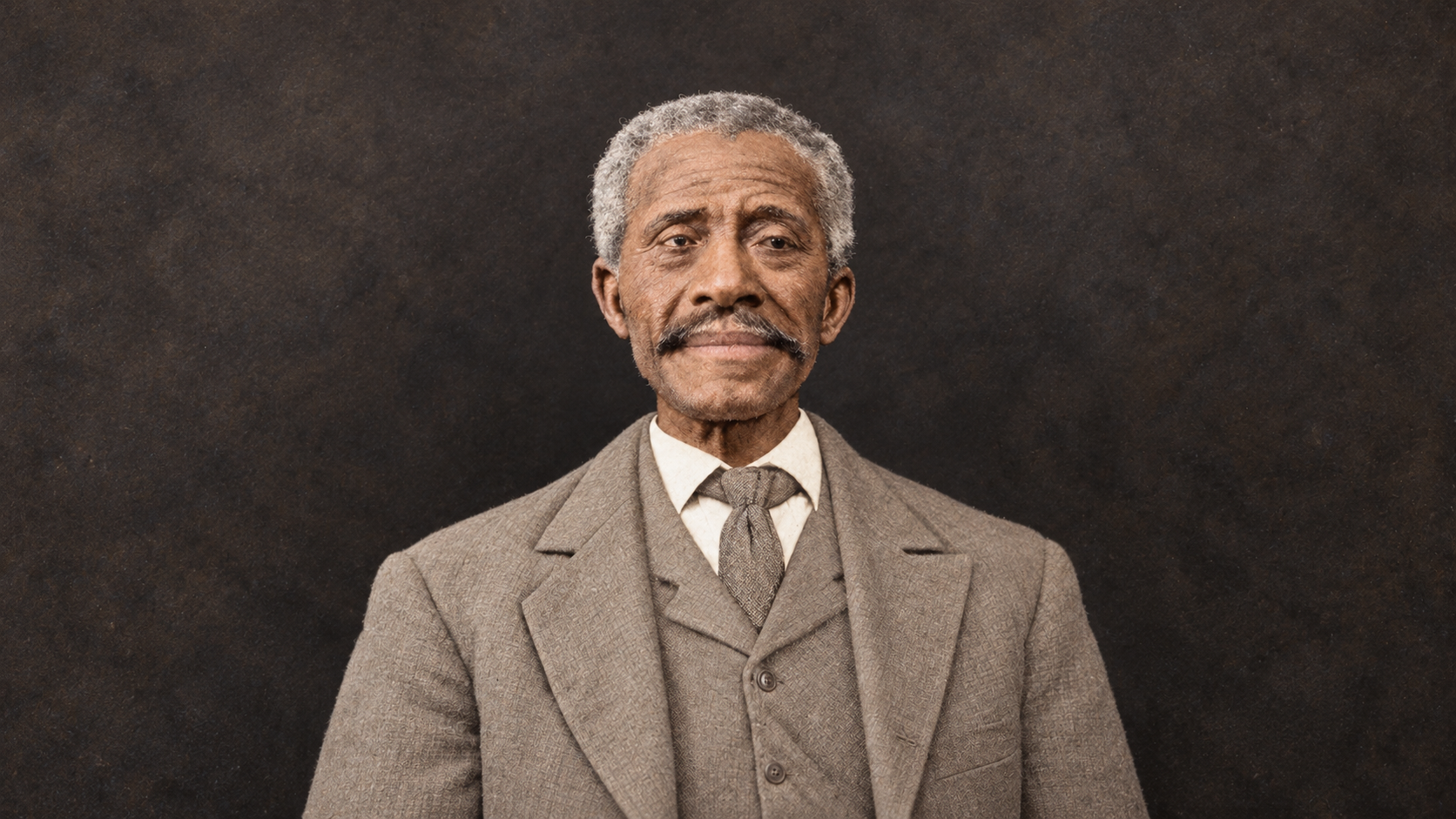
African Americans in Civil War Winchester
This audio tour stop made possible by Anne and Ben Stoppe of Lake Monticello, Virginia
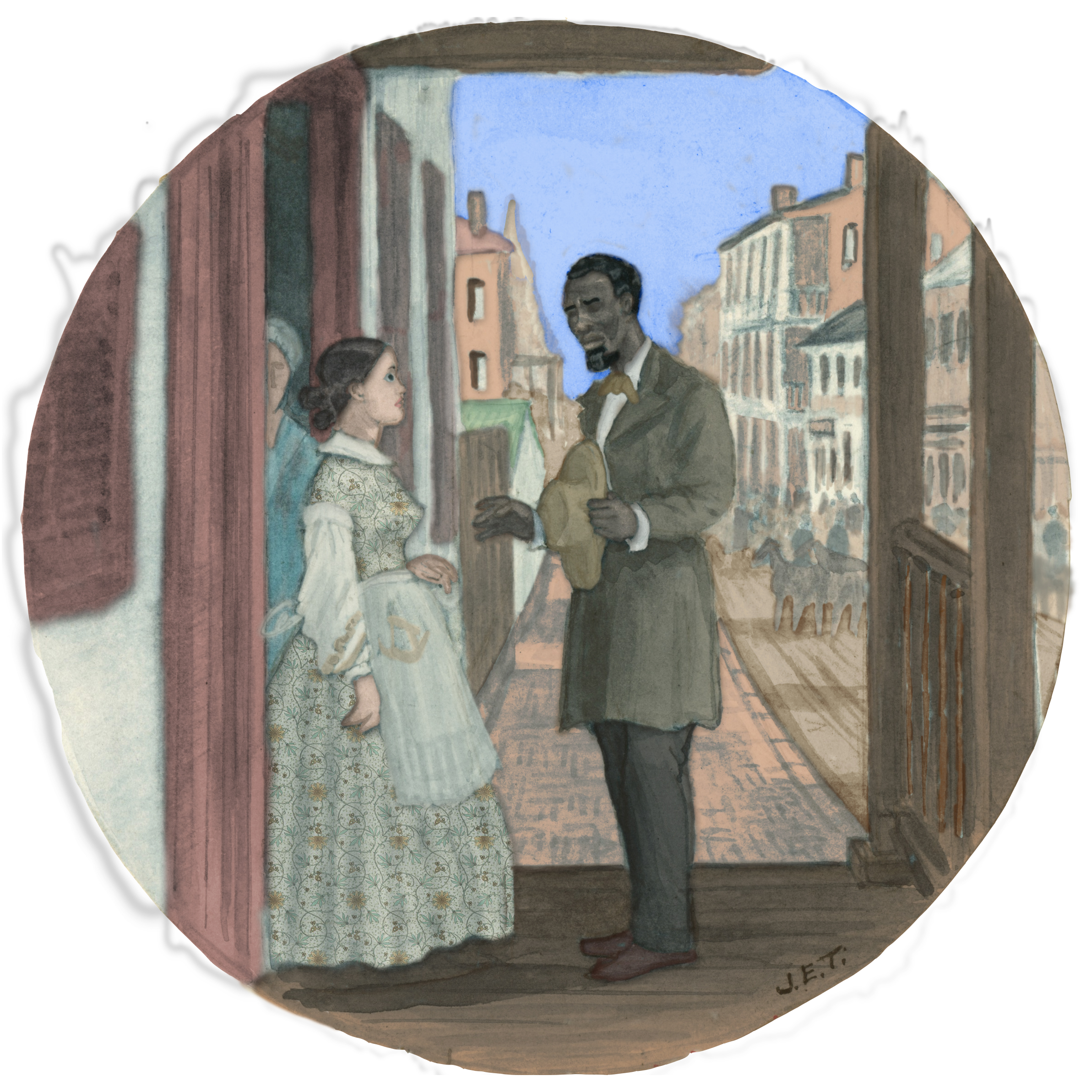
Freedom, war, and community
One of the first casualties of the Civil War era was a free black man from Winchester named Hayward Shepherd who was killed during John Brown's infamous raid of Harpers Ferry in October of 1859. Shepherd encountered two of the panicked raiders on the bridge and was shot in the back as he fled. It was a tragic irony that the first casualty of a raid intended to liberate enslaved African Americans was a free black man.
In 1860, on the eve of the Civil War, there were 1,388 African Americans in Winchester which made up 31% of the city's total population. Of those, 608 were free blacks and 780 were enslaved, meaning that about one out of every six residents of Winchester was an enslaved person. For African Americans in Winchester, the war brought the tenuous hope for a better future but also terrifying uncertainty. Some were able to navigate the dangerous times including Robert Orrick who had been born into slavery in 1841.
Shortly before the war, his owner agreed to allow Orrick to establish his own livery stable as long as Orrick compensated him for his time. During the war, Orrick prospered by selling his skills to both sides. In January of 1863, Winchester was one of the first places to feel the impact of Abraham Lincoln's Emancipation Proclamation when Union General Robert Milroy issued a broadside stating freedom to slaves, firmly announcing his intention to maintain and enforce the proclamation.
Some local African Americans served as spies, the most famous being Thomas Laws who smuggled vital information from Union Loyalist Rebecca Wright to Union General Philip H. Sheridan. The messages, rolled in tinfoil and hidden in his mouth so he could swallow them if he was searched, contained information that helped the Federals win victory at the Third Battle of Winchester. When the war ended, it brought the passage of the 13th Amendment to the U.S. Constitution abolishing slavery. But it also brought uncertainty as it was unclear how newly freed people would be integrated into this new society.
After the war, the Freedmen's Bureau, which was created to help newly freed people, opened an office right here in Winchester. The Bureau also established eight schools here. One of the teachers was James Washington, who had been a free blacksmith prior to the Civil War. Following the war, the now free Robert Orrick continued his livery stable business, becoming not only a remarkably successful businessman, but also renowned minister, real estate owner, contracted mail carrier, and a philanthropist. His name lives on today in Orrick Cemetery.
Note: The downtown walking mall contains stops 21-25
Directions to this stop
This stop is located on the downtown walking mall in front of the Shenandoah Valley Civil War Museum at 20 North Loudon Street, Winchester, VA. This stop is on the interpretive sign next to the statue. Click below for directions.
DIRECTIONS TO THIS STOP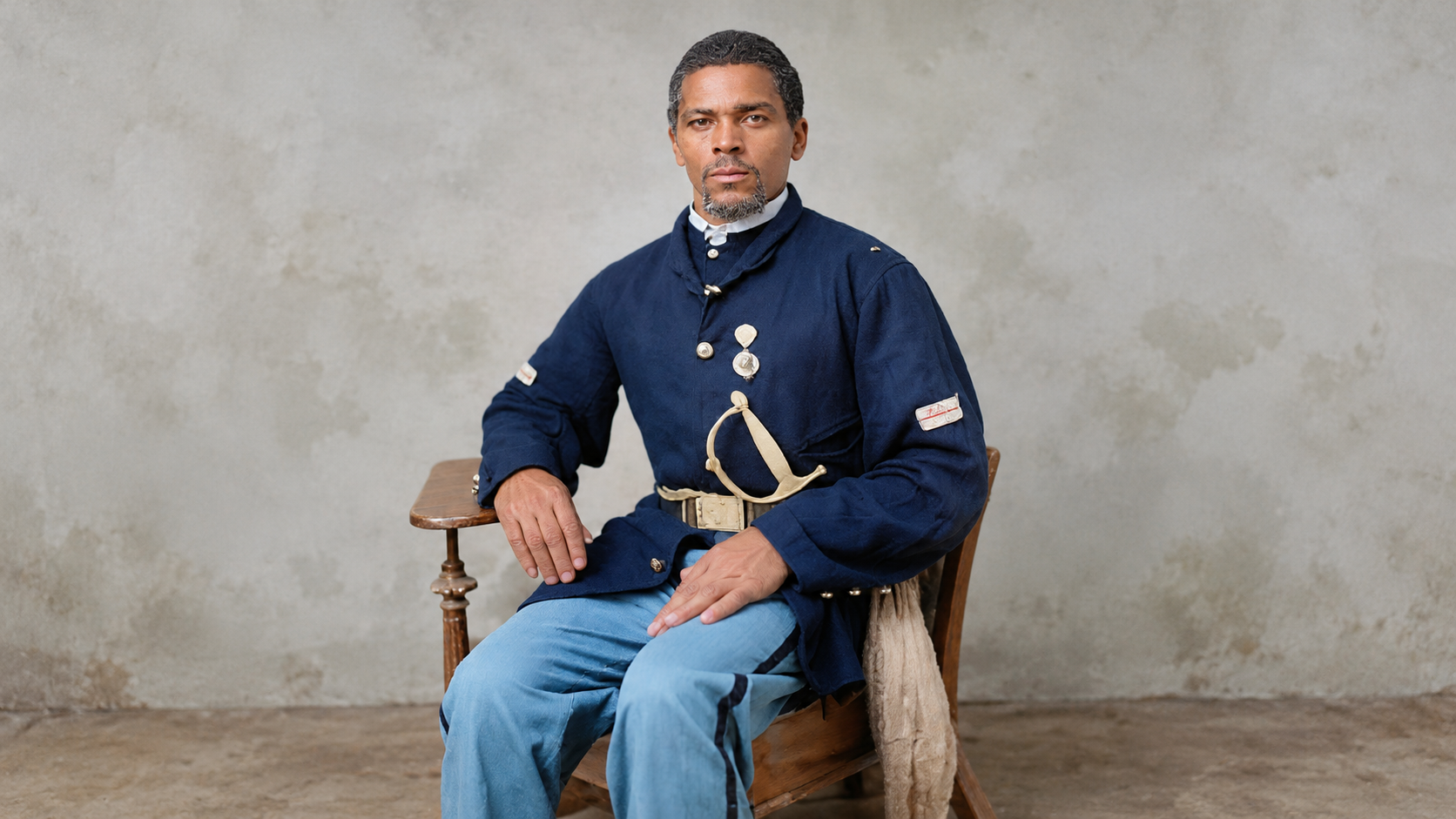
United States Colored Troops in Winchester
This audio tour location made possible by Kirk Hinman
Serving in the Union army
When Abraham Lincoln's Emancipation Proclamation went into effect on January 1st, 1863, it opened the door for African Americans to enlist in the Union Army. 175 Black regiments were formed and more than 180,000 African Americans fought in the United States Colored Troops, the USCT. In the spring of 1864, the 19th regiment set out on a recruiting mission to the Shenandoah Valley. On April 3rd, 1864, the regiment was marching toward downtown Winchester along the Berryville Pike, modern-day Route 7, when they unexpectedly came under fire.
One soldier, Private Benjamin Curtis, was struck in the head by a bullet but would survive. Assuming they had been attacked by Confederates, the 19th members took cover and fired back. As one officer noted, they "returned the fire and did not flinch." When an officer went forward to investigate, he was shocked to learn that they had been fired upon by a group of Jesse Scouts who were Union soldiers that dressed as Confederates in order to spy behind enemy lines. The attack was a cruel attempt to test the mettle of the African American soldiers.
Regaining their composure, the regiment entered Winchester and set up camp in Market Square, where Rouss City Hall, the building behind the Shenandoah Valley Civil War Museum, stands today. Their arrival startled the residents. Pro-Confederate Mary Greenhow Lee wrote, "I looked up and saw a white Yankee officer." Even Union loyalists were startled. Julia Chase wrote, "We have witnessed a sight today that I never expected to see." While the 19th USCT recruited only two men during this trip, over 700 African Americans from the Shenandoah Valley would serve in the Union Army, including 150 from Winchester alone.
One of them was Phillip Brent, a free black farmer from Clarke County, who served in the 4th USCT regiment until he mustered out on May 4th, 1866. Brent is one of three USCT veterans buried in Winchester's National Cemetery.
Directions to this stop
DIRECTIONS TO THIS STOP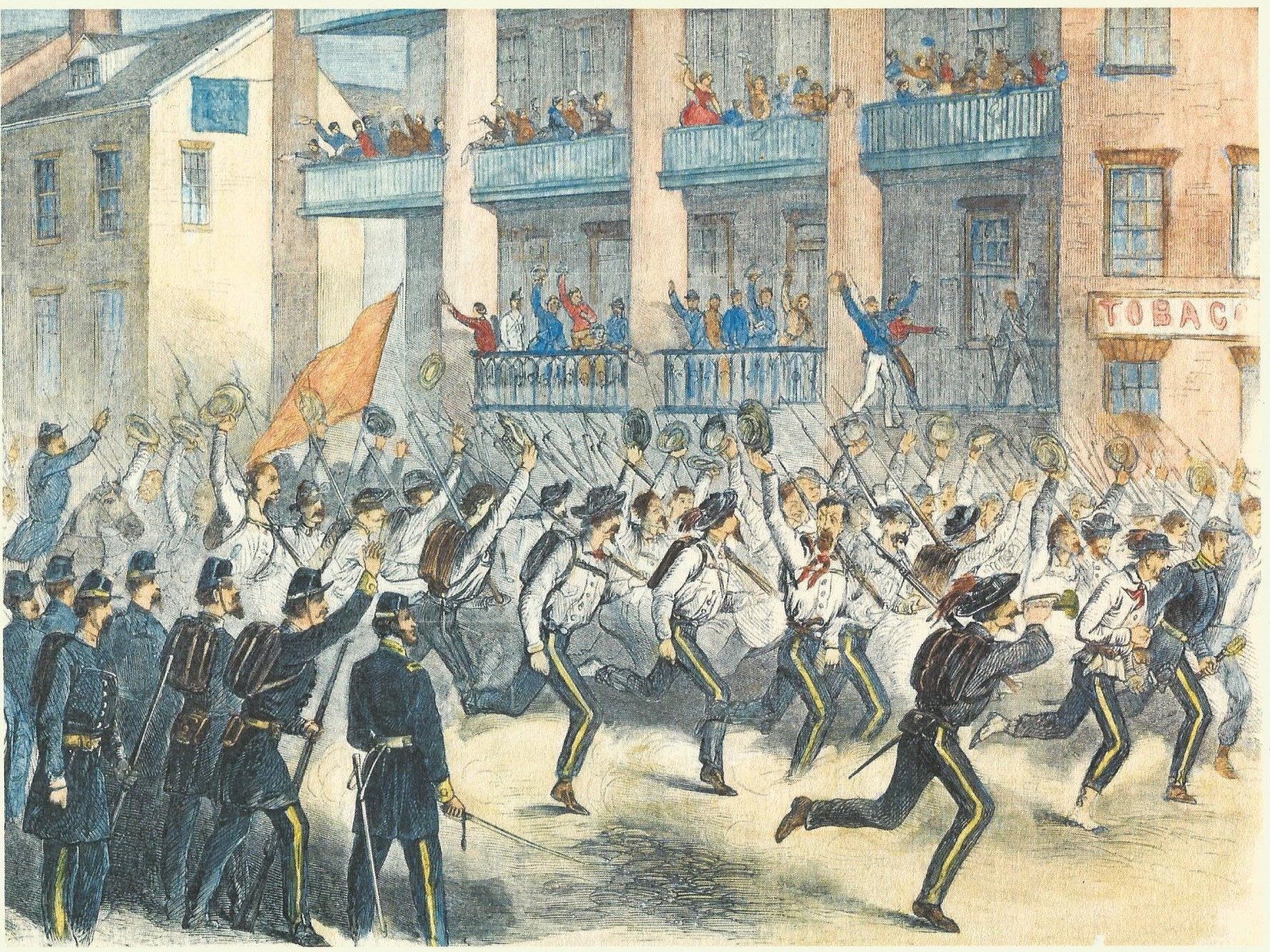
The Taylor Hotel
This audio tour location made possible by Dale Voss
A hotel at the center of history
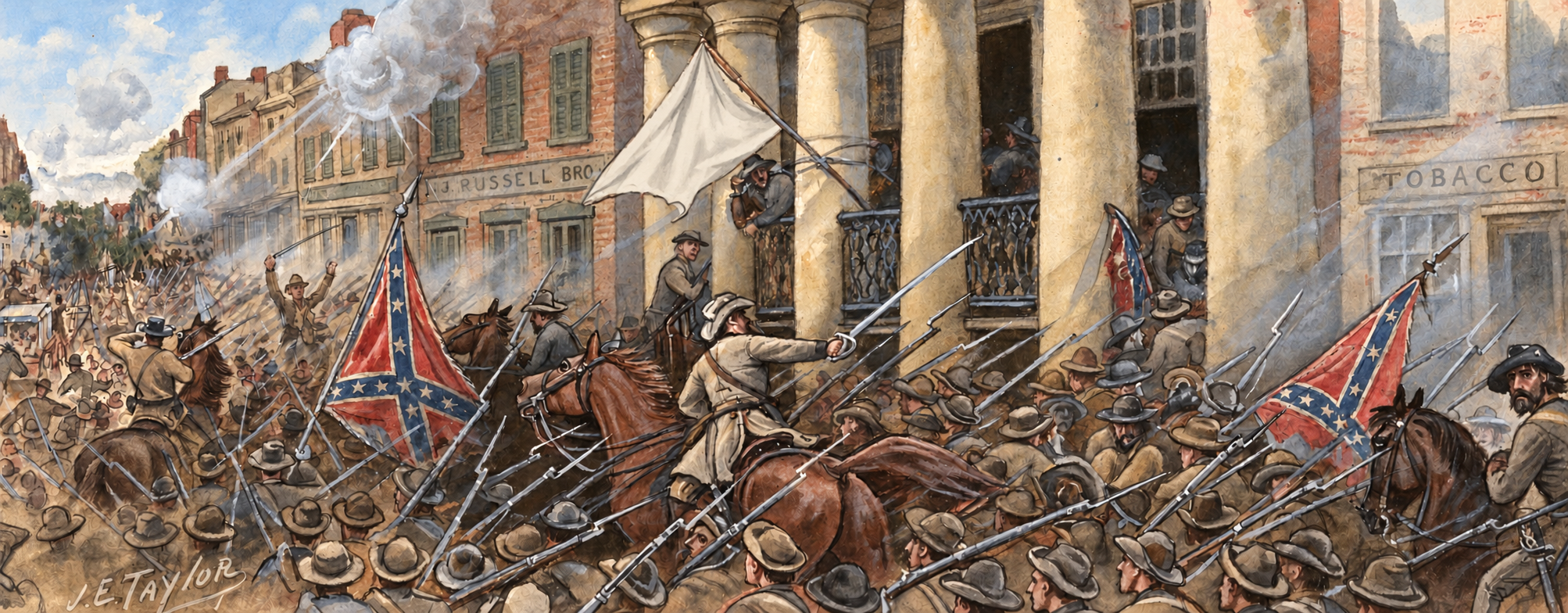
You are standing in front of the historic Taylor Hotel. During the Civil War, the hotel was also called the Taylor Tavern and was one of Winchester's most prominent buildings. During the Civil War, it served as a headquarters and hospital for both sides. Most famously, Confederate General Stonewall Jackson made his initial headquarters here when he arrived to take command of the Valley District in November of 1861. Sometimes the hotel's guests reflected the quick-changing nature of the war. On the eve of the First Battle of Winchester, three Union generals stayed here.
The next day, Stonewall Jackson's Confederates routed the Federals and drove them out of the city, and that night an exhausted Stonewall returned to this hotel. Entering his room, he collapsed face down on the bed, still wearing his uniform and spurs, and fell fast asleep. Like many buildings in Winchester, the hotel was also often used as a hospital. After the massive casualties arrived from the Battle of Antietam, the hotel was so full of wounded men that they were laid out in the street.
After the Confederate victory at the Second Battle of Winchester in June of 1863, Union patients at the hotel found they had been abandoned by their retreating army, and they were now prisoners of the Confederates. One described how, "We were imprisoned in a small hospital, crowded with the dead and dying, and not allowed to show ourselves outside under penalty of being shot." When the Confederates entered the city, both Union and Confederate patients lined the porches of the hotel to watch.
Reaching this point, a Confederate band stopped in front of the hotel and began to play Dixie, and then the Bonnie Blue Flag. During the Bonnie Blue Flag, both bystanders and Confederate soldiers joined in, the words ringing down these streets. In 1864, after the Third Battle of Winchester, fought on September the 19th, this hotel was again full of casualties.
Union Lieutenant Morton Hawkins recalled, "The hotel was shrouded in darkness during that dreadful night, and sleep was impossible, as the groans, sighs, shrieks, prayers, and oaths of the wretched sufferers combined with my own severe pain, banished all thought of rest." The Taylor Hotel survived the war and remained in operation until 1910. Today, the largely reconstructed building remains one of the most iconic landmarks in the city.
Directions to this stop
This stop is located at the Macado's restaurant on the downtown walking mall. It is at 119 N Loudon St., Winchester, VA just north of the Shenandoah Valley Civil War Museum. Click below for directions.
DIRECTIONS TO THIS STOP