

Shenandoah Valley Civil War Museum
Inside an 1840 courthouse, One Story, One Thousand Voices uses artifacts, displays, and immersive exhibits to tell the story of the entire Shenandoah Valley during the Civil War.
Monday–Saturday
10 a.m.–5 p.m.
Sunday
1–5 p.m.
Admission is free for Winchester and Frederick County residents.
The courthouse is one of the museum’s most important artifacts.
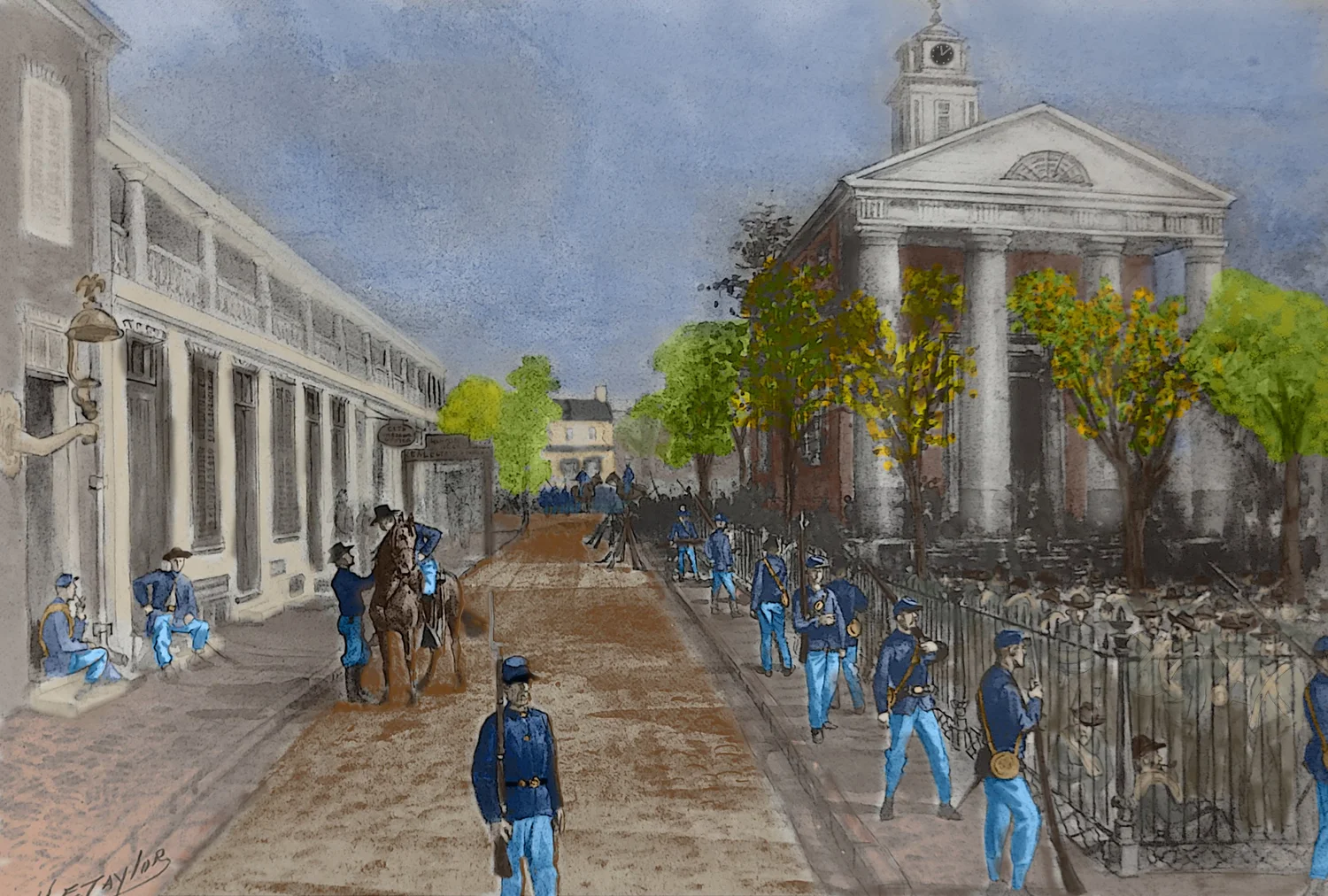
Located on Winchester’s walking mall, the museum occupies the historic Frederick County Courthouse—built on the site where George Washington was first elected to public office.
Completed in 1840, the courthouse was drawn directly into the Civil War. Over four years it served at different times as a hospital, a prison, and a barracks. Its rooms held wounded men, troops, and prisoners from a conflict that repeatedly swept through the Shenandoah Valley.
The building does more than contain the museum. Its architecture, surviving surfaces, and traces left by the people who passed through it allow visitors to encounter the history in the place where part of it happened.
- 1840The Frederick County Courthouse is completed.
- 1861–65The courthouse serves as a hospital, prison, and barracks during the Civil War.
- 1984The building continues to function as the Frederick County Courthouse until 1984.
- 2000Renovation for museum use reveals historic graffiti hidden behind paneling.
- TodayThe courthouse interprets the Valley’s wartime experience and the effort to preserve it.
One Story, One Thousand Voices
The museum’s signature exhibit brings together artifacts, displays, and immersive experiences to tell the story of the whole Shenandoah Valley during the Civil War.
Visitors follow the region from the road to war through years of combat and destruction, the postwar era, and the continuing work of preservation. Major battles provide the larger arc, while the experiences of soldiers and civilians reveal how people endured four years of upheaval.


The walls still carry their voices.
Prisoners held inside this courthouse left names, regiments, dates, drawings, and messages—small traces of individual lives that survived the war.


Civil War soldiers commonly left signatures, inscriptions, and drawings wherever they went. That impulse was especially strong among prisoners held temporarily inside this courthouse. The walls preserve names, regiments, and—in some cases—the date and place of a soldier’s capture.
Some men may have hoped to leave a trace that friends or family could someday find. Others drew to pass the time or wrote out of frustration. Like letters and journals, these marks offer a direct and deeply personal window into individual lives.
A national conflict becomes a roomful of individual voices.
Explore the graffiti storyVisit the museum today.
Explore the Civil War story of the entire Shenandoah Valley inside Winchester’s historic 1840 courthouse.
Plan your visit
Monday–Saturday
10 a.m.–5 p.m.
Sunday
1–5 p.m.